 comparison
Best Alternatives to Dogtopia for Anxious Dogs
Table of Contents
- Why Standard Daycare Facilities Stress Anxious Dogs
- Signs of Daycare Stress in Dogs to Watch For
- Private Boarding Suites: A Controlled Alternative
- In-Home Pet Sitting vs. Facility Boarding for Anxious Dogs
- How to Help Dog with Separation Anxiety During Boarding
- Evaluating Safety and Stress Management at Any Facility
- Alternatives for Anxious Dogs: Quick Comparison
- Frequently Asked Questions
Last Updated: September 29, 2026
Why Standard Daycare Facilities Stress Anxious Dogs
Traditional dog daycare centers assume activity equals contentment. For anxious dogs, this approach often backfires.
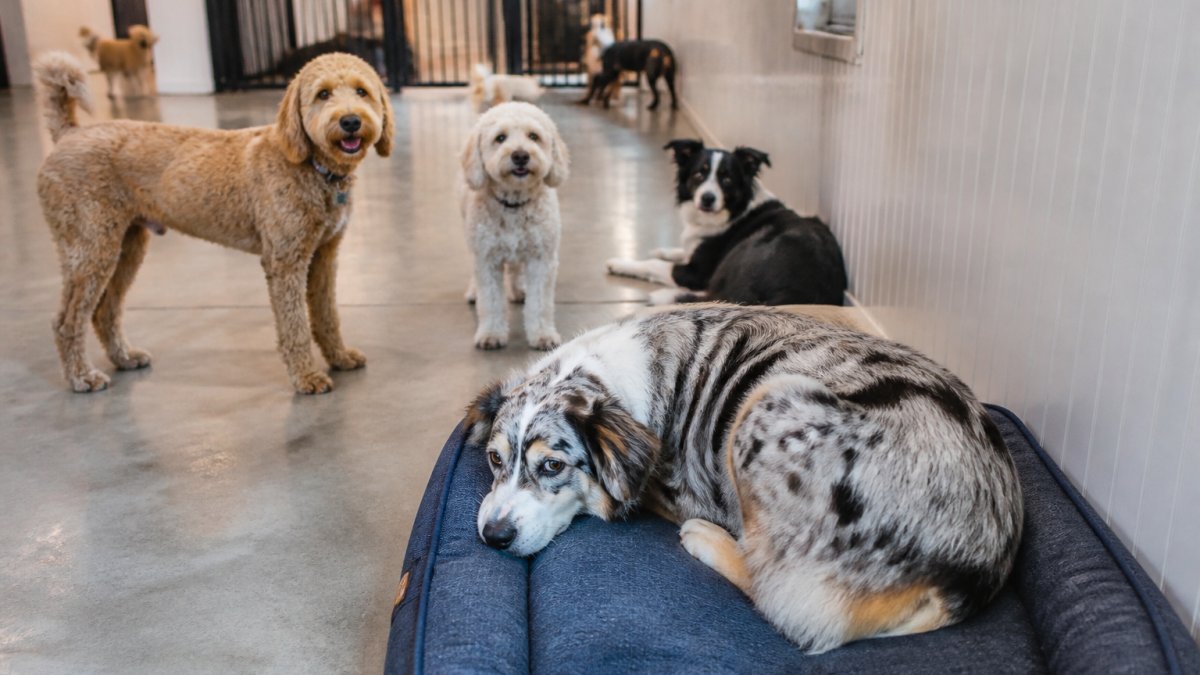
High-volume facilities create sensory overload. Multiple dogs barking, playing, and competing for attention trigger anxiety responses and worsen separation anxiety rather than help it.
Staff-to-dog ratios matter enormously. When one handler manages 15 dogs, subtle stress signals get missed and anxiety escalates before staff intervene.
Ruffin' It Ranch addresses this directly through individualized care plans and private play options. The facility recognizes that not every dog thrives in group settings, and that's the starting point for better outcomes.
Signs of Daycare Stress in Dogs to Watch For
Common stress indicators include excessive panting, pacing, refusal to eat, destructive behavior, withdrawal, diarrhea, or vomiting.
After pickup, watch for overly excited, aggressive, or clingy behavior; regression in housetraining; or reactivity to previously handled triggers.
If your dog has kennel anxiety, standard crating can amplify fears. Signs include frantic scratching, escape attempts, or self-injury, reasons private boarding suites exist.
Know your dog's normal behavior before boarding and document changes after stays. Share observations with your facility so they can adjust care accordingly.
Private Boarding Suites: A Controlled Alternative
Private boarding suites offer a different model: your dog stays in a dedicated, climate-controlled space designed for calm, individualized attention instead of group play.
This approach works well for reactive behavior and separation anxiety, providing a secure, predictable environment with customized routines.
Private suite facilities fill quickly during peak seasons, so book early. Pricing reflects personalized service, though package discounts often apply.
In-Home Pet Sitting vs. Facility Boarding for Anxious Dogs
In-home pet sitting keeps your dog in the familiar home environment while a professional visits multiple times daily for care and exercise.
For dogs with severe separation anxiety, in-home sitting often produces better outcomes. The dog remains in known surroundings with a consistent caregiver who builds trust.
Quality and experience vary between sitters, and finding a backup if your regular sitter is unavailable takes time.
Facility boarding offers professional infrastructure and backup staff but less personalization. Choose based on your dog's anxiety triggers: new environments favor in-home sitting; structured activity favors controlled facilities.
How to Help Dog with Separation Anxiety During Boarding
A structured desensitization protocol implemented weeks before boarding significantly reduces anxiety responses and teaches your dog that separation is temporary.
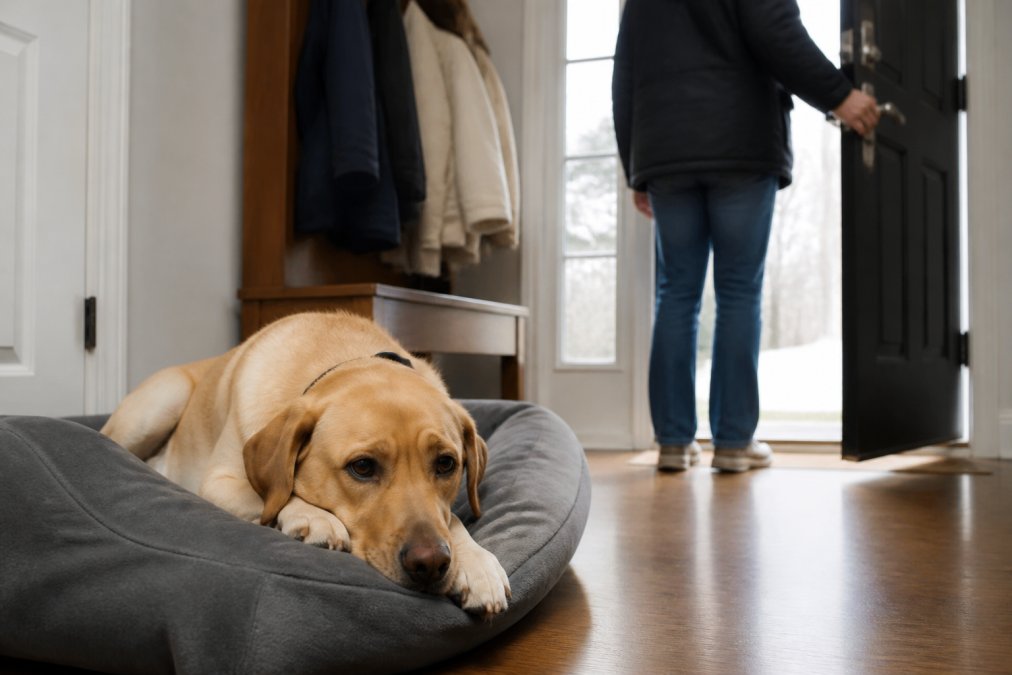
Step 1: Baseline Assessment (Week 1) Document your dog's anxiety triggers: panic when you leave, car distress, reactions to unfamiliar people or spaces. Note physical responses (panting, pacing, whining, freezing) and duration. This baseline helps measure progress and informs your facility.
Step 2: Micro-Separations in Familiar Space (Weeks 2-3) Leave your dog in one room with a closed door for 30 seconds, returning before distress escalates. Reward calm behavior and gradually extend duration to 1, 2, then 5 minutes. Most dogs improve within 2-3 weeks with 5-10 daily repetitions.
Step 3: Environmental Novelty Introduction (Weeks 3-4) Visit the boarding facility during off-hours and let your dog explore while you're present. On subsequent visits, step into an adjacent room for 1-2 minutes. This builds familiarity without actual boarding stress.
Step 4: Graduated Facility Exposure (Weeks 4-6) Schedule supervised visits starting with 15-30 minutes, increasing weekly to 1 hour, 2 hours, then half-day. Ask staff to implement your home routine. Your presence reduces anxiety while your dog learns the facility is safe.
Step 5: Brief Overnight Stays (Week 6+) Schedule an overnight stay while you're in town.
Customizing Your Protocol with Facility Input
Environmental Enrichment During Boarding
Evaluating Safety and Stress Management at Any Facility
Conduct a thorough facility evaluation using objective safety metrics and stress-management criteria to compare options systematically.
Physical Environment & Sensory Control
- Soundproofing: Quality facilities maintain 65-70 decibels; above 80 creates sustained stress. Tour during busy times to hear actual conditions.
- Climate control: Facilities should maintain 68-72°F with 40-60% humidity and backup systems.
- Lighting design: Dim, adjustable lighting in rest areas reduces stress. Separate lighting for nap and play areas indicates anxiety-aware care.
- Separate anxiety zones: Quality facilities dedicate space for anxious dogs away from high-energy play areas.
- Odor management: Excessive odor indicates poor sanitation; facilities should smell clean without overwhelming chemical odors.
Staffing & Behavioral Oversight
Staff-to-dog ratios directly correlate with anxiety management quality:
- Daytime staff-to-dog ratio: Minimum 1 per 8-10 dogs for general care; 1 per 4-6 for anxious dogs. Ask about ratios during peak times when anxious dogs need most attention.
- Overnight supervision: 24/7 on-site staff (not just cameras) is essential. Facilities with only cameras cannot respond to anxiety episodes in real time.
- Behavioral training credentials: Staff should include at least one certified professional with specific anxiety training.
- Behavioral assessment protocol: Facilities should conduct formal anxiety assessments covering triggers, previous experiences, and behavioral red flags.
- Incident documentation: Facilities should track behavioral incidents to identify patterns and adjust care plans.
Medical & Emergency Protocols
- Veterinary oversight: 24/7 on-call veterinarian and emergency clinic relationship are essential for stress-related issues.
- Medication administration: Facilities should have clear protocols for timing, documentation, and handling of anxiety medications.
- Health screening: Current vaccinations and contagious condition screening prevent additional stress.
Stress-Management Protocols Specific to Anxiety
- Customizable activity levels: Facilities should offer quiet-time-only packages for anxious dogs, not just standard group play.
- Feeding flexibility: Will they feed your dog on your home schedule? Disrupted feeding routines increase anxiety. Ask if they accommodate special diets or feeding anxiety (some dogs won't eat around other dogs).
- Enrichment variety: Beyond basic toys, do they offer puzzle feeders, sniff-based activities, or treadmill access? Mental stimulation reduces anxiety-driven behaviors. Ask for examples of enrichment used with anxious dogs specifically.
- Pheromone and calming support: Do they use synthetic dog-appeasing pheromone diffusers (Adaptil) in rest areas? Can they accommodate calming supplements or anxiety wraps? These are markers of anxiety-aware facilities.
- Communication frequency: Will they provide daily photo or video updates? Can you call to check on your dog? Transparent communication reduces owner anxiety, which indirectly helps your dog (dogs sense owner stress).
Creating Your Evaluation Checklist
Red Flags That Indicate Poor Anxiety Management
- Facility dismisses your anxiety concerns or refuses to customize care
- No formal behavioral assessment before boarding
- Staff cannot articulate their anxiety-management approach
- Facility operates on volume (high dog-to-staff ratios, no private options)
- No 24/7 on-site supervision or emergency veterinary access
- Unwillingness to provide references from owners of anxious dogs
- Facility insists all dogs must participate in group play regardless of temperament
- No documentation of behavioral incidents or communication about your dog's experience
Requesting References from Anxious-Dog Owners
Professional Certifications & Memberships
Verify credentials:
- Pet Care Services Association (PCSA) membership: Indicates commitment to industry standards
- International Association of Canine Professionals (IACP) affiliation: Shows ongoing professional development
- American Animal Hospital Association (AAHA) accreditation: Ensures medical standards (less common for boarding but valuable if available)
- Local veterinary board licensing: Some states license boarding facilities; verify your facility is compliant
Alternatives for Anxious Dogs: Quick Comparison
| Alternative | Best For | Key Advantage | Primary Consideration |
|---|---|---|---|
| Ruffin' It Ranch | Dogs needing individualized care and stress management | 24/7 professional staff, private play options, climate-controlled environment | Booking early during peak seasons |
| Private Boarding Suites | Anxious dogs requiring controlled environments | Customizable activity packages, minimal stress triggers | Limited availability, higher cost |
| In-Home Pet Sitting | Dogs with severe separation anxiety | Familiar home environment, consistent caregiver, personalized routine | Variable sitter quality, limited backup options |
| **** | Budget-conscious owners seeking flexibility | Variable sitter quality, limited backup options | Experience levels vary between individual sitters |
| Crate Training at Home | Dogs building confidence in secure spaces | Owner-controlled environment, no facility stress | Requires gradual, patient conditioning |
The right choice depends on your dog's specific anxiety profile, your budget, and your comfort level with the boarding model. A dog with severe kennel stress and reactive behavior needs private suites or in-home sitting. A dog with mild separation anxiety that responds well to structure might thrive in a facility offering customized care plans.
Frequently Asked Questions
What are the signs that a dog is overwhelmed at daycare?
Dogs experiencing daycare stress often display excessive panting, drooling, trembling, or reluctance to enter the facility. Some dogs become withdrawn and hide, while others show reactive behavior like lunging or excessive barking. Loss of appetite, sleep disruption, or destructive behavior at home after daycare visits are also red flags. If your dog shows any of these signs of daycare stress in dogs, the facility may be overstimulating, and a quieter alternative like private boarding or in-home sitting might be better suited.
How do I help dog with separation anxiety during boarding?
Start by choosing a facility that offers private spaces and individualized attention rather than open-play environments. Bring familiar items like a worn blanket or toy that smells like home. Ask the facility about their protocols for calming anxious dogs, including quiet rest periods and one-on-one interaction. Gradual acclimation through short visits before an extended stay helps. Work with your veterinarian about whether calming supplements or medication might ease the transition. Facilities trained in how to help dog with separation anxiety will provide structured routines and avoid overstimulation.
What's the difference between private runs and open-play daycare for anxious dogs?
Private runs offer a dedicated, enclosed space where anxious dogs can rest without constant social pressure or loud noise from other dogs. Open-play daycare exposes dogs to multiple animals, unpredictable interactions, and higher stimulation levels, which can overwhelm sensitive or reactive dogs. Private runs allow for controlled socialization on the dog's schedule and provide a safe retreat when the dog needs downtime. For anxious dogs, private runs significantly reduce stress and prevent the escalation of anxiety-driven behaviors.
Is in-home pet sitting better than facility boarding for dogs with separation anxiety?
In-home pet sitting can be ideal for dogs with severe separation anxiety because it eliminates exposure to unfamiliar dogs, loud environments, and kennel stress. The dog remains in a familiar setting with established routines and comfort items. However, quality varies by sitter, and some dogs benefit from structured activity and professional oversight that facilities provide. The best choice depends on your dog's specific triggers: if group settings cause panic, in-home sitting is preferable; if your dog needs behavioral structure and professional handling, a specialized facility with private accommodations may work better.