 ultimate-guide
Climate Controlled Dog Boarding in Marlboro: What to Look For
Table of Contents
- Why Climate Control Matters for Your Dog
- What to Look For in a Climate Controlled Boarding Facility
- Luxury Dog Boarding for Senior Dogs: Extra Comfort and Care
- Dog Boarding Requirements for Vaccinations: What You Need to Provide
- How to Prepare Your Dog for Boarding: A Step-by-Step Guide
- Compare Marlboro Boarding Options: Amenities and Pricing
- Book a Tour of a Marlboro Climate Controlled Facility
- Frequently Asked Questions
Last Updated: September 9, 2026
Why Climate Control Matters for Your Dog
Climate controlled dog boarding in Marlboro is more than a temperature preference; it is a core component of canine health and safety. Dogs regulate heat primarily through panting, making them vulnerable to heat stress in warm weather, while short-coated breeds, puppies, and seniors struggle to maintain body heat in cold months. A stable indoor temperature removes this stress so your dog can rest, play, and eat normally.
Temperature regulation also affects behavior. A dog that is too hot becomes lethargic or irritable, while a chilled dog may become anxious. The American Veterinary Medical Association notes that heatstroke can be fatal in a matter of minutes, which makes proactive climate management a safety issue rather than a luxury (EXTERNAL_LINK: American Veterinary Medical Association heat safety guidance | avma.org) (avma.org). At Ruffin' It Ranch, we maintain a climate-controlled environment with large private indoor and outdoor space.
The real risk is the in-between hours. Many facilities cool the main playroom but leave kennel areas unregulated, where your dog spends most of its time resting. Look for a facility where every resting area sits within the same temperature-controlled envelope.
What to Look For in a Climate Controlled Boarding Facility
A facility can claim "climate controlled" while delivering little more than a window AC unit. To separate genuine climate management from marketing language, ask about three systems: temperature, humidity, and air filtration.
Temperature stability. The American Kennel Club's Canine Health Foundation notes that brachycephalic breeds and senior dogs are disproportionately affected by temperatures above 80°F (akcchf.org). A quality facility maintains a set point between 68°F and 75°F year-round across all zones. Ask for the actual set point and whether the HVAC is zoned; a single central unit serving a 5,000-square-foot building creates hot and cold spots. Zoned systems with individual thermostats per wing hold temperature within a 2-3 degree band.
Humidity control. Dogs cool through panting, which relies on evaporative moisture loss. When relative humidity exceeds 60%, that cooling becomes inefficient and a dog can overheat even at moderate temperatures; below 30%, nasal passages dry out and kennel cough symptoms can worsen. Look for an HVAC system that maintains relative humidity between 35% and 55%, and ask to see the hygrometer reading during your tour.
Air filtration and exchange. The American Veterinary Medical Association recommends 10-15 air changes per hour to dilute airborne pathogens like canine influenza and Bordetella (avma.org). Ask what MERV rating the filters carry, MERV 13 or higher captures bacteria and virus-laden droplets, while MERV 8 only traps larger dust particles. Also ask whether the isolation area has separate ventilation; shared ductwork can recirculate pathogens to healthy dogs. Negative air pressure in the isolation ward demonstrates genuine infection-control thinking.
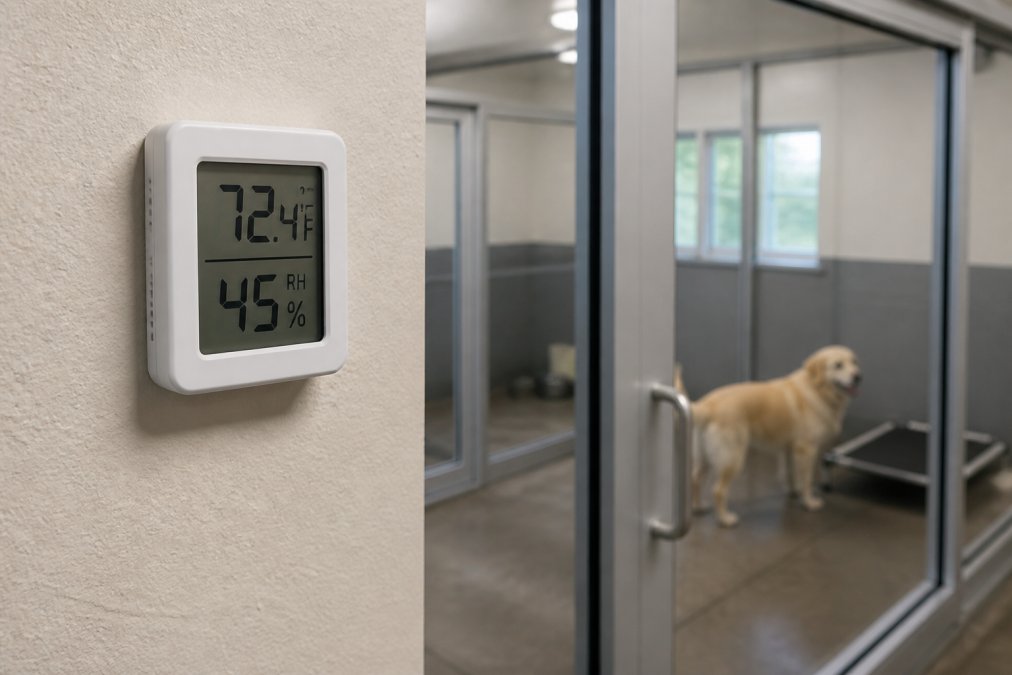
Floor-level temperature verification. Wall thermostats sit at head height, roughly 5 feet off the ground, but your dog spends most of its time at floor level, where temperatures can differ by 5-8 degrees. During your tour, place a portable thermometer on the floor of a kennel suite and wait five minutes. If the reading is more than 3 degrees off the wall thermostat, the climate control is not reaching the spaces that matter.
Backup power systems. Climate control is only as reliable as the electrical grid feeding it. Ask whether the facility has a permanently installed backup generator and what percentage of the building it covers, a generator that powers only lights and refrigerator leaves the HVAC dead during a summer outage. Also ask about the protocol for extreme weather events, such as emergency transfer agreements or around-the-clock staffing during heat advisories.
A truly climate controlled facility treats these systems as infrastructure, not amenities. Staff should answer technical questions about set points, humidity targets, and filter ratings without hesitation; if they cannot, the climate control is likely decorative.
Luxury Dog Boarding for Senior Dogs: Extra Comfort and Care
Luxury dog boarding for senior dogs focuses on reducing joint strain, managing medication schedules, and providing gentle, low-impact activity. Older dogs often need orthopedic bedding, ramp access, and more frequent bathroom breaks. A climate-controlled environment is especially valuable for seniors because temperature changes can aggravate arthritis.
Senior dogs also need behavioral patience. A young dog may thrive on group play, but an older dog often prefers quiet, private time with staff attention. The best facilities offer private suites with scheduled outdoor exercise matched to their stamina. Ask whether staff can administer medications, including supplements and injections, and whether they track daily appetite and water intake.
Wellness checks should happen daily and be documented. If your dog has a chronic condition, confirm the facility keeps your veterinarian's contact information on file and has a clear protocol for reaching out. Look for enrichment suited to an older dog, such as gentle nose-work games or short, leashed walks.
Dog Boarding Requirements for Vaccinations: What You Need to Provide
Dog boarding requirements for vaccinations typically include proof of rabies, distemper, and Bordetella, plus a negative fecal test. Bring current vaccination records at check-in; many facilities will contact your veterinarian to verify history if you forget the paperwork.
Kennel cough prevention relies on more than vaccination, since the vaccine does not cover every strain. Look for a facility that enforces a 48-hour waiting period between Bordetella vaccination and boarding. Daily disinfection of suites and shared play areas reduces transmission risk more than any single vaccine.
Your dog should be on a consistent flea, tick, and heartworm prevention program before boarding. If your dog is due for any vaccine, schedule the appointment at least one week before boarding to allow the immune system time to respond fully.
How to Prepare Your Dog for Boarding: A Step-by-Step Guide
Preparing your dog reduces separation anxiety and helps the transition feel routine rather than alarming.
- Schedule a trial visit. Bring your dog for a half-day of daycare before the overnight stay. This lets your dog learn the scents, sounds, and staff without the pressure of an overnight absence.
- Pack familiar items. Send a shirt that smells like you, your dog's regular food, and a favorite toy. Familiar scents lower stress hormones and help your dog settle.
- Maintain your routine. Feed your dog at the same times you would at home and keep the same morning walk schedule. Predictability is calming.
- Skip the dramatic goodbye. Keep departures brief and calm. Extended farewells can signal that something is wrong and increase anxiety.
- Share health details. Provide your veterinarian's contact information, a list of medications with dosages, and any behavioral notes that help staff care for your dog.
Anxiety management matters most during the first 24 hours. Many dogs pace or refuse food initially, and experienced staff respond with quiet reassurance and enrichment. Ask whether the facility offers private play sessions for nervous dogs and whether they send photo updates.
Compare Marlboro Boarding Options: Amenities and Pricing
Pricing for climate controlled dog boarding in the Marlboro area typically falls into three tiers. Understanding what each tier includes, and excludes, prevents surprise charges at checkout.
Standard climate controlled boarding ($45-$65 per night). This tier includes a temperature-regulated indoor suite, scheduled group play, and basic feeding. It often excludes outdoor exercise beyond a 10-minute bathroom break, medication beyond oral pills, photo updates, and individualized enrichment. Some facilities charge extra for a second daily play session ($10-$15) or a webcam suite upgrade ($5-$8 per night).
Premium boarding ($65-$95 per night). This tier adds private or semi-private play sessions, daily photo updates, medication administration (including injections), and orthopedic bedding. Climate control typically includes zoned HVAC and humidity monitoring. Many premium facilities include a complimentary bath for stays of five nights or more, a $25-$40 value. Some charge $8-$12 per day for a "signature" raw or fresh-cooked meal plan.
Luxury suites ($95-$150 per night). This tier offers suite-style accommodations with raised cots, individual webcams, multiple daily private play sessions, and a dedicated staff member per 8-10 dogs. Climate control extends to individual suite ventilation points. Luxury facilities often include grooming add-ons and may offer trail walks ($15-$20) or one-on-one training sessions ($25-$40 per 30 minutes).
Fee structures to scrutinize. The daily rate is rarely the final number. Common additional charges include:
- Holiday surcharges: Most facilities add $10-$20 per night for major holidays (Thanksgiving, Christmas, New Year's, July 4th). Some extend surcharges to the entire week surrounding the holiday.
- Medication fees: Oral medication is often included at premium tiers, but injectable medications (insulin, allergy shots) may carry a $5-$15 per day administration fee.
- Late pickup fees: Facilities typically require pickup by 10:00-11:00 AM on the final day. Pickup after that time triggers an additional half-day or full-day charge, often $25-$45.
- Trial day fee: Some facilities require a half-day daycare evaluation before the first overnight stay, costing $25-$40. This fee is sometimes credited toward the first boarding stay.
- Fecal test requirement: If your dog does not have a current fecal test on file, the facility may require one at your vet's office or offer on-site testing for $30-$50.
What the base rate should always include. Regardless of tier, the nightly rate should cover: the climate controlled suite, all meals (with food you provide), fresh water, daily cleaning, at least two outdoor bathroom breaks, and 24/7 supervision. If a facility charges extra for any of these basics, that is a red flag.
Value comparison beyond price. A $60-per-night facility charging $15 for medication, $10 for a second play session, and $8 for photo updates costs $93 per night before taxes. An $85-per-night premium facility with all-inclusive pricing may be the better value. Ask for a written estimate that includes your dog's specific needs and compare the totals, not the advertised nightly rates.
Discounts and packages. Many facilities offer multi-dog discounts (typically 10-15% off the second dog) and monthly daycare packages. Some offer 10% off stays of 10 nights or more, and military or first-responder discounts are becoming more common. Ask about loyalty programs, some offer a free night after 10 accumulated nights.
| Feature | Standard Facility ($45-$65/night) | Premium Facility ($65-$95/night) | Luxury Facility ($95-$150/night) |
|---|---|---|---|
| Temperature control | Central heat/AC | Zoned HVAC, humidity monitoring | Individual suite ventilation, full climate envelope |
| Resting areas | Standard runs | Private suites with raised beds | Orthopedic beds, webcams |
| Supervision | Overnight attendant | 24/7 on-site professional staff | Dedicated staff, low dog-to-staff ratio |
| Play options | Scheduled group play | Private or open play sessions | Multiple daily private sessions |
| Senior care | Basic feeding/walks | Orthopedic bedding, medication admin | Full medical monitoring, individualized care plans |
| Vaccination enforcement | Bordetella required | Full records + fecal test | Full records + fecal test + trial day |
| Enrichment | Occasional toys | Daily structured activities | Custom enrichment, training add-ons |
| Photo updates | Not included | Daily included | Webcam access, multiple daily updates |
| Holiday surcharge | $10-$20/night | $10-$20/night | Often included in rate |
A facility that advertises climate control but charges for every amenity may cost more than a premium facility with transparent, all-inclusive pricing. The cheapest advertised rate is rarely the cheapest total invoice. The value calculation should include what is covered, not just what is charged.
Book a Tour of a Marlboro Climate Controlled Facility
The best way to evaluate a climate controlled dog boarding facility is to see it in person, and any reputable facility should welcome a tour. Observe the behavior of the dogs currently boarding, are they relaxed and sleeping, or pacing and barking? Do staff interact warmly with the animals?
Ask to see the isolation area and confirm it has separate ventilation from the main boarding area. Check outdoor exercise runs for secure fencing, shade, and clean surfaces. If you have an aggressive rescue dog or a puppy with special needs, ask directly whether staff has experience with those cases and how they manage introductions.
Ruffin' It Ranch provides premier, 24/7 pet boarding, daycare, and grooming services in a climate-controlled environment designed for your pet's comfort. With highly trained staff and spacious private indoor and outdoor runs, we offer individualized care for all dogs, including puppies and those with special needs. Schedule a tour before making a boarding decision.
Choosing climate controlled dog boarding in Marlboro comes down to verifying the details that keep your dog healthy and calm. Temperature stability, staffing ratios, vaccination enforcement, and senior care protocols all deserve your attention before you book. Ruffin' It Ranch combines a climate-controlled environment with 24/7 on-site professional staff and individualized care. Book your pet's stay now for peace of mind.
Frequently Asked Questions
Does climate control help reduce stress in boarded dogs?
Yes. A stable temperature between 68-72°F prevents the physical stress of overheating or getting cold, which lets dogs settle more easily. When a dog is comfortable, they are less likely to pace, pant excessively, or show signs of anxiety. Climate controlled dog boarding also keeps the air moving and fresh, which reduces the buildup of odors and airborne irritants that can make a dog restless.
How does temperature regulation affect senior dogs during boarding?
Senior dogs have a harder time regulating their own body temperature, so they feel extreme heat and cold more intensely. A climate controlled environment keeps a senior dog's joints from stiffening in cold air and prevents overheating during summer play. For luxury dog boarding for senior dogs, look for facilities with private suites, extra bedding, and staff who can adjust the room temperature or offer additional warmth if needed.
What are the dog boarding requirements for vaccinations at most facilities?
Most facilities require proof of current Rabies, Distemper (DHPP), and Bordetella (kennel cough) vaccinations. Some also recommend the Canine Influenza vaccine. You must bring your dog's vaccination records at check-in, and many facilities require them to be administered at least two weeks before the stay to ensure immunity. Call ahead to confirm the exact dog boarding requirements for vaccinations, as policies vary.
What should I pack for my dog's stay at a climate controlled boarding facility?
Bring your dog's regular food in a sealed bag to avoid stomach upset, along with any medications and clear instructions. Many facilities provide fresh bedding, but bringing a t-shirt that smells like you can help comfort an anxious dog. Avoid bringing bowls, large toys, or anything you would be upset to lose. Most climate controlled dog boarding facilities include enrichment toys and supervised playtime as part of the stay.