 comparison
Dog Boarding Alternatives to AHC Marlboro
Table of Contents
- Why Pet Owners Seek Dog Boarding Alternatives
- Premium Facility-Based Dog Boarding Alternatives
- In-Home Pet Sitting and Professional Pet Care Services
- How to Choose a Dog Boarding Facility That Meets Your Needs
- Luxury Dog Boarding for Senior Dogs and Special Needs
- What to Pack for Dog Boarding: Essential Preparation
- Comparison of Boarding Options: Pros and Cons
- Frequently Asked Questions
Last Updated: September 25, 2026
Why Pet Owners Seek Dog Boarding Alternatives
Some pet owners have experienced issues with traditional kennels, overly crowded facilities, or services that don't match their dog's specific needs. Understanding why pet owners search for dog boarding alternatives helps you find the right fit for your companion.
Premium Facility-Based Dog Boarding Alternatives
Resort-Style Boarding with 24/7 Care
Resort-style boarding facilities offer spacious accommodations, multiple play sessions, and round-the-clock supervision with climate-controlled environments, both indoor and outdoor runs, and trained staff focused on pet comfort and socialization.
Local Boarding Facilities with Established Reputations
Community-based boarding facilities offer a middle ground: more personal attention than large commercial kennels at a more accessible price point than luxury resorts. They excel at understanding the local pet community and often have relationships with nearby veterinary clinics. The trade-off is fewer amenities than premium resorts and potentially limited specialized services like raw diet preparation or advanced grooming.
In-Home Pet Sitting and Professional Pet Care Services
In-home pet sitting keeps your dog in familiar surroundings, reducing stress for anxious dogs. Platforms connect pet owners with local, independent sitters who offer transparent pricing and verified profiles. Advantages include flexibility and comfort of home; drawbacks include no dog-to-dog socialization and variable quality between sitters, requiring thorough vetting.
How to Choose a Dog Boarding Facility That Meets Your Needs
Selecting the right boarding facility requires systematic evaluation across safety, staff competency, facility conditions, and service quality.
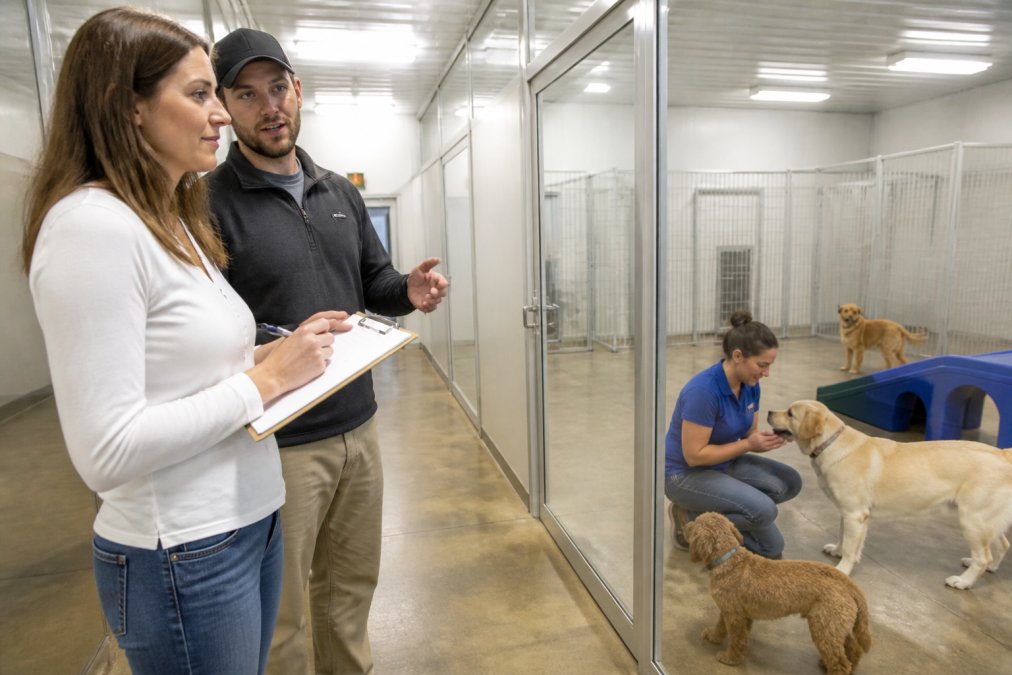
The Boarding Facility Evaluation Checklist
Use this checklist during your facility visit to compare options objectively:
Staffing and Training
- What is the staff-to-dog ratio during peak hours and overnight? (Industry standard: 1 per 8-12 dogs during day; 1:15 overnight)
- Are staff trained in pet first aid and CPR?
- What is the protocol for handling dog-to-dog conflicts or behavioral incidents?
Facility Safety and Sanitation
- Are runs cleaned daily and disinfected?
- Is temperature maintained between 65-75°F year-round?
- Are dogs separated by size, age, and temperament?
- What is the vaccination policy? (Minimum: rabies, DHPP, bordetella)
- How are medical emergencies handled? Is a veterinarian on call 24/7?
- Are there secure fences and containment systems?
Exercise and Enrichment
- How many supervised play sessions occur daily and for how long?
- Are play groups separated by size and temperament?
- Can private play sessions be arranged if needed?
- Do dogs have outdoor access throughout the day?
Communication and Transparency
- Does the facility provide daily updates (text, email, or photos)?
- Can you speak with staff about your dog's day?
- Will they accommodate special requests and medication timing?
- Do they require a meet-and-greet before boarding?
Special Needs Accommodation
- Can they administer medications on schedule and verify correct dosing?
- Do they offer dietary accommodations (raw diets, prescription foods, allergy-friendly meals)?
- How do they handle senior dogs or those with mobility issues?
- Can they manage dogs with anxiety, aggression, or fear-based behaviors?
Red Flags During a Facility Tour
Red flags include: dogs caged for more than 4 hours without breaks, visible feces or odor, aggressive interactions without intervention, staff unwilling to answer questions, no written contract, staff seeming rushed or indifferent, no veterinary oversight, or stressed dogs with no intervention.
Questions to Ask References
Ask the facility for contact information from at least three recent clients. When you call, ask: How long has your dog been boarding here? Does your dog seem happy when picked up? Have there been any incidents or behavioral changes? How responsive is staff to questions?
Evaluating Staff Credentials and Safety Protocols
The quality of care depends on staff training, certifications, and experience with behavioral challenges. Ruffin' It Ranch maintains 24/7 on-site staff, signaling that the facility prioritizes safety. Ask how they handle medical emergencies, aggressive interactions, and vaccination requirements. A reputable operation will welcome references from satisfied customers.
Assessing Facility Amenities and Space
Tour the facility in person and look for climate control, outdoor space, and comfortable rest areas. Premium facilities like Ruffin' It Ranch offer both indoor and outdoor runs. Ask about exercise routines, supervised playtime frequency, and whether private play sessions are available. Inquire about grooming facilities if needed.
Luxury Dog Boarding for Senior Dogs and Special Needs
Senior dogs and those with medical conditions need specialized care including medication administration, dietary accommodations, and frequent rest periods. Ruffin' It Ranch offers a signature crafted raw diet. When selecting a facility for a dog with special needs, confirm staff can administer medications on schedule, monitor for distress, and adjust activity levels. Request written daily updates.
| Special Need | Key Questions to Ask | What to Prioritize |
|---|---|---|
| Separation anxiety | How do you manage anxious dogs? | Individualized attention, calm environment |
| Aggression toward other dogs | Do you have experience with aggressive dogs? | Private runs, one-on-one handling |
| Medical conditions | Can you administer medications? | Staff training, veterinary oversight |
| Senior age | How do you accommodate older dogs? | Rest periods, limited activity, comfort |
| Dietary restrictions | Can you prepare specialized meals? | Raw diet prep, allergy management |
What to Pack for Dog Boarding: Essential Preparation
Pack your dog's regular food, detailed feeding instructions, medication schedules, and comfort items like a favorite toy or blanket. Document your dog's routine (wake time, meal times, exercise schedule, behavioral quirks), emergency contact information, veterinarian details, and authorization for emergency medical care. Include vaccination records and clearly labeled medication doses with administration instructions.
Comparison of Boarding Options: Pros and Cons
Each boarding option serves different needs and comes with distinct cost and value trade-offs. Understanding the financial and practical differences helps you choose the option that delivers the best value for your situation.
| Boarding Type | Best For | Typical Price Range | Pros | Cons | Value Sweet Spot |
|---|---|---|---|---|---|
| Resort-style facility | Dogs needing socialization, supervision, and enrichment | $60-$120+ per night | 24/7 staff, multiple play sessions, amenities, medical oversight, specialized services | Higher cost, facility environment (not home), may require adjustment period | Dogs with high social needs, owners prioritizing comprehensive care over cost |
| Local boarding facility | Standard boarding needs, budget-conscious owners, dogs comfortable in kennels | $35-$65 per night | Community reputation, reliable service, lower cost, established relationships with local vets | Limited amenities, may have capacity limits, less personalized attention, basic accommodations | Dogs without anxiety, owners seeking reliable care at moderate cost |
| In-home pet sitting | Anxious dogs, medical needs, home comfort preference, single dogs | $25-$60 per visit (typically 2-3 visits daily) | Familiar environment, flexible scheduling, personalized care, reduced stress for anxious dogs, no facility adjustment | No dog socialization, quality varies significantly by sitter, requires thorough vetting, less oversight | Senior dogs, anxious dogs, dogs with medical conditions, single-pet households |
| Professional pet care platform | Owners seeking competitive pricing, variety of providers, transparent reviews | $20-$55 per visit | Wide variety of providers, transparent pricing and reviews, flexible scheduling, often cheaper than facilities | Variable quality standards, less facility oversight, sitter may be less experienced, no emergency backup | Budget-conscious owners, dogs without special needs, owners comfortable with variable quality |
Cost-Benefit Analysis by Budget Level
Budget-Conscious Local boarding facilities or in-home pet sitting offer options for various budgets. This works for healthy, well-adjusted dogs but may not suit anxious or medically complex pets.
Value Comparison: What You Actually Get
Staff-to-Dog Ratio and Supervision Resort facilities typically maintain specific staff-to-dog ratios during the day and overnight. Local facilities may have different ratios. In-home sitters provide 1-on-1 attention but only during scheduled visits. If your dog has behavioral issues or medical needs, a higher staff-to-dog ratio at premium facilities can be beneficial.
Making the Financial Decision
Consider these questions:
- How often will you board? If you board frequently, investing in a premium facility with a good fit for your dog may be more cost-effective than constantly trying different options.
- What is your dog's temperament? Anxious dogs may need in-home sitting despite higher per-visit costs. Social dogs thrive in facilities and justify the expense.
- Do you have special needs? Medical conditions, behavioral challenges, or dietary restrictions often require premium facilities, making the higher cost necessary rather than optional.
- What is your peace-of-mind threshold? Some owners are willing to pay more for 24/7 supervision and real-time updates. Others are comfortable with less oversight if they trust the provider.
The cheapest option is rarely the best value. The best value is the option that keeps your dog safe, comfortable, and happy while fitting your budget, and that varies by dog and situation.
Frequently Asked Questions
What should I look for in a professional dog boarding facility?
Prioritize facilities with 24/7 on-site staff, climate-controlled environments, and verified safety protocols. Check for staff credentials, vaccination requirements, and whether the facility can handle your dog's specific needs, separation anxiety, aggression, or medical conditions. Read client reviews and ask about supervision methods, exercise routines, and how they manage emergencies. Visit in person if possible to assess cleanliness, space, and staff interaction with animals.
Can dogs with special needs be accommodated at boarding facilities?
Yes, many facilities specialize in caring for dogs with aggression, anxiety, medical conditions, or age-related needs. When evaluating dog boarding alternatives, ask directly about experience with your dog's specific condition. Premium facilities like those offering individualized care plans can provide private runs, customized exercise schedules, and specialized diets. Always provide detailed medical history and behavioral notes to ensure proper care.
What are the benefits of climate-controlled dog boarding?
Climate control maintains consistent temperature and humidity, reducing stress on your dog and preventing heat-related illness or cold exposure. This environment is especially critical for senior dogs, puppies, and breeds sensitive to temperature extremes. Climate-controlled facilities also minimize respiratory issues and allow for comfortable indoor-outdoor transitions. When comparing dog boarding alternatives, prioritize this feature for year-round comfort and safety.
How do I prepare my dog for their first boarding experience?
Start by visiting the facility with your dog to familiarize them with the environment. Pack comfort items like their bed, favorite toys, and familiar-smelling blankets. Provide detailed information about feeding schedules, medications, behavioral triggers, and exercise preferences. Consider a trial daycare visit before overnight boarding. Maintain a calm departure routine, avoid prolonged goodbyes. Discuss any anxiety concerns with staff so they can provide extra attention and reassurance.