 how-to
Dog Boarding for Aggressive Dogs: Safety First
Table of Contents
- Why Standard Boarding Fails Aggressive Dogs
- Boarding for Reactive Dogs: What to Look For
- Kennel Requirements for Aggressive Dogs
- How to Prepare a Reactive Dog for Boarding
- Emergency Plans and Liability Waivers You Should Expect
- Conclusion: Finding a Facility That Prioritizes Safety
- Frequently Asked Questions
Last Updated: September 8, 2026
Finding safe dog boarding for aggressive dogs requires a facility that understands reactivity, fear-based aggression, and trauma, not just one that tolerates it. Below, we explain exactly what to look for and how to prepare your dog, ensuring you choose a boarding facility that prioritizes safety above everything else.
Why Standard Boarding Fails Aggressive Dogs
Most boarding facilities operate on a group-play model where dogs are expected to socialize freely. For a dog with leash reactivity, resource guarding, or past trauma, that environment is a recipe for disaster, leading to defensive aggression, injuries, and deep stress.
Traditional kennels also lack the staffing ratios and behavioral knowledge to de-escalate tense moments. Isolating an aggressive dog in a cage for the entire stay worsens anxiety and reinforces negative behaviors, ignoring the dog's underlying emotional state rather than managing triggers.
Boarding for Reactive Dogs: What to Look For
Boarding for reactive dogs is a specialized service that prioritizes individual care, secure handling, and trigger management over group socialization. The best facilities treat your dog's stay as a behavioral management plan, assessing each dog's history and temperament before accepting them.
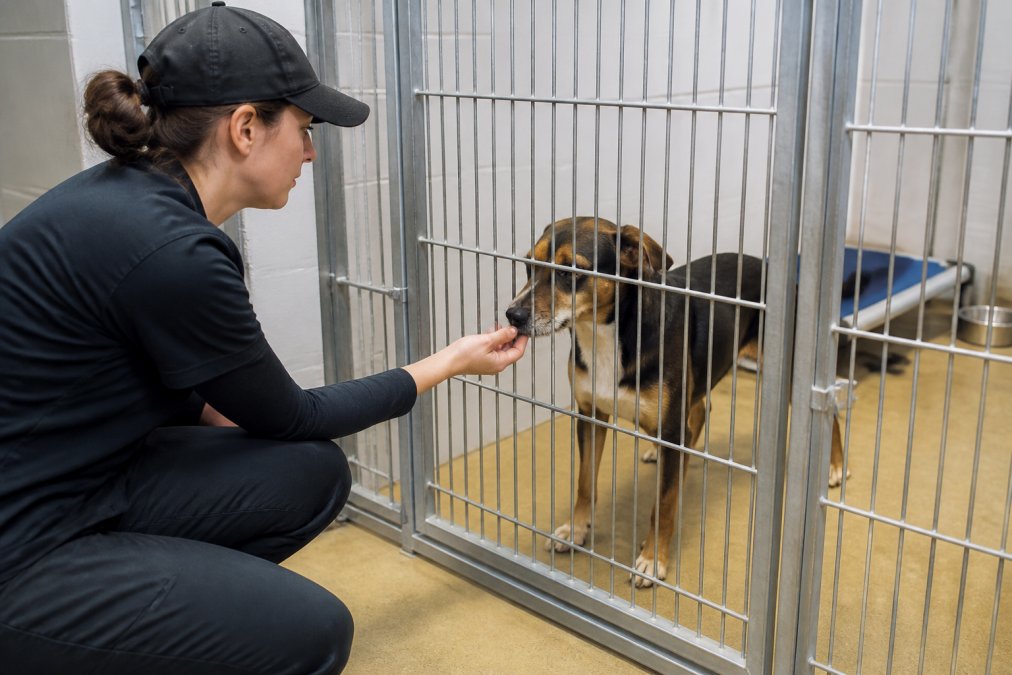
When touring a facility, ask about their specific experience with aggression. A reputable facility will be transparent about their protocols for handling a reactive dog, explaining how they read body language and intervene before a situation escalates.
Staff Training and Behavioral Assessment
A qualified facility employs staff trained in positive reinforcement and canine body language, not just basic pet care. The intake process must include a thorough behavioral assessment where you disclose triggers, bite history, and past trauma, allowing the team to build a care plan that avoids known stressors. Look for a team that asks about daily habits, not just vaccination records.
Individual Care and Secure Facilities
The physical environment is just as critical as the people. Aggressive dogs need private, secure kennels with solid barriers that prevent visual contact with other dogs, reducing barrier frustration. Ask about the staff-to-dog ratio and 24/7 monitoring. The facility should offer individual play sessions in a securely fenced area rather than forcing interaction.
Kennel Requirements for Aggressive Dogs
A standard chain-link run is not secure for a dog that may lunge, bite, or attempt to escape when stressed. When evaluating a kennel, you are looking for a containment system designed for worst-case scenarios.
Containment and Escape Prevention
The most critical feature is a double-gated entry system, or airlock, where staff enter a vestibule, close the door, then open the inner door to the run. This prevents bolting during feeding or cleaning. Ask if the facility uses this system for every entry.
Solid walls between runs are non-negotiable. Chain-link fencing triggers barrier frustration and can lead to fighting through the fence. Solid materials like sealed concrete block or heavy-gauge sheet metal prevent this. Walls must be high enough to deter climbing, with a secure roof or inward-angled top.
Emergency Contingency: The Escape Plan
A facility that boards aggressive dogs must have a documented, rehearsed escape plan. Ask these specific questions:
- What is the protocol if a dog slips its collar or breaks a leash during a potty break? The answer should not be "we would catch it." A professional facility has a plan that includes closing perimeter gates, deploying a second staff member to a strategic exit point, and using high-value treats or a slip lead to safely recover the dog without chasing it (which escalates arousal).
- Are there secondary containment barriers? A secure facility has a fenced perimeter around the entire kennel building, so even if a dog escapes an individual run, it is still within a secure outer area.
- Do they have a relationship with a local animal control or a microchip recovery service? While you hope it never happens, knowing they have a pre-established protocol for a lost dog, including who to call and what information to provide, is a significant trust signal.
Environmental Stress Reduction
Beyond security, the environment must reduce arousal. Look for:
- Sound-dampening materials: Acoustic panels on ceilings or baffles in hallways reduce the echo of barking, which can create a feedback loop of anxiety. A quiet kennel is a safer kennel.
- Independent ventilation: Each run should have its own air supply or the facility should have a high-quality HVAC system with sufficient air changes per hour to prevent the spread of airborne pathogens and odors. A stressed dog pants more, and poor air quality can exacerbate respiratory issues.
- Non-slip flooring: Concrete that is too smooth can cause a dog to slip and injure itself during a sudden lunge. Sealed, textured concrete or rubber matting provides traction and is easier to sanitize than porous surfaces.
Finally, ask about the cleaning schedule. A strong chemical smell can be a trigger for stressed dogs. The facility should use enzymatic cleaners that break down waste without harsh residues that irritate a dog's respiratory tract or paws (the CDC).
How to Prepare a Reactive Dog for Boarding
Preparation begins weeks before the stay. Ensure your dog gets vigorous exercise in the days leading up to it so they arrive tired and more receptive to rest. Keep your own anxiety in check; dogs read our stress, and a calm drop-off sets a better tone.
Pack familiar items that carry your scent, such as a worn t-shirt or favorite blanket. Provide clear, written instructions for the staff regarding feeding times, favorite toys, and specific commands. The more information you share, the more consistent the care will be.
Muzzle Training and Medication Protocols
If your dog has a bite history, a facility may require muzzle training, a safety measure, not a punishment. Acclimate your dog to a well-fitted basket muzzle at home using positive reinforcement, associating it with treats and calm behavior.
For medication, bring medications in their original packaging with a written schedule. Ask how the facility ensures the correct dosage at the right time, especially for anxiety medication. A facility equipped for these protocols demonstrates a level of care standard kennels lack.
Emergency Plans and Liability Waivers You Should Expect
For an owner of an aggressive dog, the worst-case scenario is a behavioral incident that results in injury. A professional facility must have a clear, documented plan for both medical and behavioral crises, and you must understand the legal framework governing liability.
Medical Emergency Protocols
A facility that boards high-risk dogs should have a written medical emergency plan shared at intake (avma.org). This plan should include:
- A designated veterinary hospital: They should have a pre-existing relationship with a 24/7 emergency vet clinic, not just a local vet that is open during business hours. Ask for the name of the hospital and the approximate transport time. If they are more than 30 minutes from an emergency vet, ask how they handle stabilization (avma.org).
- A chain of command: Who is responsible for making the call to the vet? Who is authorized to authorize treatment if you cannot be reached? The facility should have a signed veterinary release form that allows them to seek immediate care, with a clear financial limit (e.g., up to $500) before they are required to call you for approval.
- Transport protocols: For an aggressive dog, transport to a vet is a high-risk event. The facility must have a plan for safely moving a panicked or painful dog. This includes having a properly fitted basket muzzle and a secure crate or a crash-tested harness for transport. Ask if they have a dedicated vehicle or if they use a commercial pet transport service that is equipped to handle reactive dogs.
Behavioral Emergency Protocols: The Bite Incident Plan
A weak facility will be vague about bite incidents. A strong facility will have a specific, step-by-step protocol that includes:
- Immediate separation: The priority is to safely separate the dogs or remove the dog from the situation without putting staff at further risk. This often involves using a barrier (like a solid panel or a leash) rather than reaching in with bare hands.
- Assessment and first aid: Staff should be trained in basic canine first aid, including how to clean and bandage a bite wound. They should know the difference between a minor puncture and a wound that requires immediate veterinary attention.
- Incident documentation: A professional facility will document every incident in writing, including what triggered it, the staff response, and the outcome. This documentation is critical for your vet and for understanding your dog's behavior.
- Notification: You must be notified immediately, not at pickup. The facility should have a clear policy on when they will call you, and they should be transparent about the incident, even if it was minor.
Insurance and Liability Waivers: The Legal Side
You will be asked to sign a liability waiver before your dog's stay. This is standard practice for any facility boarding a dog with a known bite history, but you need to understand what you are signing.
- What the waiver covers: Typically, a waiver releases the facility from liability for injuries to your dog or damage to their property caused by your dog's behavior. It may also hold you responsible for veterinary costs for other dogs or staff members if your dog initiates a fight.
- What the waiver does NOT cover: A waiver cannot legally protect a facility from gross negligence. If your dog is injured because a staff member left a gate open, or because they ignored a known trigger you disclosed at intake, the waiver may not hold up in court. This is why the behavioral assessment is so important, it creates a documented record of what the facility knew.
- Ask for proof of insurance: A reputable facility will carry commercial liability insurance that covers dog bites. Ask to see their certificate of insurance. If they are evasive or cannot provide proof, this is a major red flag. Their insurance should cover both property damage and bodily injury claims.
Finally, consider your own insurance. Some homeowners' or renters' policies exclude dog bites, and if your dog has a history of aggression, you may need a separate liability policy. Before booking, confirm your coverage is active and understand your financial responsibility in an incident.
Conclusion: Finding a Facility That Prioritizes Safety
Choosing dog boarding for aggressive dogs is about finding a partner who treats your dog's behavioral needs with the same seriousness as a medical condition. The right facility combines professional training, secure facilities, and a genuine commitment to individual care. Our 24/7 on-site staff and climate-controlled environment with spacious private indoor and outdoor runs are designed for dogs that need a little more space and understanding. Book your pet's stay now and give yourself peace of mind.
Frequently Asked Questions
Will boarding kennels take aggressive dogs?
Many standard kennels will not accept dogs with a history of aggression due to safety risks and liability concerns. However, specialized facilities like Ruffin' It Ranch are equipped to handle them. Look for a boarding facility that performs a behavioral assessment, has staff trained in de-escalation and positive reinforcement, and offers secure, private runs. This type of specialized handling ensures your dog's needs are met safely. Always be upfront about your dog's behavior history when you call.
What questions should I ask a kennel before boarding an aggressive dog?
Ask about their experience with fear-based aggression and resource guarding. Inquire about their staff-to-dog ratio and whether someone is on-site 24/7. Confirm they use secure kennels and offer individual play sessions rather than group play. Ask how they handle medication administration and what their emergency contingency plans are. Finally, request details about their liability waiver and whether they provide post-boarding behavioral reports. Their answers will show if they offer the specialized handling your dog requires.
How do I prepare my reactive dog for a boarding stay?
Start with short visits to the facility so your dog can acclimate to the new smells and staff. Practice muzzle training at home using positive reinforcement so it is a low-stress experience. Ensure your dog's vaccinations are current and provide clear, written instructions for any medication administration. Pack familiar items like a favorite toy or blanket to reduce kennel stress. Being transparent about your dog's triggers and past trauma helps the staff implement the right trigger management plan.
What is the difference between standard boarding and behaviorally-aware boarding?
Standard boarding often focuses on group play and general socialization, which can be dangerous for a reactive dog. Behaviorally-aware boarding, like the care at Ruffin' It Ranch, provides individual care in secure, private runs. The environment is a controlled one, with safety protocols designed to prevent incidents and reduce anxiety for dogs that need specialized handling.