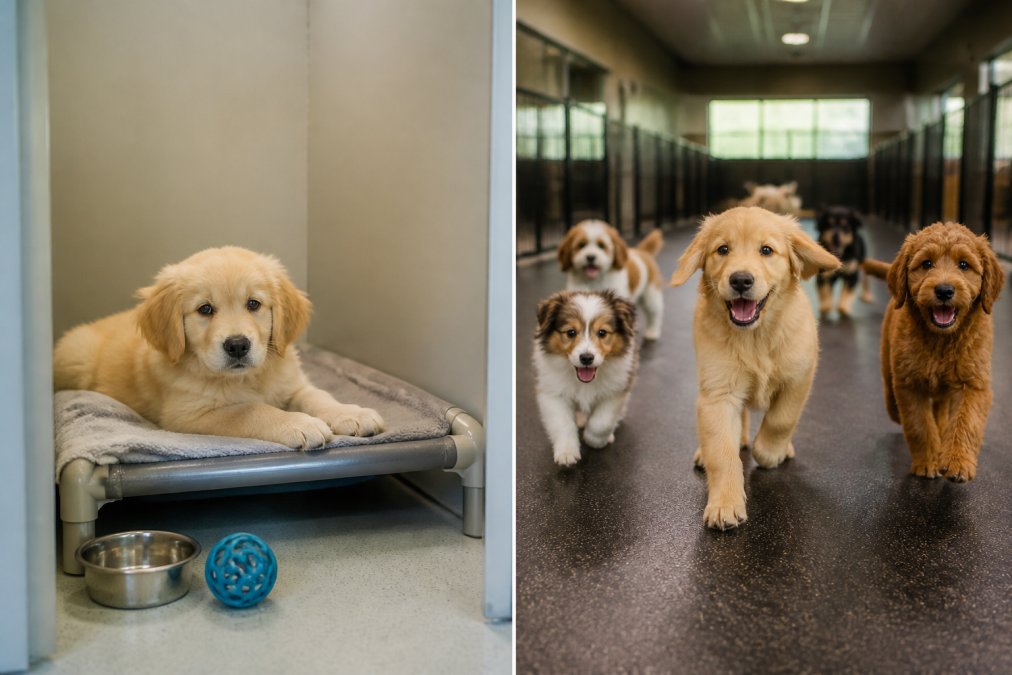
 comparison
Dog Boarding vs Daycare for Puppies: A Complete Guide
Table of Contents
- Dog Boarding vs Daycare: Core Differences
- What Daycare Offers Puppies
- What Overnight Boarding Provides
- Puppy Socialization Requirements for Group Care
- Dog Boarding Vaccination Requirements and Health Protocols
- Preparing a Puppy for Their First Boarding Stay
- How to Choose Between Boarding and Daycare for Your Puppy
- Frequently Asked Questions
Last Updated: September 18, 2026
Dog Boarding vs Daycare: Core Differences
Dog boarding vs daycare for puppies serves two distinct purposes in your puppy's care routine, and understanding the difference is essential before choosing which service fits your needs. Daycare is daytime supervision where your puppy plays, socializes, and receives exercise while you work. Boarding is overnight care that includes feeding, sleeping arrangements, and 24/7 supervision when you travel or need extended coverage.
The core distinction comes down to duration and environment. Daycare typically runs during business hours, often 7 AM to 6 PM, and returns your puppy home each evening. Boarding keeps your puppy at a facility overnight, sometimes for multiple consecutive nights, providing continuous care in a controlled setting. For puppies specifically, this difference matters significantly because young dogs are still developing their independence, bladder control, and emotional resilience.
Many puppy owners assume the two services are interchangeable, but they address different needs. A puppy attending daycare learns socialization in short bursts with structured breaks and transitions home. A puppy in boarding adapts to sleeping away from home, managing separation anxiety in a new environment, and following unfamiliar routines. Both build confidence, but in different ways.
At Ruffin' It Ranch, we recognize these distinctions and structure our services accordingly. Our daycare program focuses on active engagement during peak hours, while our boarding facility provides 24/7 climate-controlled care with individualized attention for puppies adjusting to overnight stays. The choice between them depends on your schedule, your puppy's temperament, and what developmental milestones you're targeting.
What Daycare Offers Puppies
Daytime care creates a structured social environment that's critical for puppy development. Daycare provides supervised playtime, mental stimulation through enrichment activities, and consistent interaction with staff and other puppies. Your puppy returns home tired, which often improves evening behavior and sleep quality.
For puppies under six months, daycare serves as a controlled introduction to group dynamics. Trained staff monitor play intensity, separate incompatible personalities, and intervene before conflicts escalate. This prevents negative socialization experiences that could create fear or aggression later. Puppies learn bite inhibition, appropriate play boundaries, and how to read other dogs' body language, skills impossible to teach at home.
The structured routine also supports housebreaking. Most daycare facilities enforce regular outdoor bathroom breaks, reinforcing your puppy's developing bladder control. Staff can report patterns ("He typically needs to go 30 minutes after eating") that help you establish consistent schedules at home.
Enrichment during daycare hours matters more than most owners realize. Puppies have high mental energy. Puzzle toys, scent games, and rotating activities prevent boredom-related destructive behavior that often emerges when puppies lack stimulation. A tired puppy is a well-behaved puppy.
Daycare also offers flexibility for working professionals. Rather than hiring a midday walker or leaving a puppy alone for eight hours, daycare provides continuous supervision and exercise. This is especially valuable for puppies aged 8 weeks to 6 months, when they cannot safely hold their bladder for extended periods.
What Overnight Boarding Provides
Boarding introduces your puppy to sleeping away from home, a skill that becomes essential as they mature. Unlike daycare, boarding includes overnight care, meal management, and the emotional challenge of adapting to an unfamiliar sleeping environment. For puppies, this teaches resilience and reduces separation anxiety when handled correctly.
Overnight facilities provide continuous supervision that prevents dangerous situations. A puppy left alone at night could chew electrical cords, ingest toxins, or panic if experiencing a medical issue. Boarding staff monitor sleep patterns, appetite, and bathroom habits throughout the night. This is particularly important for puppies transitioning from their mother's litter or adjusting to new homes.
Quality boarding facilities maintain climate control, which matters for puppies sensitive to temperature extremes. Young dogs regulate body temperature less effectively than adults. A climate-controlled kennel with appropriate bedding prevents stress from heat or cold.
Boarding also provides structured feeding under supervision. Puppies on specialized diets, raw food protocols, or medication schedules need careful monitoring. Ruffin' It Ranch's signature crafted raw diet option, for example, ensures puppies receive proper nutrition without owner stress about meal prep during travel.
The extended stay in a boarding environment builds confidence gradually. A puppy's first overnight stay is often stressful, but subsequent visits become easier as they recognize the facility, staff, and routine. This emotional growth, learning that separation is temporary and safe, carries over to other situations like veterinary visits or grooming appointments.
Puppy Socialization Requirements for Group Care
Socialization is the process of exposing your puppy to diverse people, animals, sounds, and environments during their critical developmental window (roughly 3 to 14 weeks). Both daycare and boarding can support socialization, but they do it differently.
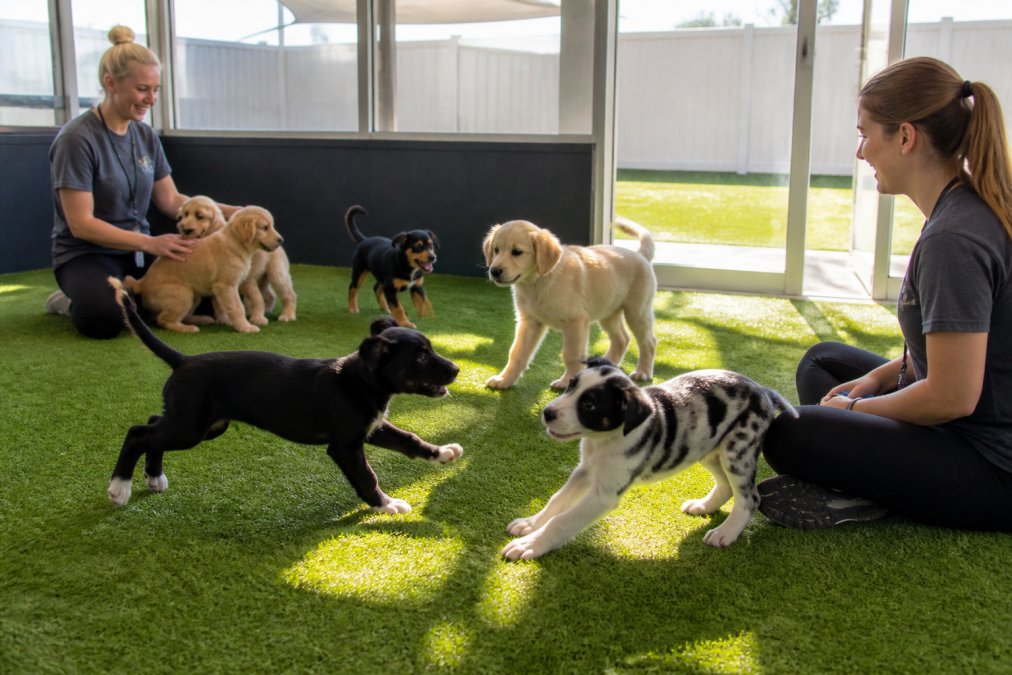
Daycare provides regular, predictable social interaction. Your puppy meets the same staff and peers multiple times per week, building familiarity and confidence. This repetition is crucial for puppies. Exposure without repetition doesn't stick; puppies need multiple positive experiences with the same stimuli to truly desensitize.
For boarding, socialization works differently. A puppy may meet new dogs and staff during their stay, but the primary focus is comfort in an unfamiliar setting. If your puppy is boarding for the first time, intense group play might overwhelm them. Experienced facilities offer private or semi-private play sessions for young or sensitive puppies, allowing socialization without overstimulation.
The staff-to-dog ratio directly impacts socialization quality. A ratio of one staff member per 4-6 puppies allows meaningful interaction. Higher ratios mean less individual attention and reduced ability to manage play dynamics. Ruffin' It Ranch maintains staffing levels that enable individualized attention, especially for puppies with special needs or anxiety.
Temperament assessment before group care is non-negotiable. Staff should evaluate your puppy's play style, fear responses, and comfort with novelty. Puppies showing signs of fear or aggression should start with private play before joining group sessions. Forcing a fearful puppy into group care can worsen anxiety rather than improve it.
Vaccination requirements protect the group. Most facilities require proof of current DHPP (distemper, hepatitis, parvovirus, parainfluenza) vaccination and often rabies protection. These requirements exist because puppies in group settings face higher disease exposure. Unvaccinated puppies should not attend group care, regardless of facility claims about "safe" environments.
Dog Boarding Vaccination Requirements and Health Protocols
Vaccination is the first line of defense in group care settings. Before your puppy attends daycare or boarding, your veterinarian should confirm completion of age-appropriate vaccines. Puppies typically receive their first DHPP vaccine at 6-8 weeks, with boosters every 3-4 weeks until 16 weeks old. Rabies vaccination typically occurs at 12-16 weeks.
Facilities require proof of vaccination before admission because unvaccinated puppies risk exposure to parvovirus, distemper, and other serious diseases. These pathogens survive in the environment and spread rapidly among young dogs. A single unvaccinated puppy can infect an entire facility.
Beyond vaccination, health protocols should include parasite prevention. Puppies should be on a deworming schedule and flea/tick prevention appropriate for their age and weight. Facilities may ask for proof of recent deworming or require it as a condition of attendance.
Pre-boarding health checks matter. A responsible facility will ask about your puppy's recent health history, current medications, and any behavioral concerns. This information helps staff prepare appropriate care. If your puppy has diarrhea, is on antibiotics, or shows signs of illness, reputable facilities will recommend postponing the stay to prevent spreading illness.
During boarding, staff should monitor for signs of illness: changes in appetite, lethargy, vomiting, diarrhea, or coughing. Facilities should have a relationship with a local veterinarian for emergency care. Your contact information and your vet's information should be on file before your puppy arrives.
Post-boarding observation is your responsibility. Monitor your puppy for 48-72 hours after returning home. If they develop symptoms of illness, contact your vet immediately.
Preparing a Puppy for Their First Boarding Stay
Preparation begins weeks before your puppy's first overnight stay. Start with short daycare visits to build comfort with the facility, staff, and other dogs. A puppy that's familiar with the environment will adjust to boarding more easily than one arriving for an overnight stay without prior exposure.
How to Choose Between Boarding and Daycare for Your Puppy
The decision between daycare and boarding depends on your circumstances, your puppy's temperament, and your long-term goals.
| Factor | Best for Daycare | Best for Boarding |
|---|---|---|
| Schedule | Working 8-hour days, need midday supervision | Traveling, extended absences, unpredictable hours |
| Puppy Age | 8 weeks to 6 months (bladder control developing) | 4+ months (can hold bladder overnight) |
| Temperament | Social, confident, enjoys group play | Anxious, needs one-on-one attention, adjusting to new home |
| Goal | Socialization, exercise, routine support | Separation resilience, independence, extended care |
| Frequency | Multiple times per week | Occasional (monthly or quarterly) |
| Cost Consideration | Monthly packages often reduce per-day rates | Single stays may cost more per night |
Frequently Asked Questions
At what age can puppies start dog boarding or daycare?
Most facilities require puppies to be at least 12-16 weeks old and have completed their initial vaccination series before attending group care. Younger puppies lack immunity and socialization skills needed for a kennel or daycare environment. Starting with short daycare visits (a few hours) is safer than overnight boarding for puppies under 6 months. Always confirm vaccination requirements with your chosen facility before enrollment.
What puppy socialization requirements should I know before choosing daycare?
Puppies need exposure to different dogs, people, and environments during their critical socialization window (3-14 weeks). Daycare provides controlled socialization through supervised playgroups, but your puppy must be healthy and vaccinated first. Look for facilities that assess temperament before mixing puppies together and offer age-appropriate groupings. Private play sessions are an option if your puppy isn't ready for group settings yet.
What dog boarding vaccination requirements do facilities typically enforce?
Most boarding facilities require current rabies, DHPP (distemper, hepatitis, parvovirus, parainfluenza), and Bordetella (kennel cough) vaccinations. Some require proof of vaccination at least 2 weeks before arrival. Puppies typically need a series of shots spaced 3-4 weeks apart until 16 weeks old. Ask your veterinarian when your puppy will be fully protected and confirm vaccination timelines with your boarding facility before booking.
How do I know if my puppy is ready for their first boarding stay?
Before preparing a puppy for their first boarding stay, ensure they're fully vaccinated, at least 4-6 months old, and comfortable with crate training. Start with a trial daycare visit to gauge their stress levels. Practice separation at home gradually. Bring familiar bedding or toys to the facility. Choose a facility offering private runs or small-group settings rather than large open kennels. A calm, supportive environment reduces anxiety during that first overnight experience.