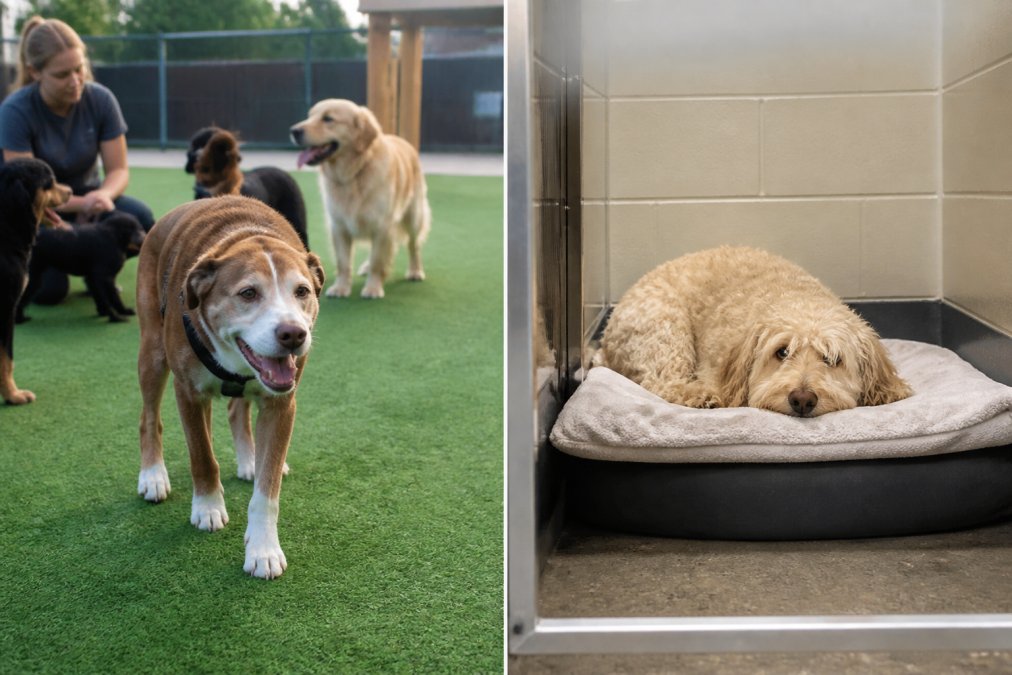
 comparison
Dog Daycare vs Boarding for Special Needs: Which Is Better?
Table of Contents
- Dog Daycare vs Boarding for Special Needs: What's the Real Difference?
- Quick Comparison: Daycare vs. Boarding for Special Needs Dogs
- Medical Boarding for Dogs: When a Standard Kennel Isn't Enough
- Signs of Stress in Dogs at Daycare: What to Watch For
- Questions to Ask Pet Boarding Facilities Before You Book
- How to Match Your Dog's Condition to the Right Care Setting
- Making the Final Call: Which Option Fits Your Dog's Needs?
- Frequently Asked Questions
Last Updated: September 7, 2026
Dog Daycare vs Boarding for Special Needs: What's the Real Difference?
Choosing between dog daycare vs boarding for special needs dogs is not about finding a place to keep your pet safe; it is about finding a facility that actively manages their medical and behavioral requirements around the clock. A standard kennel that provides food, water, and a bed is fundamentally different from a care setting equipped to administer medication, monitor chronic conditions, and de-escalate anxiety.
The gap comes down to supervision intensity and medical capability. Daycare offers daytime supervision and socialization, but not overnight care. Boarding covers extended stays, yet care quality depends on whether staff are trained for special needs. For owners of dogs with separation anxiety, mobility issues, or complex medication schedules, the wrong choice can turn a short trip into a health crisis.
Below, we show you how to evaluate each setting, what questions to ask before booking, and how to match your dog's condition to the right care environment.
Quick Comparison: Daycare vs. Boarding for Special Needs Dogs
The core distinction is simple: daycare is for daytime hours, while boarding is for overnight and extended stays. For special needs dogs, that distinction carries significant weight.
Daycare suits dogs that thrive on routine socialization and need structured daytime activity, provided a facility offers private or open play options. Boarding becomes necessary when you travel overnight and demands a higher level of veterinary-supervised care if your dog has medical needs.
| Care Setting | Best For | Key Consideration | Typical Duration |
|---|---|---|---|
| Daycare | Social dogs needing daytime activity | Staff-to-dog ratio and play group matching | 4-10 hours |
| Standard Boarding | Healthy dogs without medical needs | Kennel environment and exercise schedule | Overnight to weeks |
| Medical Boarding | Dogs with chronic conditions or medication needs | Veterinary-supervised care and monitoring | Overnight to weeks |
| In-Home Care | Anxious dogs that struggle in kennel settings | Sitter experience and one-on-one attention | Flexible |
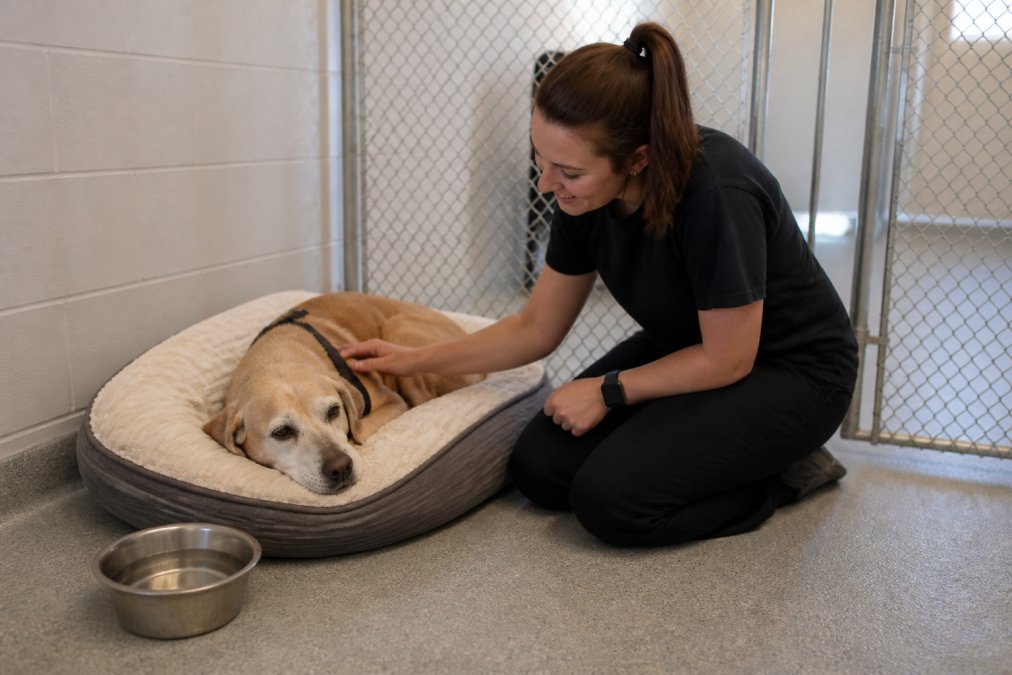
The deciding factor is whether your dog can safely participate in group settings. A friendly, healthy dog may do well in standard daycare. A dog with a heart condition, epilepsy, or severe anxiety requires a non-medical setting that still offers professional oversight, which is where medical boarding enters the picture.
Medical Boarding for Dogs: When a Standard Kennel Isn't Enough
Medical boarding for dogs is a specialized care option where trained staff manage medication administration, monitor chronic conditions, and provide individualized attention for dogs that cannot handle standard kennel environments. This is the critical distinction from standard boarding: a medical boarding facility operates with protocols for health monitoring and emergency response, not just feeding schedules.
Standard kennels are designed for healthy, social dogs. When your dog requires daily medication, has mobility assistance needs, or suffers from age-related concerns like arthritis or cognitive decline, those standard setups fall short. Missed doses, inability to recognize distress, or forced socialization can cause serious harm.
Facilities equipped for medical boarding typically offer human-only, non-group care options for dogs that cannot socialize. They maintain structured, low-stress environments that keep anxious or reactive dogs separate from high-energy groups. Staff are trained to recognize subtle signs of pain or distress that a general boarding attendant might miss.
Medication Administration: The Protocols That Matter
A facility's claim of "we can give meds" is not sufficient for a dog with a complex regimen. For example, a dog with diabetes requires insulin injections at precise intervals, typically 12 hours apart, and the facility must have a system to prevent double-dosing or missed doses (avma.org). Ask if they use a medication log checked off by two staff members, or a digital tracking system. For seizure medications like phenobarbital or Keppra, timing is critical to maintain therapeutic blood levels; a delay of even a few hours can trigger a breakthrough seizure (PubMed).
For dogs requiring mobility assistance, such as those with intervertebral disc disease (IVDD) or severe arthritis, the facility must have a protocol for safe handling. This includes using a sling or harness to support the hindquarters during walks, providing non-slip flooring in the run, and ensuring the dog is not forced to climb stairs. A facility that cannot articulate how they will help your dog stand or navigate the space is not equipped for that level of care.
The 2 AM Emergency: A Contingency Plan You Must Verify
Most articles stop at "they have emergency protocols," but you need to know what happens when a crisis occurs at 2 AM. Ask the facility to walk you through their exact procedure for a dog having a seizure or a hypoglycemic episode overnight.
A high-quality medical boarding facility will have a written emergency action plan that includes:
- Designated emergency veterinary hospital: They should have a specific 24-hour clinic they use, not just "the nearest vet." Ask for the name and confirm the distance and transport time.
- On-site emergency kit: The facility should have a stocked kit that includes items like glucose gel for diabetic dogs, rectal thermometers, and a muzzle for pain-induced aggression.
- Staff certification: Confirm that at least one overnight staff member is certified in pet CPR and first aid. The American Red Cross offers a certification, and many facilities require it.
- Communication protocol: Determine who is contacted first if a crisis occurs. Is it you, or the emergency vet? A clear chain of command prevents delays.
The Cost of Specialized Care
Medical boarding is not a single price point. The cost scales with the complexity of your dog's needs. A dog that needs a pill twice a day might incur a small surcharge, while a diabetic dog requiring insulin injections and glucose monitoring could cost 30-50% more per night than standard boarding. Some facilities charge a flat "medical care fee" per day, while others bill per medication administration. Always ask for a detailed breakdown of these charges before booking so there are no surprises on your final invoice.
This level of care often costs more than standard boarding because it requires higher staff training and lower staff-to-dog ratios. That premium buys peace of mind: knowing someone on-site understands your dog's condition and knows what to do if it worsens.
Signs of Stress in Dogs at Daycare: What to Watch For
Daycare can be excellent for socialization, but it is not suitable for every special needs dog. Recognizing stress early prevents behavioral issues from escalating into aggression or injury.
Common signs of kennel stress and daycare overwhelm include:
- Excessive panting or drooling when not exercising
- Pacing or repetitive circling in the play area
- Tucked tail, flattened ears, or whale eye (showing the whites of the eyes)
- Refusal to eat or drink during the day
- Hiding in corners or avoiding other dogs
- Sudden aggression or snapping during group play
- Excessive vocalization: whining, barking, or howling
For dogs with separation anxiety, daycare can sometimes help by providing distraction and social engagement. But for others, the constant stimulation of a group environment creates more anxiety than it relieves. A quality facility conducts a temperament assessment before admitting any dog to group play, and they should be willing to offer private or solo play sessions for dogs that do not thrive socially.
Questions to Ask Pet Boarding Facilities Before You Book
Asking the right questions to pet boarding facilities separates a safe stay from a risky one. Treat the facility tour as an interview, not a formality.
Start with the non-negotiables for special needs care:
- Who administers medication, and what training do they have? You want a specific answer about staff qualifications, not a vague "we handle it."
- What is your staff-to-dog ratio during both day and night? Overnight staffing matters enormously for dogs that need monitoring.
- What are your emergency protocols? Which veterinary clinic do they use, and how fast can they transport a dog there?
- Can you accommodate a trial stay before my full booking? A short daytime visit reveals how your dog handles the environment.
- How do you handle dogs with behavioral issues like aggression or severe anxiety? Look for experience with individualized care plans, not just group housing.
- What vaccination requirements do you enforce? Confirm they require up-to-date records from all guests.
- Can I receive updates or photos during the stay? Regular communication reduces your anxiety and confirms your dog is settling in.
The American Veterinary Medical Association's guidance on boarding facility selection emphasizes visiting the facility in person and observing how staff interact with the animals in their care.
How to Match Your Dog's Condition to the Right Care Setting
Matching your dog's condition to the right care setting requires an honest assessment of their medical, behavioral, and social needs. Begin with a clear picture of your dog's baseline health, then evaluate which environment supports it.
| Condition | Recommended Setting | Why |
|---|---|---|
| Separation anxiety | In-home care or medical boarding with private runs | Reduces kennel stress from unfamiliar surroundings |
| Diabetes or heart disease | Medical boarding | Requires medication administration and monitoring |
| Mobility issues | Medical boarding with accessible spaces | Needs mobility assistance and non-slip surfaces |
| Aggression toward other dogs | Private-run boarding | Prevents behavioral issues from group exposure |
| Healthy, social, high-energy | Standard daycare or boarding | Benefits from structured group play |
For dogs with chronic conditions, request a meeting with the facility's staff to review your dog's pet health history. Bring a written summary of medications, dosages, and any triggers that cause distress. A professional facility will create an individualized care plan that documents feeding times, medication schedules, and behavioral cues.
The Trial Stay Framework: A Step-by-Step Test
A trial stay is not just a good idea; it is the single most reliable way to predict whether your dog will thrive in a facility. Treat it as a scientific experiment with clear checkpoints. Here is a framework that works for dogs with moderate to complex needs:
Step 1: The Facility Tour (30-45 minutes). Do not just look at the physical space. Observe how staff interact with the dogs. Are they attentive? Do they notice subtle behavioral cues? Bring your dog's medication list and ask the staff to explain their administration process. If they cannot articulate a clear procedure, cross them off your list.
Step 2: The Half-Day Socialization Visit (2-3 hours). This is for dogs that might participate in group play. Drop your dog off in the morning. Do not stay to watch; your presence can alter their behavior. When you pick them up, ask for a specific report: Did they eat? Did they engage with other dogs? Were there any signs of stress like pacing or excessive panting? A good facility will provide a written or verbal behavior log.
Step 3: The Full-Day Trial (6-8 hours). If the half-day went well, book a full day. This tests your dog's stamina and the facility's ability to manage them over a longer period. For a dog on medication, this is the first real test of their administration schedule. Confirm that the facility gave the medication at the correct time and that your dog ate normally afterward.
Step 4: The Overnight Stay (if boarding is the goal). This is the final and most critical test. It evaluates how your dog handles the overnight environment, including noise levels, unfamiliar sleeping quarters, and the absence of daytime activity. For a dog with separation anxiety, this is where problems often surface. Ask the facility to call you in the morning with a report on how the night went. If your dog had a panic episode or was restless, you need to reconsider the plan.
The Facility Vetting Checklist: What to Look For on Your Tour
To make your tour productive, use a structured checklist. Here are the non-negotiable items to verify in person:
- Staff-to-Dog Ratio: Ask for the actual ratio during peak hours and overnight. For special needs dogs, a ratio of 1:10 or lower during the day is preferable. Overnight, there should be at least one staff member physically on-site, not just on call.
- Medication Storage: Where are medications kept? They should be in a locked, labeled cabinet, not on an open shelf. Ask how they handle controlled substances like Tramadol or Gabapentin.
- Isolation Area: If your dog becomes ill or shows signs of contagious disease, is there a separate isolation area? This is critical for a dog with a compromised immune system.
- Emergency Contact Verification: Do they have your vet's number on file? Have they called your vet to confirm your dog's medical history? A proactive facility will do this before the stay.
- Climate Control: For brachycephalic breeds (like Bulldogs or Pugs) or dogs with respiratory issues, ask about the temperature in the kennel area. It should be consistently cool and well-ventilated.
Making the Final Call: Which Option Fits Your Dog's Needs?
The decision between daycare and boarding ultimately depends on your dog's specific combination of medical needs, temperament, and your travel schedule. There is no universal right answer, only the right match for your individual dog.
Choose daycare if your dog is social, healthy enough for group play, and you need daytime coverage while you work. Choose boarding when you need overnight care, and select a medical boarding facility if your dog has any condition requiring monitoring or medication. For dogs with severe anxiety or complex needs, in-home care through a vetted sitter may be the most comfortable option, though it lacks the professional oversight of a dedicated facility.
For owners in the Marlboro area, Ruffin' It Ranch provides 24/7 on-site professional staff in a climate-controlled environment with large private indoor and outdoor runs. Our team is equipped to care for puppies, aggressive pups, and dogs with special needs through individualized care plans and private or open play sessions. We also offer a stress-free, cage-free grooming environment and a signature crafted raw diet for dogs with specific nutritional needs.
The key is to start your search early, ask the hard questions, and trust a trial stay over a brochure. Your dog cannot tell you what went wrong, so your diligence is their only voice.
Choosing the right care for a special needs dog is a risk-mitigation exercise, not a service comparison. You need a facility that understands medication administration, recognizes stress signals, and has genuine emergency protocols in place. Ruffin' It Ranch pairs 24/7 professional supervision with individualized care plans, private runs, and climate-controlled comfort, so your dog receives the attention their condition requires. Book your pet's stay now and give yourself the peace of mind that comes from knowing your dog is in capable hands.
Frequently Asked Questions
Is dog daycare better than dog boarding for anxious pets?
For anxious pets, the answer depends on the source of the anxiety. If your dog thrives on activity, daycare with supervised group play can burn energy and reduce stress. If your dog is overwhelmed by noise or other dogs, boarding with private runs and one-on-one attention is often calmer. A trial stay helps you see which environment your dog actually settles into. Ask the facility how they handle kennel stress and whether they offer a quiet space for dogs that need a break from stimulation.
What is considered a special needs dog in a professional care setting?
In a professional care setting, a special needs dog is one that requires monitoring or support beyond standard feeding and exercise. This includes dogs with chronic conditions like diabetes or epilepsy, mobility limitations, blindness or deafness, and age-related concerns such as cognitive decline. Dogs with severe separation anxiety or behavioral issues like reactivity also qualify. These dogs need individualized attention, and often medication administration or emergency protocols, which a standard daycare may not provide.
What are the primary risks of doggy daycare for medically fragile dogs?
The main risks are injury during group play, exposure to illness, and missed medication timing. Even with supervision, boisterous play can harm a dog with arthritis or a heart condition. The stress of a new environment can also suppress the immune system, making a medically fragile dog more susceptible to contagious diseases. Before booking daycare, confirm the facility requires up-to-date vaccinations, separates dogs by size and temperament, and has staff trained to recognize early signs of distress or fatigue.
How does 24/7 supervision impact the choice between daycare and boarding for special needs dogs?
24/7 supervision is a deciding factor when your dog needs overnight monitoring. Standard daycare covers daytime hours only, leaving evenings and nights unmanaged. For dogs with conditions like epilepsy or congestive heart failure, a facility with round-the-clock staff provides peace of mind that someone will notice and respond to an emergency at 2 AM. This level of care is more common in medical boarding settings, where staff are trained to administer medication and recognize changes in condition.