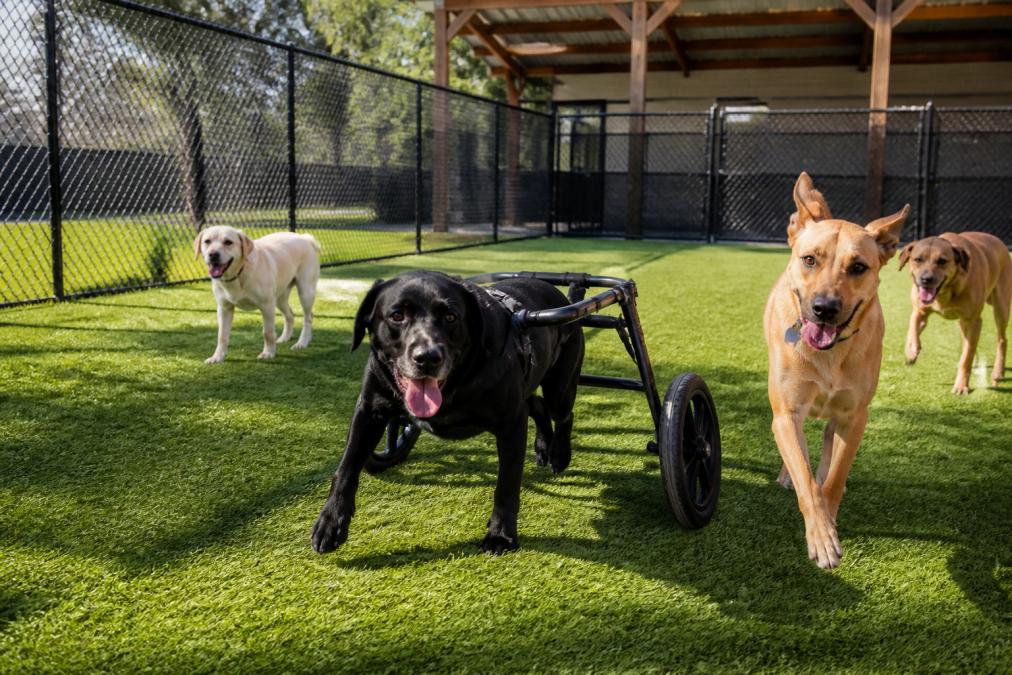
 comparison
Dogtopia Alternative for Special Needs: What to Look For
Table of Contents
- Why Standard Daycare Fails Dogs with Special Needs
- What to Look for in a Dogtopia Alternative for Special Needs Dogs
- Private Dog Boarding for Reactive Dogs: A Closer Look
- How to Help Dog with Separation Anxiety During Boarding
- Comparing Facility Types: Franchise vs. Boutique vs. Medical-Grade
- Questions to Ask Before You Book
- Finding the Right Fit for Your Dog's Needs
- Frequently Asked Questions
Last Updated: September 5, 2026
Standard dog daycare franchises were built around a simple promise: dogs play together in groups while you work. That model works beautifully for social, high-energy dogs. It fails for dogs with medical conditions, mobility issues, or behavioral challenges like reactivity and separation anxiety. A Dogtopia alternative for special needs dogs must prioritize individualized care over group throughput, evaluating supervision ratios, medical protocols, and the physical layout.
Why Standard Daycare Fails Dogs with Special Needs
The core mismatch is philosophical. Franchise daycare centers profit from volume, moving dogs through group play sessions and kennel rotations on a schedule. A dog with chronic health conditions, physical limitations, or behavioral triggers does not operate on that schedule, medication windows are missed, and a reactive dog pushed into a group often escalates anxiety rather than reducing it.
Separation anxiety compounds the problem. Kennel environments with constant noise and unfamiliar smells can push an anxious dog past its threshold, turning a restful stay into a stress marathon. The result is a dog that returns home exhausted, dehydrated, or with new behavioral regressions.
A common mistake is assuming that "private suite" means "individualized care." Many facilities offer private spaces but still route dogs through shared exercise yards or communal feeding times. For special needs dogs, the entire day needs structure: private elimination breaks, controlled feeding, and no forced interaction with unfamiliar dogs.
What to Look for in a Dogtopia Alternative for Special Needs Dogs
A true alternative for special needs dogs focuses on three pillars: safety protocols, medical competence, and environmental control. When you tour a facility, you are evaluating whether the staff can handle the unexpected, recognizing early signs of a seizure, administering subcutaneous fluids, or reading stress signals before a bite occurs.
Staff-to-dog ratio matters more than square footage. A facility with 24/7 on-site professional staff and climate-controlled spaces provides a baseline of security that a standard 9-to-5 daycare cannot offer.
Safety Protocols and Supervision Standards
Safety starts with an honest intake process. The best facilities require a temperament assessment before your dog ever steps into a play session, not to judge your dog, but to understand triggers and thresholds. A facility that skips this step is guessing, and guessing is how incidents happen.
Ask about emergency protocols. What happens if a dog stops eating? What is the plan for a medical crisis at 2 AM? The answer should reference veterinary partnerships and clear escalation procedures. According to the American Veterinary Medical Association's guidance on boarding facility standards, facilities should have written protocols for medical emergencies and staff trained in canine first aid.
Managing Medication and Feeding Schedules
Medication administration is the most common point of failure in group daycare settings. Staff juggling multiple dogs can give a pill 30 minutes late, which matters for a dog with epilepsy or heart conditions.
You need a facility that documents every dose, with a written medication log, a quiet space for administration, and staff who can identify adverse reactions. Feeding schedules are equally critical. Dogs with special needs often require a signature crafted raw diet or specific portion control. Ask whether the facility prepares food on-site or simply opens a bag of kibble, for dogs with digestion issues, the difference is significant. Confirm they have a plan for picky eaters who refuse food when stressed.
Private Dog Boarding for Reactive Dogs: A Closer Look
Private dog boarding for reactive dogs is not the same as booking a standard kennel run. Reactive dogs need a buffer from triggers: no dogs walking past their door, no shared exercise yards, and no surprise encounters in hallways. The physical design of the facility determines whether this is possible. Look for spacious private indoor and outdoor runs that are not adjacent to high-traffic areas, allowing a dog to move between indoor climate-controlled space and outdoor access without passing through common areas. This reduces stress and prevents barrier frustration.
Behavioral Assessment Criteria: A Checklist for Owners
A reputable facility conducts a behavioral assessment before the stay, not after an incident. Most top-tier facilities use a structured intake that evaluates your dog across five specific domains. Use this checklist during your tour to determine if the facility can genuinely handle reactivity, anxiety, or sensory processing issues, or if they are just using "special needs" as a marketing term.
1. Response to Strangers at a Distance The assessor should observe your dog's reaction to an unfamiliar person approaching slowly, then directly. A reactive dog may show a hard stare, lip lick, or stiff body before any vocalization. The facility should articulate what they look for beyond "he seemed fine." Ask them to describe the last dog they turned away and why; a facility that cannot recall a specific rejection is not conducting rigorous assessments.
2. Reaction to Novel Objects and Surfaces Special needs dogs often have sensory processing differences. A dog with noise sensitivity may panic at the clatter of metal kennel doors; a dog with vision impairment may startle on unfamiliar flooring transitions. The assessment should include exposure to the actual textures and sounds of the facility, not just a sterile office meet-and-greet. Ask whether they walk the dog through the boarding wing during the assessment.
3. Handling Tolerance The assessor should gently touch the dog's paws, ears, and mouth area to gauge handling sensitivity, critical for dogs with arthritis, previous injuries, or fear-based aggression. A dog that flinches during a mock nail trim will need a modified handling protocol. The facility should document this and share it with the care team.
4. Food and Resource Guarding Many reactive dogs also guard food, toys, or resting spaces. The assessment should include a controlled test where the assessor approaches while the dog eats a high-value treat. The result determines whether the dog can be fed near other dogs or requires a fully isolated feeding area.
5. Threshold and Recovery Time The most telling metric is not how quickly a dog escalates, but how quickly they recover after a stressful stimulus is removed. A dog that takes 20 minutes to settle after a trigger passes requires a different care plan than one that recovers in two minutes. Ask the facility how they measure recovery and what they do if a dog does not settle.
The Physical Design Test
Beyond the assessment, the physical layout determines whether a reactive dog can be safely managed. Walk the actual boarding wing during your tour. Look for solid doors or visual barriers between runs, a dog that can see another through a chain-link fence is in a state of constant arousal. The facility should have a plan for dogs triggered by the sight of other dogs, not just those that react on leash.
Ask about the route from the parking lot to the private suite. Can your dog enter and exit without passing through a group play area? What happens if another dog is being walked down the same hallway? The answer should reference a specific protocol, such as staggered walk times or a secondary exit route.
Staff Competency in De-escalation
Finally, assess the staff's actual training. Many facilities advertise that they accept aggressive pups but lack the training to manage them safely. Ask about their specific experience with reactivity. A facility equipped for aggressive dogs will have protocols for muzzling, separate entry and exit points, and staff trained in conflict de-escalation. Ask whether staff have completed a recognized program such as the International Association of Animal Behavior Consultants' (IAABC) foundational courses or equivalent. While certification is not a guarantee, its absence is a red flag. Staff should be able to describe a specific incident they handled and what they would do differently.
How to Help Dog with Separation Anxiety During Boarding
Separation anxiety is one of the hardest conditions to manage during boarding because the trigger is being away from you. How to help dog with separation anxiety starts before you leave: bring items that smell like home, a worn t-shirt, a familiar blanket, and their regular food. Transitions matter more than duration.
A facility that understands anxiety will not place your dog in a busy, high-stimulation area. They will provide a quiet, private space and maintain a consistent daily routine. Exercise is critical for anxious dogs, but it should be structured, a private play session with a staff member burns energy without the stress of group dynamics.
Ask whether you can receive updates or videos during the stay. Knowing your dog is eating and resting reduces your anxiety, which in turn helps your dog. A facility that refuses updates is hiding something. For severe cases, ask whether the facility has experience with calming protocols or whether a medical-grade boarding alternative might be more appropriate.
Comparing Facility Types: Franchise vs. Boutique vs. Medical-Grade
Understanding the landscape helps you ask better questions. Franchises offer consistency and often lower prices, but operate on standardized models that may not flex for special needs. Boutique facilities offer more individualized attention but vary widely in staff training. Medical-grade boarding alternatives sit closest to clinical care, often with on-site veterinary oversight, but they are rare and may feel sterile.
The right choice depends on your dog's specific needs. A young dog with mild anxiety may thrive in a boutique setting with small-group play. A senior dog with mobility assistance needs and chronic health conditions requires a facility with medical competence and a higher staff-to-dog ratio.
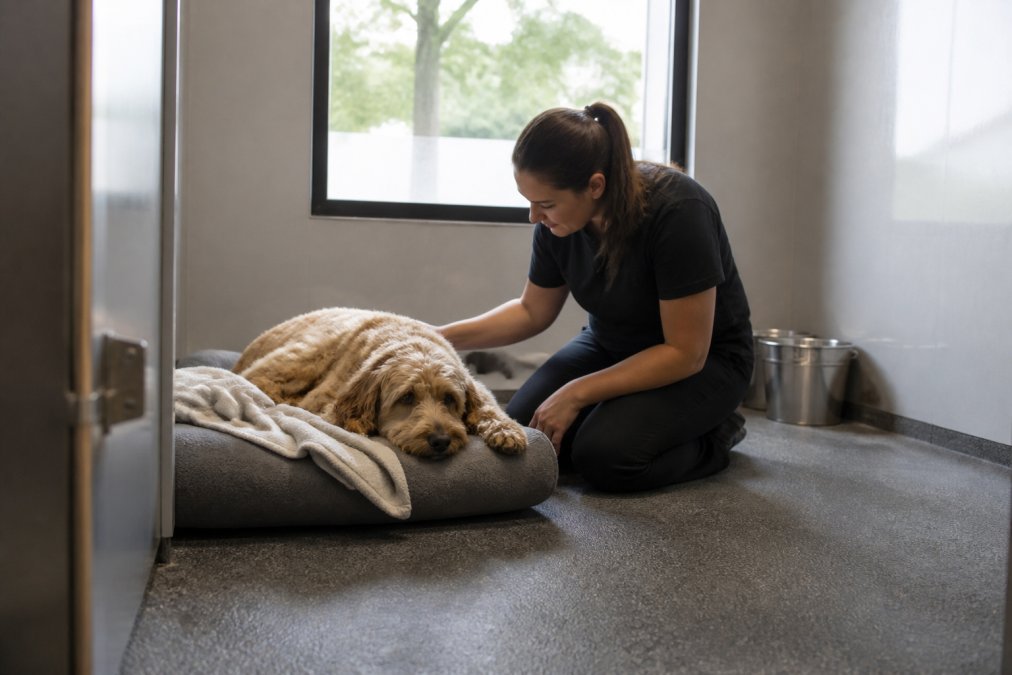
The Real Cost of Private vs. Group Care
Private care costs more than group daycare. That is a fact. But the gap is not as wide as most owners assume, and the cost-benefit calculation changes dramatically when a dog has special needs.
What You Are Actually Paying For In a group daycare setting, the daily rate covers supervision of multiple dogs by a single staff member, so the marginal cost of one additional dog is low. In private care, the facility must allocate a dedicated staff member's time for your dog's exercise, feeding, and medication windows. The cost is not just the space; it is the labor. When comparing rates, ask what the staff-to-dog ratio is during private play sessions, a facility that charges a private rate but routes your dog through a shared yard with one attendant watching five dogs is not offering private care.
The Hidden Costs of Group Care For a special needs dog, the risks of group care are not abstract. A missed medication dose for a dog with epilepsy can trigger a seizure requiring emergency veterinary intervention. A single emergency vet visit can be costly for overnight observation (avma.org). A single incident can erase the cost difference between a week of group care and a week of private care. For a dog with a chronic condition like diabetes or heart disease, the risk is not hypothetical, over multiple stays, a standard group facility will likely miss a dose or misread a stress signal.
The Price Premium in Context Private care typically runs a premium over group daycare, but the exact amount varies by facility type (humanesociety.org). Rather than fixating on the nightly rate, calculate the total cost of a stay including add-ons: medication administration fees, private exercise sessions, and special diet preparation. Some facilities bundle these into a single "special needs" rate; others nickel-and-dime. A facility that itemizes every service is not necessarily more expensive, it is more transparent. Request a written quote listing every service your dog will need and compare the totals, not the base rates.
When Group Care Is Acceptable There is a narrow set of circumstances where group care is acceptable for a special needs dog. A dog with mild anxiety triggered only by strangers, not by other dogs, may do fine in a small, well-supervised group of known dogs. A dog with a stable medical condition requiring a single daily medication may be manageable if the facility has a documented medication log and a dedicated staff member who administers it. The key is that the facility must demonstrate competence, not just promise it. Ask to see their medication log from the previous week and how many dogs they currently have on daily medication. If the answer is "the kennel attendant," that is a risk.
A Decision Framework for Special Needs Owners
Use this framework to match your dog's needs to the facility type. This is not about finding the "best" facility, it is about finding the one that can actually execute your dog's care plan.
| Care Type | Best For | Key Limitation | Typical Cost Signal |
|---|---|---|---|
| Franchise Daycare | Social, healthy dogs | Standardized protocols, limited flexibility | Lowest nightly rate |
| Boutique Facility | Anxious dogs needing calm | Training varies by location | Moderate premium |
| Private Boarding | Reactive or special needs dogs | Higher cost per night | 1.5x to 2x group rate |
| Medical-Grade Boarding | Chronic health conditions | Limited availability, clinical setting | Highest rate, often includes vet oversight |
The Medical-Grade Option For dogs with chronic illnesses, mobility issues, or post-surgical needs, a medical-grade boarding facility is the closest thing to a hospital stay. These facilities typically have on-site veterinary technicians, oxygen support, and physical therapy equipment. They are rare, most are affiliated with veterinary hospitals or rehabilitation centers. If your dog requires subcutaneous fluids, physiotherapy, or close monitoring of vital signs, a standard boarding facility, even a private one, is not equipped for that level of care. Ask your veterinarian for a referral to a facility that offers medical boarding. If none exists in your area, consider whether a veterinary hospital that boards hospitalized patients can accommodate a longer stay.
The Bottom Line The cost difference between group and private care is not a luxury markup; it is the price of labor and risk mitigation. For a healthy, social dog, group care is a reasonable choice. For a dog with special needs, the question is not "can I afford private care?" but "can I afford the consequences of group care if something goes wrong?" The answer, for most owners, is no.
Questions to Ask Before You Book
The tour is your diagnostic tool. Do not rely on marketing materials. Ask to see the actual sleeping areas, not just the playrooms. Verify that the facility is equipped to care for puppies and aggressive pups, since that indicates a broader range of handling experience.
Ask about the grooming environment if your dog is sensitive to handling. A stress-free, cage-free grooming setup signals that the facility prioritizes the dog's emotional state over operational convenience. Request specifics on how they handle a dog that refuses to eat, and ask about staff training in canine body language and certifications like Pet Boarding Certified (PPCS Certified).
Finding the Right Fit for Your Dog's Needs
The decision comes down to matching the facility's capabilities to your dog's specific vulnerabilities. A Dogtopia alternative for special needs dogs is not a downgrade; it is an upgrade in precision, choosing a partner that sees your dog as an individual with a medical history and behavioral profile, not as one more dog in a playgroup.
For many owners in Monmouth County, Ruffin' It Ranch offers that level of individualized care with 24/7 on-site staff, climate-controlled private indoor and outdoor runs, and flexible play care options. The team is equipped to handle aggressive pups and dogs with special needs, and the signature crafted raw diet is available for dogs with digestion issues.
Choosing care for a special needs dog is stressful because you are trusting someone else with a life that depends on routine and precision. Standard daycare models are not designed for that responsibility. Ruffin' It Ranch provides a climate-controlled environment with spacious private runs, individualized play care, and staff trained to support puppies, aggressive dogs, and those with medical or behavioral needs. Book your pets stay now and give your dog the calm, supervised environment they deserve.
Frequently Asked Questions
What should I look for in a daycare for a dog with special needs?
Prioritize facilities that offer individualized care plans rather than a one-size-fits-all approach. Ask about staff-to-dog ratios, private boarding options for reactive dogs, and experience with medication administration. Confirm that they conduct a thorough temperament assessment before any group play. Look for a climate-controlled environment with separate spaces where your dog can retreat from noise. Verify emergency protocols and whether veterinary oversight is available on-site or on-call.
Are there alternatives to open-play daycare for reactive dogs?
Yes. Private dog boarding for reactive dogs is a common alternative that provides a secure, individual space without forced social interaction. Many facilities offer solo play sessions, personalized walks, and enrichment activities tailored to your dog's comfort level. This approach reduces stress and prevents behavioral triggers. Look for options that allow your dog to exercise and receive attention without the pressure of group dynamics.
How do I know if my dog is too anxious for group daycare?
Signs of extreme anxiety include constant pacing, excessive drooling, hiding, or refusing to eat in a new environment. If your dog has shown aggression or extreme fear around other dogs, group daycare is likely a poor fit. A reputable facility will conduct a temperament test to assess suitability. If your dog struggles with separation anxiety, ask how staff handle the initial adjustment period and whether they offer private boarding to ease the transition.
What are the benefits of private boarding for dogs with medical conditions?
Private boarding offers a controlled environment that reduces stress, which is critical for dogs with chronic health conditions or mobility issues. It ensures accurate medication administration without the distraction of other animals. Staff can closely monitor eating habits, elimination, and energy levels to spot potential problems early. This setting also allows for customized feeding schedules and physical accommodations, providing peace of mind that your dog's specific medical needs are the primary focus.