 ultimate-guide
How to Prepare Your Dog for Boarding: A Complete Checklist
Table of Contents
- Start With a Behavioral and Health Assessment
- Schedule a Dog Boarding Trial Stay
- Update Vaccinations and Medical Records
- What to Pack for Dog Boarding
- Establish a Feeding Schedule and Medication Plan
- Preparing Senior Dogs for Boarding
- Manage Separation Anxiety Before Drop-Off
- Create a Drop-Off Routine and Post-Boarding Decompression Plan
- Frequently Asked Questions
Last Updated: September 19, 2026
Start With a Behavioral and Health Assessment
Before you prepare dog for boarding, understand your dog's baseline temperament and medical status. A behavioral assessment identifies anxiety triggers, aggression patterns, and socialization comfort levels, critical information for any boarding facility.
What Facilities Evaluate During Temperament Assessment
Most professional boarding facilities assess:
- Dog-to-dog sociability: Does your dog approach other dogs calmly, ignore them, or show fear or aggression? Facilities separate dogs that snap, growl, or display resource guarding around toys or food.
- Human interaction comfort: Will your dog accept handling from strangers? Allow staff to touch paws, ears, and mouth for health checks? Dogs that bite during routine handling are typically restricted to private accommodations.
- Environmental sensitivity: Does your dog startle at loud noises, sudden movements, or unfamiliar spaces? Noise-sensitive dogs may need quieter areas away from the main play space.
- Stress response under novelty: How does your dog react when separated from you in an unfamiliar place? Does she settle within 10-15 minutes or escalate into panic?
- Play style and intensity: Is your dog a gentle player, a rough wrestler, or a resource competitor? Facilities match play groups by energy level and style to prevent injuries and stress.
Assess Your Dog Before the Facility Does
Evaluate these traits at home before the facility does:
- Observe your dog's reaction to unfamiliar dogs at parks or on walks. Dogs with dog-directed aggression or extreme fear may need in-home pet sitting instead of group boarding.
- Practice handling: Touch your dog's paws, ears, mouth, and belly regularly. Reward calm acceptance.
- Expose your dog to new environments gradually. A dog that panics in new settings needs desensitization before boarding.
- Test separation in controlled settings. Leave your dog alone for 30 minutes while out of sight. Excessive whining, barking, or destruction will intensify in a boarding facility.
Medical Records and Health Baseline
Schedule a Dog Boarding Trial Stay
A trial stay (2-4 hours or overnight) lets your dog acclimate to the facility before a longer absence. Observe how she responds to the new space, other dogs, and your departure. Test the facility's responsiveness and note cleanliness, temperature control, and water access. When you return, a relaxed, slightly tired dog is a good sign; a panicked or withdrawn dog may need a different arrangement.
Update Vaccinations and Medical Records
Before you prepare dog for boarding, confirm your dog's immunization status at least two weeks before your stay. Standard requirements include DHPP, rabies, kennel cough (bordetella), and flea/tick prevention. Some facilities also require Lyme disease vaccine. Ask your facility for their specific requirements and bring written proof from your vet.
What to Pack for Dog Boarding
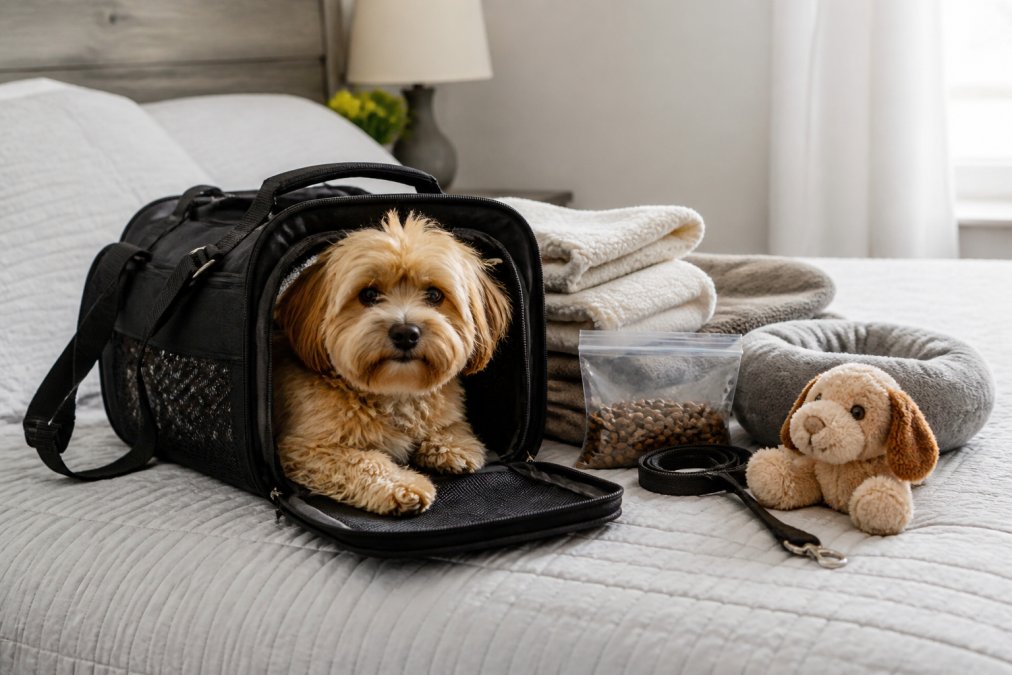
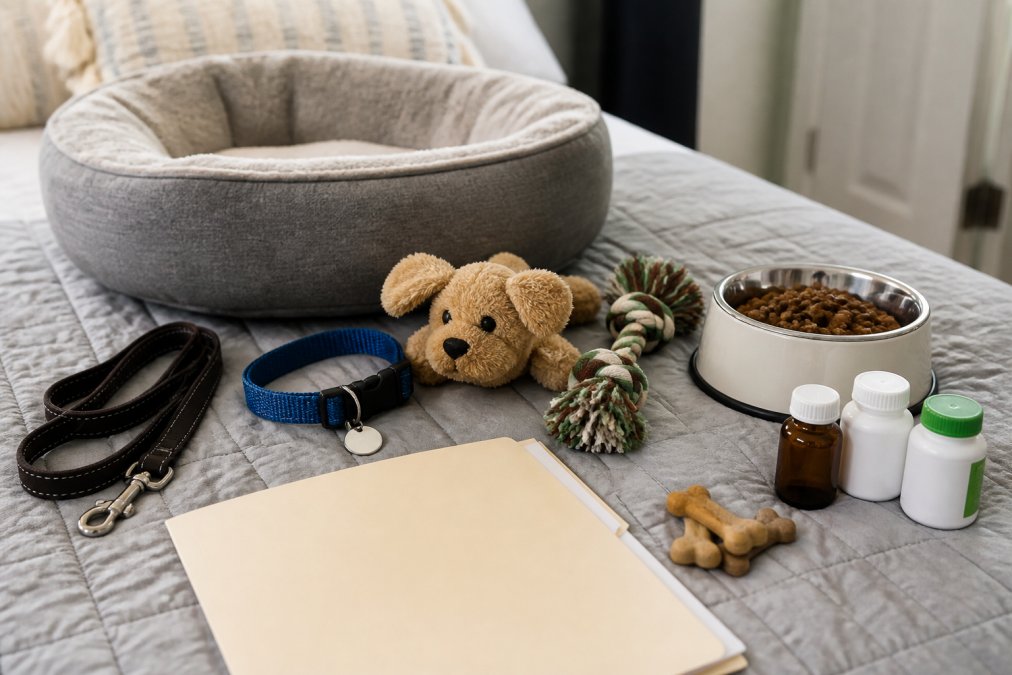
Pack a blanket or bed from home, familiar scent calms anxious dogs. Include favorite toys (no small parts), chew toys, and known treats. Pack enough food for the entire stay in clearly labeled containers to prevent digestive upset.
Establish a Feeding Schedule and Medication Plan
Provide explicit feeding instructions: exact amount per meal (use a measuring cup), feeding times, special preparation, treats allowed, and constant water access. For medication, provide detailed written instructions with the medication in original, labeled bottles, including your veterinarian's name, phone number, and dosing schedule. Ambiguity leads to missed doses or incorrect administration.
Preparing Senior Dogs for Boarding
Senior dogs need quieter environments and more frequent bathroom breaks. Assess mobility honestly and share limitations with the facility. Write detailed medication instructions and bring medications in original bottles with your vet's emergency contact. Discuss bathroom frequency, senior dogs often need more frequent outdoor access. Consider shorter initial stays (24-48 hours) rather than week-long absences.
Manage Separation Anxiety Before Drop-Off
Address separation anxiety before boarding through gradual desensitization. Start with 15-minute absences and extend over weeks. Practice calm departures without fanfare. Use positive reinforcement and reward calm behavior. Some dogs benefit from calming supplements or pheromone diffusers. During your trial stay, observe how your dog responds to your departure and ask staff for real-time feedback. Discuss anxiety management with the facility before your stay.
Create a Drop-Off Routine and Post-Boarding Decompression Plan
Drop-Off Routine: Setting the Emotional Tone
Arrive early for drop-off and keep your energy calm, your dog picks up on your anxiety. Establish a consistent goodbye ritual: brief affection, a specific phrase ("I'll be back"), and calm departure. Avoid extended goodbyes or sneaking away. Ask the facility for updates during your absence; photos or brief videos help you stay connected and confirm your dog is adjusting well.
Post-Boarding Decompression: The Critical 48-72 Hour Window
What to Expect Immediately After Pickup
Many dogs exhibit temporary behavioral changes after boarding:
- Excessive clinginess or shadowing: Your dog may follow you from room to room, refuse to be alone, or show anxiety when you leave the house briefly. This is normal and typically resolves within 3-7 days as your dog confirms you're not leaving again.
- Sleep disruption or excessive sleeping: Some dogs sleep 12-16 hours for the first 24-48 hours after boarding. Others show temporary insomnia or restlessness. Both are normal stress responses.
- Appetite changes: Your dog may refuse food for 12-24 hours or eat ravenously. Offer her normal meals at normal times without pressure. Avoid offering extra treats or hand-feeding, which can reinforce anxiety.
- Hyperactivity or lethargy: Some dogs return overstimulated and manic; others are withdrawn and quiet. Either pattern usually normalizes within a few days.
- Temporary house-training regression: Even well-trained dogs may have accidents indoors after boarding. This reflects stress, not a loss of training. Return to your normal house-training routine without punishment.
- Behavioral sensitivity: Your dog may startle more easily, show temporary noise sensitivity, or react strongly to routine sounds or activities. Avoid sudden changes to her environment during this window.
The Decompression Protocol: First 48 Hours
- Quiet time and familiar routines: Return to your normal schedule immediately. Feed at normal times, take normal walks, maintain normal sleep routines. Predictability is calming.
- Minimal social stimulation: Avoid introducing your dog to new people, other dogs, or unfamiliar environments. If you have children or other pets, brief them on giving your dog space.
- Moderate exercise only: Take short, calm walks at a relaxed pace. Avoid vigorous play, running, or high-intensity exercise. Your dog is neurologically fatigued and needs rest more than activity.
- Access to her safe space: Ensure your dog has a quiet area (crate, bed, or room) where she can retreat without interruption. Don't force interaction if she wants to rest.
- Normal feeding without pressure: Offer meals at normal times and remove uneaten food after 15 minutes. Don't hand-feed, offer special treats, or create a fuss around eating. Return to baseline nutrition.
Days 3-7: Gradual Reintegration
After the initial 48-hour window, gradually reintroduce normal activities:
- By day 3-4, brief visits from family members or close friends are usually fine if your dog initiates interaction.
- Resume normal exercise levels by day 4-5 if your dog shows interest and normal energy.
- Reintroduce training or enrichment activities by day 5-7, starting with short, positive sessions.
- Return to normal social activities (dog parks, playdates, classes) only after day 7 if your dog shows full recovery.
Red Flags That Warrant Veterinary Attention
- Your dog refuses food for more than 24 hours or shows signs of nausea (drooling, lip smacking).
- Behavioral changes persist beyond 7-10 days (excessive anxiety, aggression, or withdrawal).
- Your dog shows signs of illness: lethargy, vomiting, diarrhea, coughing, or discharge from eyes or nose.
- Your dog exhibits new or escalated aggression toward people or other animals.
- House-training regression continues beyond 5-7 days despite normal routine.
Document and Learn for Future Stays
- Your dog's anxiety level before boarding (on a scale of 1-10).
- Her behavior during the trial stay and facility feedback.
- Any issues the facility reported during the stay.
- Her recovery timeline and any behavioral changes observed.
- Whether she showed eagerness or reluctance when you returned to the facility for pickup.
- How quickly she returned to normal behavior and appetite.
Frequently Asked Questions
What vaccinations are required before I can board my dog?
Most boarding facilities require proof of current rabies vaccination, DHPP (distemper, hepatitis, parvovirus, parainfluenza), and bordetella (kennel cough) vaccines. Your veterinarian can confirm your dog's vaccination status and provide the necessary records. Bring these documents to your facility tour and keep copies with your boarding confirmation. Senior dogs and puppies may have different requirements, so verify with your chosen facility before your stay.
How can I help my dog with separation anxiety before boarding?
Start with short trial stays to build confidence gradually. Practice drop-off routines at home without actually leaving. Use familiar comfort items like bedding with your scent, favorite toys, and calming treats. Establish a calm energy during goodbyes, avoid prolonged farewells. Some dogs benefit from crate training beforehand. During your facility tour, discuss your dog's anxiety with staff so they can provide extra attention and positive reinforcement during the adjustment period.
Is it stressful for a dog to be boarded?
Boarding can cause temporary stress, especially for dogs unaccustomed to new environments. However, proper preparation, including trial stays, vaccination records, familiar items, and a structured feeding schedule, significantly reduces anxiety. Professional boarding facilities with trained staff, socialization opportunities, and calm energy help dogs adjust quickly. Most dogs show behavioral adjustment within 24 hours. Post-boarding decompression at home is normal; expect your dog to rest and decompress for a day or two after returning.
What should I pack for my dog's boarding stay?
Pack comfort items including bedding with familiar scent, favorite toys, and any special treats. Bring medications in original bottles with clear administration instructions, vaccination records, microchip information, and emergency contact details. Include your vet's contact information and authorization for emergency medical care. For dogs on special diets, provide enough food in sealed containers. Don't forget grooming supplies if your dog has specific needs. Create a boarding checklist to ensure nothing is forgotten before drop-off.