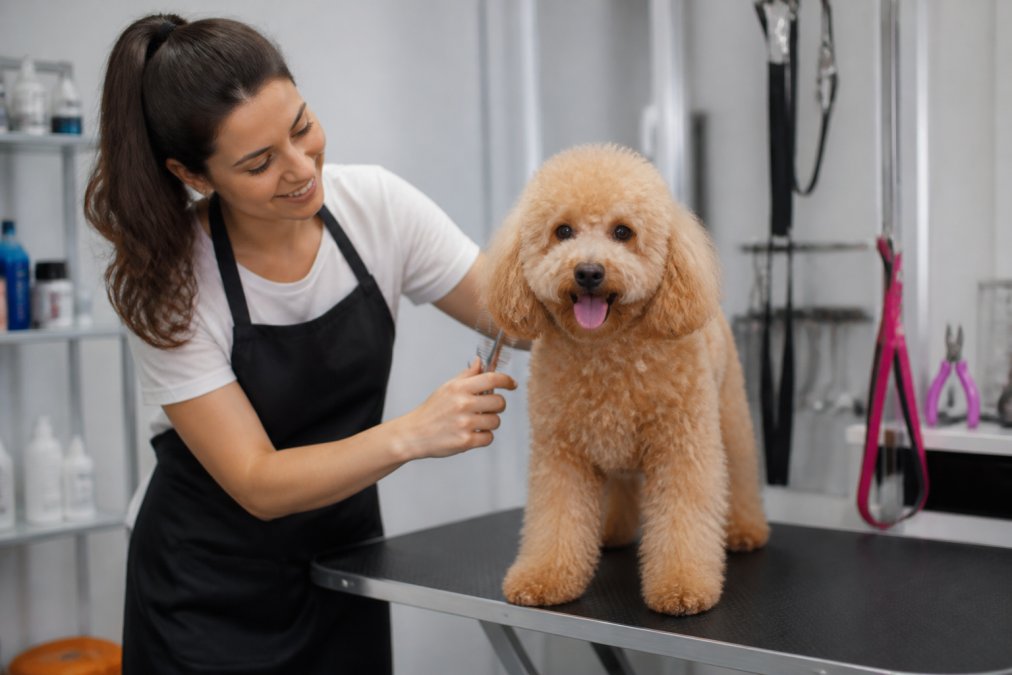
 comparison
The Posh Pooch Alternative for Grooming: 2026 Guide
Table of Contents
- Why Pet Parents Seek a Posh Pooch Alternative for Grooming
- Comparison Criteria: How to Evaluate Grooming Alternatives
- The Benefits of Cage-Free Grooming for Anxious Dogs
- Full Grooming Services and Spa Add-Ons to Compare
- How to Prepare an Anxious Dog for Grooming
- What to Look for in a Professional Dog Groomer
- DIY vs. Professional Grooming: A Cost-Benefit Breakdown
- Special Needs Grooming: Puppies, Seniors, and Reactive Dogs
- Frequently Asked Questions
Last Updated: September 10, 2026
Why Pet Parents Seek a Posh Pooch Alternative for Grooming
The search for a posh pooch alternative for grooming usually starts with one bad experience: a trembling dog, a rushed pickup, or a groomer who won't take anxious breeds. This guide from Ruffin' It Ranch breaks down how to evaluate those options.
Cage-free grooming is a method where dogs move freely in an open, supervised space rather than waiting in stacked kennels before and after their appointment. For anxious dogs, that single design choice often matters more than the haircut itself.
The demand is real. Grooming is one of the fastest-growing segments of the pet care industry, and the American Pet Products Association's industry data shows owners increasingly prioritizing low-stress handling over convenience alone.
Below, we cover comparison criteria, pricing models, and the services worth paying for.
Comparison Criteria: How to Evaluate Grooming Alternatives
Most grooming alternatives look identical on a website: a smiling groomer, a fluffy dog, the words "stress-free" and "cage-free." The differences that affect your dog show up in staffing, restraint policy, and pricing. Evaluate any alternative on six objective criteria.
1. Handling philosophy and restraint policy. Ask what the groomer does when a dog pulls away from a nail trim. A low-stress handler pauses, repositions, and uses a sling or a second set of hands. A traditional handler uses a grooming loop pulled tight and works through the struggle. The American Veterinary Medical Association's guidance on low-stress handling describes reducing restraint and confinement as a core principle, not a marketing add-on, so a studio that can't describe its restraint policy in plain terms is a studio that hasn't trained one.
2. Staffing ratio and supervision. Ask how many dogs one groomer handles at a time and who watches the dogs not on the table. In a kennel setup, that answer is often "nobody"; in a cage-free studio, it should be a named role. One groomer per dog on the table, plus a separate attendant monitoring the open area, is the standard.
3. Facility design. Cage-free should mean cage-free for the entire visit, not just the bath. Ask whether dogs wait in kennels before or after the groom. A studio that is cage-free only during the service is still a kennel operation for the two longest stretches of the visit.
4. Service scope. A full menu tells you how many referrals you'll be making. If a studio doesn't do deshedding, dental brushing, or nail buffing, you'll need a second provider. Ask for the complete service list in writing.
5. Pricing transparency. Ask for a quote based on your dog's breed, coat condition, and temperament before the appointment. A studio that quotes a range and explains what moves it is easier to budget with than one that quotes flat and adds charges at pickup.
6. Credentials and continuing education. Certifications from recognized pet care organizations signal training to a documented standard. Ask which certifications the owner and lead groomer hold, and how often the team completes continuing education.
A practical checklist for your first call:
- Is the facility cage-free for both pre- and post-grooming time?
- How many dogs does one groomer handle at once, and who supervises the open area?
- Are anxious or reactive dogs accepted, or referred elsewhere?
- Is pricing quoted before the appointment or only after?
- Can you tour the space before booking?
- What certifications does the lead groomer hold?
Cage-Free vs. Traditional Kennel Grooming
Traditional kennel grooming keeps dogs in stacked cages between arrival, bathing, drying, and pickup; cage-free grooming keeps them in an open, supervised area. The practical difference is time confined: a kennel dog may wait an hour or more in a cage, while a cage-free dog waits in a monitored space.
For most anxious dogs, the kennel wait is the hardest part, not the bath. If your dog panics in crates at home, expect the same in a grooming cage: confinement removes the ability to create distance from a stressor, and a dog that can't retreat escalates from avoidance to defensive behavior. Open space gives an exit, which is why low-stress facilities see fewer bite attempts and aborted grooms.
Pricing Models and What Drives Cost
Grooming prices depend on coat type, size, condition, and the time a groomer needs to finish safely. Most studios quote per service or package rather than by the hour, and rates shift based on:
- Coat length, density, and matting
- Dog size and temperament
- Add-on treatments like deshedding or teeth brushing
- Whether de-matting or hand stripping is required
Because pricing varies so much by dog, ask for a quote based on your pet's specific coat and condition rather than comparing headline rates. Request quotes for the same three services, bath and brush, full haircut, and deshedding, from each alternative, then compare the spread. A narrow band suggests time-based pricing; a wide band suggests coat-condition pricing, which is more accurate but harder to budget for.
The Benefits of Cage-Free Grooming for Anxious Dogs
Cage-free grooming reduces stress for anxious dogs by removing the confinement that triggers most panic responses. A dog waiting in an open space with a groomer nearby stays calmer than one left alone in a kennel, and calmer dogs are easier and safer to handle.
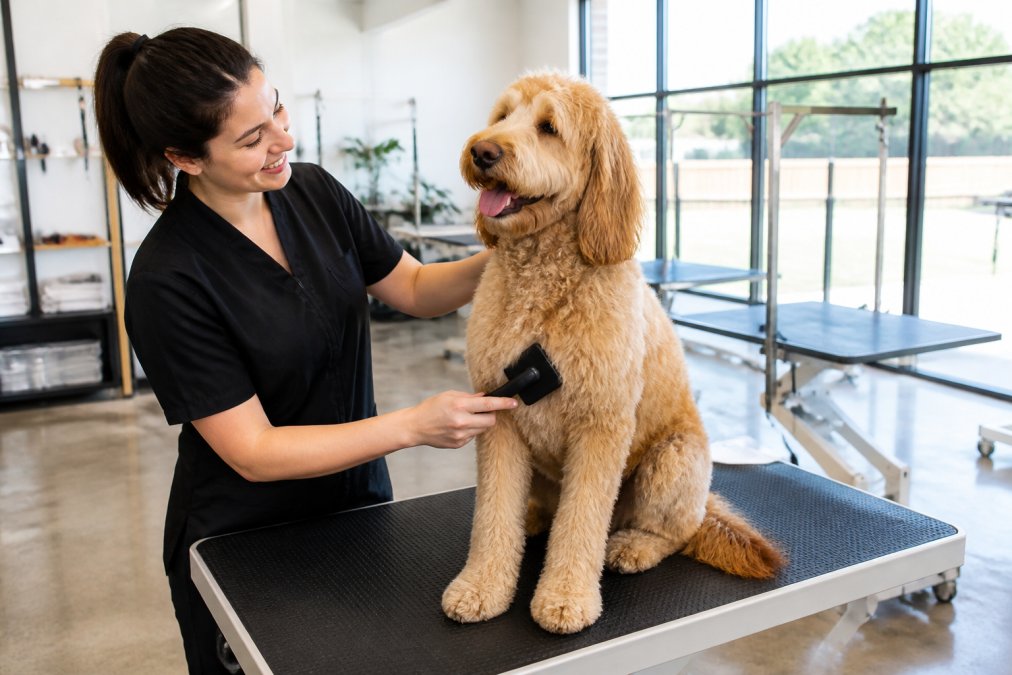
The benefits stack up quickly:
- Less confinement means fewer stress hormones before the bath even starts
- Open sightlines reduce startle reactions
- Calmer dogs tolerate drying and nail work with less restraint
- Groomers can pause and reset a nervous dog instead of pushing through
The American Veterinary Medical Association's guidance on low-stress handling supports this approach, noting that reducing restraint and confinement improves outcomes for fearful animals.
If your dog has severe separation anxiety, tell the groomer upfront. A studio equipped for anxious dogs will adjust its pacing rather than rush yours through.
Full Grooming Services and Spa Add-Ons to Compare
Compare grooming alternatives on the full service list, not just the haircut. A complete menu typically includes bathing, brushing, styling, nail care, ear cleaning, and spa add-ons, and its depth tells you how much a studio can handle without referrals.
| Service Category | What's Included | Best For |
|---|---|---|
| Bath and brush | Shampoo, conditioning, blow-dry, brush-out | Maintenance between full grooms |
| Full haircut | Breed-specific or custom styling, sanitary trim | Coats that need shaping |
| Spa add-ons | Oatmeal bath, whitening treatment, coat conditioning | Skin sensitivity, dull coats |
| Nail and paw care | Nail buffing and trimming, paw pad trim | Dogs that dislike clippers |
| Dental and shedding | Teeth brushing, deshedding treatments | Dental hygiene, heavy shedders |
Bath, Brush, and Breed-Specific Cuts
A bath and brush package covers shampooing, conditioning, blow-drying, and a thorough brush-out, suiting dogs that only need coat maintenance. A full haircut adds styling, a perimeter trim, and a sanitary trim around the rear and belly.
Breed-specific cuts follow recognized patterns for each breed's coat. A groomer who knows the difference between terrier hand-stripping and poodle scissor work will produce a cleaner result than one applying the same clip to every dog.
Nail Buffing, Teeth Brushing, and Deshedding Treatments
Nail buffing and trimming smooths rough edges after clipping, protecting floors and skin. Teeth brushing addresses dental hygiene between vet visits, and deshedding pulls loose undercoat before it lands on your furniture.
For double-coated breeds, deshedding is the highest-value add-on on the menu. Skip it and you'll be vacuuming daily for weeks.
How to Prepare an Anxious Dog for Grooming
Prepare an anxious dog for grooming by building calm associations before the appointment, not on the day of. Short practice sessions at home, a familiar walk beforehand, and a groomer who allows a slow introduction all reduce the odds of a meltdown.
Timing matters most: book the first visit during a quiet slot, not a Saturday rush, so the groomer can spend unhurried time with your dog.
A simple preparation routine:
- Handle your dog's paws, ears, and muzzle at home for a few minutes daily, starting a week out.
- Take a brisk walk before drop-off so your dog arrives tired rather than wired.
- Bring a favorite toy or blanket with a familiar scent.
- Skip a heavy meal right before the appointment.
- Ask whether you can stay nearby for the first visit.
If your dog is reactive, call ahead and ask how the studio handles reactive pups. A grooming salon that accepts them will have a plan; one that doesn't will tell you honestly.
What to Look for in a Professional Dog Groomer
Look for certification, transparent pricing, visible handling standards, and a willingness to show you the facility. A professional groomer will ask about your dog's health, temperament, and coat history before touching a tool.
Red flags worth walking away from:
- No facility tour offered
- Vague answers about how anxious dogs are handled
- Pricing only revealed after the service
- Refusal to discuss certifications or training
Certifications signal accountability. Ruffin' It Ranch, for example, holds Pet Boarding Certification (PPCS), which covers supervised care standards. That credential tells you staff have been trained to a documented standard rather than learning on the job.
Ask directly: "How do you handle a dog that panics during drying?" The answer reveals more than any brochure.
DIY vs. Professional Grooming: A Cost-Benefit Breakdown
DIY grooming saves money on simple tasks but costs time, equipment, and risk on anything technical. Bathing and brushing at home is realistic for short-coated breeds; nail trimming, de-matting, and breed-specific styling are where professional grooming earns its fee.
| Task | DIY Feasibility | Professional Value |
|---|---|---|
| Bathing and brushing | High for short coats | Moderate |
| Nail trimming and buffing | Low, risk of cutting the quick | High |
| De-matting | Very low, easily injures skin | High |
| Breed-specific styling | Very low | High |
| Deshedding treatments | Low, requires proper tools | High |
| Teeth brushing | Moderate with training | Moderate |
The honest math: DIY works for maintenance, and professional grooming handles anything involving clippers, mats, or breed standards. Most pet parents end up doing both.
Special Needs Grooming: Puppies, Seniors, and Reactive Dogs
Special needs grooming requires a facility equipped for individualized care, not just a standard appointment slot. Puppies, senior dogs, and reactive or anxious dogs each need something different.
Puppies. A puppy's first grooming visit should be short, ideally 15 to 20 minutes of handling with no full haircut, and end before the puppy gets tired or overwhelmed. The goal is exposure, not a finished groom. Ask whether the studio offers a puppy introduction visit (sometimes called a happy visit) and whether it's priced separately or bundled. A studio that books a puppy for a two-hour full groom on the first visit is optimizing its schedule, not the puppy's development.
Senior dogs. Older dogs often have arthritis, reduced hearing or vision, thinning skin, or a heart condition, and each changes how a groom should run. A senior may not stand for a full groom, so ask whether the studio uses a belly sling or cushioned table. Seniors also lose temperature regulation, so a warm dryer fine for a young dog can be too much for a 12-year-old. Ask how the studio adjusts dryer temperature and session length.
Reactive and anxious dogs. Reactive dogs need a groomer trained to work without triggering a defensive response. The accommodations are specific: a quiet slot with no other dogs in the building, a side approach rather than head-on, a muzzle only if the dog is muzzle-trained and it's introduced positively, and permission to stop and reschedule rather than push through. Ask whether the studio books reactive dogs off-peak and whether it charges a special-handling fee.
This is the gap most grooming alternatives fail to fill. A studio set up for calm, cooperative dogs often turns away anxious or aggressive pups, leaving owners to choose between sedation at a vet and doing nothing. Sedation carries risks, and skipping grooming leads to matting that becomes a medical problem, not just a cosmetic one.
Facilities built for individualized care handle all three groups. Ruffin' It Ranch is equipped to care for puppies and aggressive pups, with 24/7 on-site professional staff and a stress-free, cage-free grooming environment. Round-the-clock staffing plus open handling space is what makes special needs grooming possible rather than aspirational.
When comparing alternatives, ask: "Do you accept reactive dogs, and what does that appointment look like?" A studio that describes its protocol in concrete steps, quiet slot, side approach, stop-and-reset permission, is equipped. A studio that says "we've never had a problem" is not answering the question.
Frequently Asked Questions
What are the benefits of cage-free grooming for anxious dogs?
Cage-free grooming lets dogs stay upright and unrestrained between bath and blow-dry steps, which reduces the panic many anxious pets feel inside a kennel dryer. They can see and hear their surroundings instead of being isolated in a box. Salons built around this model also tend to move dogs through the process faster, so the whole visit is shorter. For dogs with separation anxiety or noise sensitivity, that combination often means less shaking, less stress vocalizing, and a faster recovery once they get home.
How do I prepare an anxious dog for grooming?
Start a few days ahead by touching your dog's paws, ears, and muzzle during calm moments so handling feels routine. Exercise your dog earlier in the day to burn off nervous energy, and skip a heavy meal right before the appointment. Arrive a few minutes early so you are not rushing through the door. Tell the groomer specifically what triggers your dog, whether that is the blow dryer, nail clippers, or other dogs. A groomer who asks about triggers before starting is a good sign.
What should I look for in a professional dog groomer?
Look for staff who ask about your dog's health, temperament, and past grooming experiences before the first appointment. Ask whether they are certified, how they handle dogs that get overwhelmed, and whether pets are ever left unattended. A clean, well-ventilated space with visible grooming areas matters too. For anxious or reactive dogs, ask directly whether they offer cage-free handling and how they introduce new dogs to the environment. Walk away from anyone who will not answer these questions clearly.
Is cage-free boarding and grooming better for my dog?
Cage-free works well for dogs that stay calm around other animals and handle open spaces without stress. It can be a poor fit for dogs that guard toys or food, or for pets recovering from surgery. The right choice depends on your individual dog, not a blanket rule. Many facilities offer both private runs and open play, letting you match the setup to your dog's temperament. Ask how the facility separates dogs by size and energy level before you book.
How much do you tip a dog groomer?
Standard tipping for grooming runs 15 to 20 percent of the service total, similar to a hair salon. For a groomer who handles a difficult or anxious dog, 20 percent is a reasonable thank-you. Cash tips are simplest, though many salons now accept tips by card at checkout. If you book a package that bundles bath, nails, and teeth brushing, tip on the full amount. Tipping is optional, but it is a common way to recognize groomers who take extra care with nervous pets.