 ultimate-guide
What to Look for in Kennels: A 2026 Guide
Table of Contents
- What to Look for in Kennels: The Essential Evaluation Framework
- Cleanliness and Hygiene Standards That Matter
- Staff Qualifications and Pet-to-Staff Ratios
- Vaccination Requirements and Health Protocols
- Safety Protocols, Emergency Procedures, and Legal Protections
- Questions to Ask Your Dog Boarding Facility
- Luxury Dog Boarding for Senior Dogs and Special Needs
- Dog Boarding Checklist for Your Pre-Boarding Visit
- Frequently Asked Questions
Last Updated: September 20, 2026
What to Look for in Kennels: The Essential Evaluation Framework
Choosing the right boarding facility for your dog isn't a casual decision. Your pet's safety, comfort, and well-being depend on finding a place that meets professional standards and aligns with your dog's specific needs. What to look for in kennels goes far beyond a quick tour and friendly staff, it requires a systematic evaluation of cleanliness, staffing, health protocols, safety measures, and specialized accommodations.
This guide walks you through the essential factors that separate a quality boarding facility from one that cuts corners. We'll cover the specific standards you should expect, the questions that matter most, and a practical checklist you can use during your facility visit.
Cleanliness and Hygiene Standards That Matter
A clean facility is non-negotiable. The moment you walk through the door, you should notice the smell and appearance of the space. Quality kennels maintain rigorous sanitation protocols because disease spreads quickly in close quarters where multiple dogs interact.
Look for non-porous surfaces throughout the facility, concrete or sealed flooring that can be thoroughly disinfected daily. Porous materials like carpet or unsealed wood trap bacteria and odors, making deep cleaning impossible. Drainage systems should be visible and functional, allowing staff to rinse and sanitize areas without water pooling. Ask directly about the disinfectant products used. Facilities using hospital-grade cleaners demonstrate a commitment to preventing kennel cough and other contagious conditions.
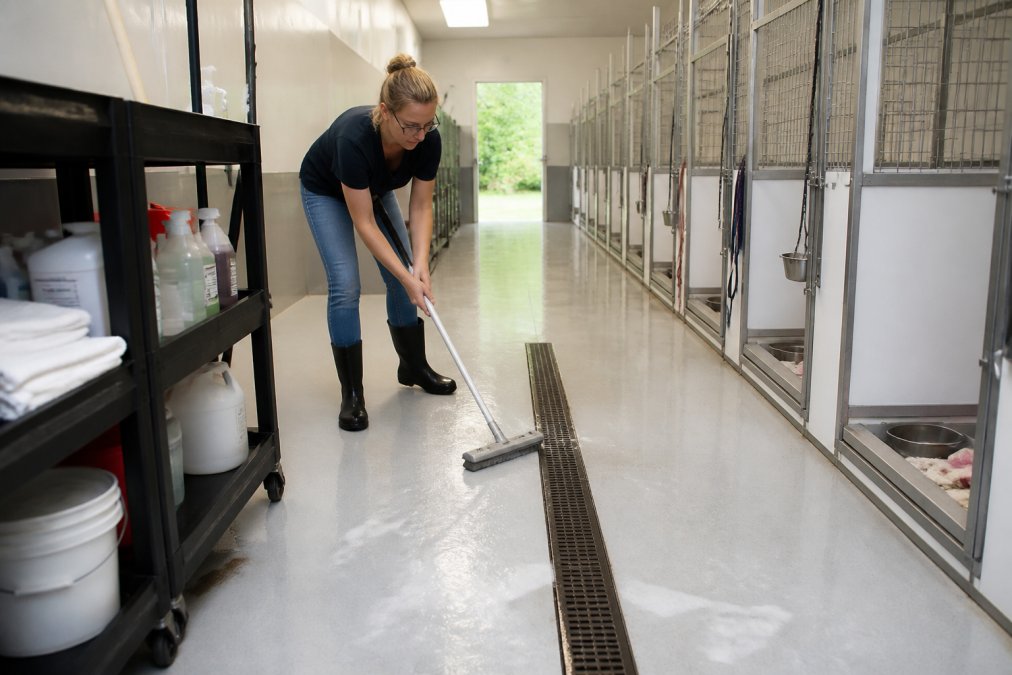
Observe the condition of water bowls, bedding, and play areas. Soiled bedding should be changed multiple times daily, not just once. Ask about their cleaning schedule, morning, midday, and evening cleanings are standard at reputable facilities. Staff should change clothes or wear dedicated facility clothing to avoid tracking contamination between areas.
A truly clean facility won't offend your senses. If the smell is overwhelming or you see visible dirt, that's your signal to leave and find elsewhere.
Staff Qualifications and Pet-to-Staff Ratios
The quality of care your dog receives depends entirely on the people handling them. Staff qualifications matter more than facility size. A smaller operation with trained, experienced handlers will provide better care than a large warehouse with untrained workers.
Ask about staff certifications. Look for employees trained in pet first aid and CPR, animal behavior, and handling techniques for anxious or aggressive dogs. We maintain a team of highly trained professionals who understand individual pet temperaments and can adjust their approach accordingly. Experience matters, staff who've worked with hundreds of dogs recognize behavioral cues that inexperienced handlers miss.
Pet-to-staff ratios determine how much individual attention your dog receives. A common mistake is assuming that a facility with many dogs is necessarily bad. What matters is supervision. During active playtime, the ratio should be low enough that staff can genuinely supervise, typically no more than 10-12 dogs per handler during group play. During rest periods, ratios can be higher, but staff should still be present and responsive.
Ask about staffing during off-hours. A facility that claims to be open 24/7 but has skeleton crews overnight is not truly providing round-the-clock care. Quality facilities maintain adequate staffing at all times, including nights and weekends.
Vaccination Requirements and Health Protocols
Before your dog enters a boarding facility, staff should verify vaccination status. Minimum requirements typically include current rabies vaccination, DHPP (distemper, hepatitis, parvovirus, parainfluenza), and bordetella (kennel cough vaccine). Some facilities also require proof of negative fecal tests to rule out parasites.
Ask for documentation of their vaccination verification process. Do they contact your veterinarian directly, or do they accept copies from you? Reputable facilities verify with your vet to prevent fraudulent records. They should also have a clear policy about what happens if a dog's vaccinations are out of date, some facilities offer grace periods; others require vaccination before boarding.
Understand their health screening procedures.
Safety Protocols, Emergency Procedures, and Legal Protections
Safety protocols protect your dog from preventable accidents and ensure proper response if something goes wrong. Ask about their approach to preventing escapes. Doors should have double-lock systems, and staff should follow strict entry and exit procedures. Ask how they prevent dogs from fighting during play sessions and what happens if a conflict occurs.
Questions to Ask Your Dog Boarding Facility
Before committing to a facility, ask these specific questions that reveal how seriously they take their work. The answers tell you whether they're genuinely focused on individual pet care or just processing dogs.
Luxury Dog Boarding for Senior Dogs and Special Needs
Senior dogs and dogs with special needs require individualized attention that standard boarding can't always provide. If your dog falls into this category, your evaluation criteria should be even more rigorous.
Dog Boarding Checklist for Your Pre-Boarding Visit
Before you book, schedule a facility tour and bring this checklist. Use it to evaluate what you see and hear.
| Evaluation Area | What to Check | Red Flags |
|---|---|---|
| Cleanliness | Non-porous flooring, visible drainage, no odors, clean water bowls | Carpet, strong smells, dirty bedding, poor drainage |
| Staff | Trained, certified, calm demeanor, engaged with dogs | Untrained appearance, rushed interactions, unwillingness to discuss qualifications |
| Health Protocols | Vaccination verification, health screening, emergency vet plan | No vaccination requirements, vague health procedures, no emergency plan |
| Safety | Double-lock doors, escape prevention, emergency procedures, liability insurance | Single locks, unclear safety measures, no emergency plan, uninsured |
| Facilities | Adequate space, climate control, ventilation, separate areas for rest and play | Overcrowded, poor temperature control, inadequate ventilation, no separation |
| Communication | Offers updates, responsive to questions, clear policies | No updates available, dismissive of questions, vague policies |
| Specialization | Experience with your dog's age, size, behavior, or medical needs | Claims to handle all dogs equally, no specialized experience |
Frequently Asked Questions
What to look for in kennels when your dog has separation anxiety?
Look for facilities offering trial stays, cage-free environments, and supervised playgroups to reduce stress. Ask about their behavioral assessment process and whether they provide updates or video monitoring. Kennels with climate-controlled spaces, consistent daily routines, and staff trained in anxiety management make a significant difference. Ensure the facility has experience with anxious dogs and can accommodate gradual acclimation visits before your actual boarding stay.
What questions to ask dog boarding facility staff about their experience?
Ask about staff certifications, training in handling aggressive or special-needs dogs, and their pet-to-staff ratios during different times of day. Inquire about their protocols for dogs with medical conditions, behavioral issues, and emergency veterinary care procedures. Request references from other pet owners with similar dog temperaments. Ask how they handle medication administration, feeding consistency, and whether they offer digital monitoring or daily updates. Understanding their experience with your specific dog's needs is critical to your decision.
Why is luxury dog boarding for senior dogs different from standard boarding?
Senior dogs require specialized accommodations including climate-controlled environments, orthopedic bedding, frequent potty breaks, and modified exercise schedules. Luxury facilities offer individualized care plans addressing age-related health concerns, medication administration, and dietary needs. They provide quiet spaces for rest, easy access to outdoor areas without excessive stairs, and staff trained in geriatric pet care. These facilities also conduct post-boarding behavioral assessments to ensure your senior dog handled the stay well, and may offer specialized services like raw diet options for digestive support.
What should a dog boarding checklist include before drop-off?
Your dog boarding checklist should cover vaccination records and immunization proof, medication lists with administration instructions, emergency contact information, feeding and dietary preferences, behavioral notes, and any special health conditions. Include the facility's boarding contract terms, liability agreements, and cancellation policies. Document your dog's baseline behavior and any separation anxiety triggers. Confirm their sanitation protocols, climate control settings, and activity schedules. Take photos of the facility during your tour, noting drainage systems, non-porous surfaces, and exercise areas to verify cleanliness standards.
What vaccinations and immunization records are required for dog boarding?
Most kennels require proof of current rabies vaccination, DHPP (distemper, hepatitis, parvo, parainfluenza), and bordetella (kennel cough) vaccination. Some facilities also require Lyme disease vaccination depending on regional prevalence. Immunization records must typically be from a licensed veterinarian and current within the facility's specified timeframe, usually within 1-3 years for rabies and annually for others. Ask your boarding facility for their specific vaccination requirements in writing before your stay.
How can I verify a boarding facility's cleanliness and sanitation standards?
Request a facility tour and look for non-porous surfaces, proper drainage systems, and evidence of regular disinfectant use. Check for odors, visible dirt, and organized storage of cleaning supplies. Ask about their sanitation schedule, disinfectant brands used, and frequency of bedding changes. Inquire about their protocols for preventing kennel cough and other contagious illnesses. A reputable facility should be transparent about their hygiene practices and welcome thorough inspection. Notice whether staff wear protective equipment and follow handwashing protocols between handling different dogs.
What emergency procedures should a quality boarding facility have in place?
Quality kennels maintain 24/7 on-site staff, emergency veterinary care agreements with nearby clinics, and clear protocols for medical emergencies. They should have backup power systems and climate control redundancy. Ask about their liability insurance, boarding contracts that outline emergency authorization procedures, and how they handle medication administration errors or injuries. Confirm they have your emergency contact information and your veterinarian's details. A facility with structured safety protocols and transparent emergency procedures demonstrates professional standards and protects your pet.