 ultimate-guide
Cage-Free Grooming Benefits for Anxious Dogs
Table of Contents
- What Cage-Free Grooming Actually Means
- Cage-Free Grooming Benefits: Stress, Safety, and Comfort
- Signs of Grooming Anxiety in Dogs
- Fear Free Grooming Techniques That Actually Work
- How to Prepare an Anxious Dog for Grooming
- Cage-Free vs. Traditional Grooming: A Side-by-Side Comparison
- Transitioning Your Dog From Traditional to Cage-Free Grooming
- Frequently Asked Questions
Last Updated: August 29, 2026
What Cage-Free Grooming Actually Means
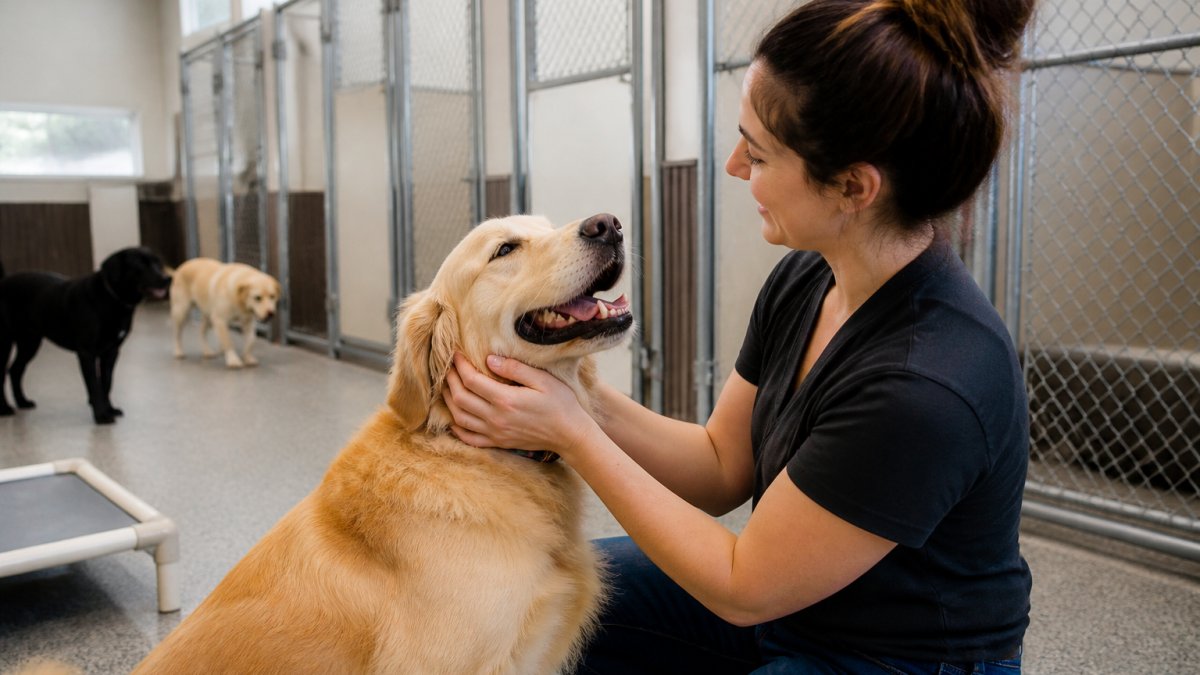
Cage-free grooming is a grooming model in which dogs are never confined to a kennel or crate before, during, or after their appointment. Instead of waiting in a stacked row of metal crates between bathing and drying, dogs move through the session in an open-concept salon environment where they can see their groomer, hear normal ambient sounds, and decompress without the added stress of confinement.
The grooming process already involves unfamiliar handling, loud dryers, water, and nail tools. Adding confinement anxiety on top of those sensory inputs creates a dog who dreads future appointments. At Ruffin' It Ranch, our stress-free, cage-free grooming environment is built around the idea that a calmer dog produces better results for everyone involved.
The practical difference between cage-free and traditional grooming comes down to what happens when the dog is not actively on the table. Traditional salons cycle dogs through kennels while they wait for a dryer or the next step. Cage-free salons handle dogs individually or in a managed open space, eliminating that waiting-in-confinement window entirely. According to the American Kennel Club's guidance on grooming stress, dogs who associate grooming with negative experiences can develop lasting behavioral responses that make future appointments progressively harder. Removing the kennel from the equation is one of the most direct ways to interrupt that cycle before it starts.
Cage-Free Grooming Benefits: Stress, Safety, and Comfort
The benefits of cage-free grooming for anxious dogs extend well beyond simple comfort. They touch on behavior, physiology, and long-term trust between a dog and the people who care for it.
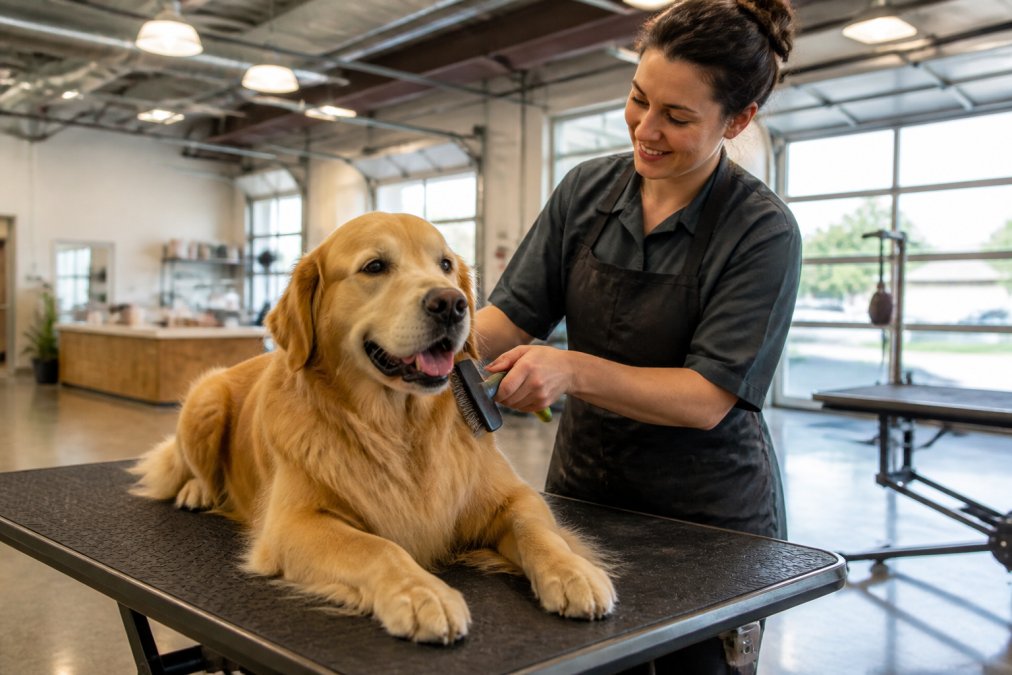
Reduced Confinement Anxiety and Sensory Overload
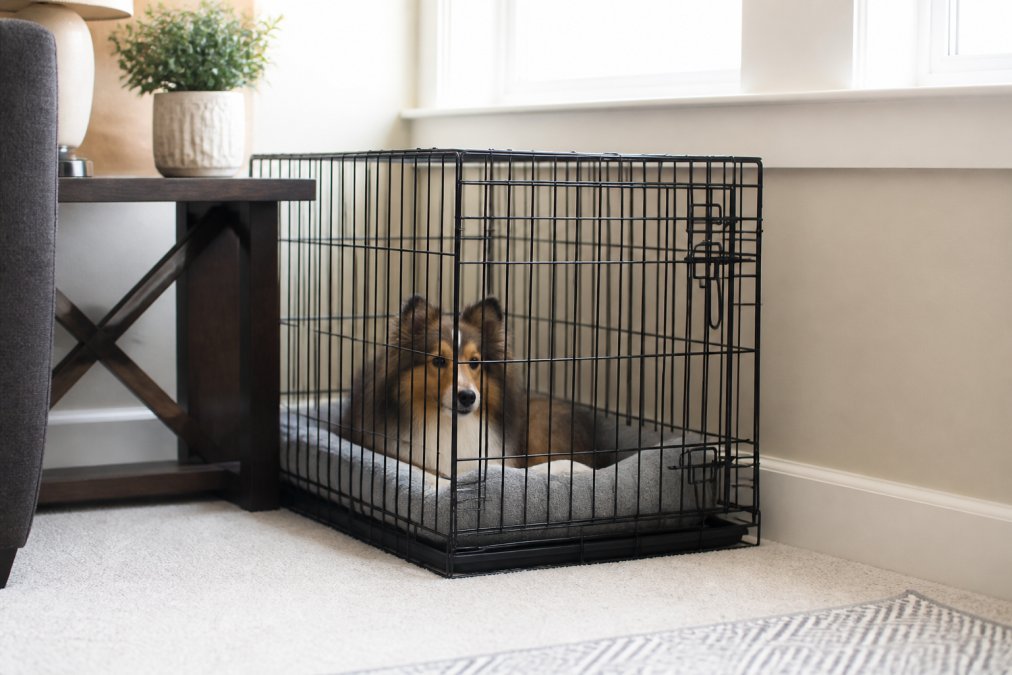
Confinement anxiety is a specific stress response triggered by being locked in an enclosed space. For dogs predisposed to separation anxiety, being placed in a kennel at a grooming salon can escalate quickly: panting, pacing, vocalizing, and in some cases, self-injury from attempting to escape. Cage-free grooming eliminates that trigger entirely.
Multiple dogs kenneled together create a wall of noise: barking, whining, and metallic sounds of crate doors. That ambient stress affects every dog in the room. An open-concept salon with thoughtful layout and calm atmosphere reduces those environmental stressors significantly. Groomers working in low-stress environments consistently report that dogs are easier to handle, require fewer restraint interventions, and recover more quickly between grooming steps.
Benefits for Senior, Reactive, and Special-Needs Dogs
Senior dogs and dogs with mobility limitations face particular risks in traditional grooming settings. Being lifted in and out of a kennel multiple times adds physical stress to joints and muscles that are already compromised. Cage-free handling allows groomers to work with a dog's physical limitations more fluidly, adjusting positioning without the rigid on/off kennel cycle.
Reactive dogs benefit enormously from an environment that removes triggers by design. Restraint-free or minimal-restraint handling paired with positive reinforcement gives reactive dogs a pathway through the grooming session that doesn't compound their reactivity. Special-needs dogs, including those recovering from surgery or managing chronic pain, need groomers who can read behavioral cues in real time. The cage-free model keeps the dog in the groomer's line of sight throughout the session, making that kind of attentive, individualized care possible.
Breed-Specific Suitability: Who Thrives and Who Needs Extra Care
Most dogs benefit from cage-free grooming, but the degree of benefit varies by temperament and breed characteristics.
Dogs that tend to do especially well in cage-free environments include anxious or fearful breeds such as Chihuahuas, Whippets, and Italian Greyhounds; dogs with known separation anxiety regardless of breed; senior dogs with mobility or cognitive challenges; and puppies being introduced to grooming for the first time.
Dogs that may need additional management in open environments include high-drive working breeds that become overstimulated in novel spaces, dogs with a history of dog-directed aggression who may need a private grooming room, and dogs that are extremely noise-sensitive.
The key is temperament assessment during the initial client consultation. A good cage-free salon reads the individual dog and adjusts the environment accordingly.
Signs of Grooming Anxiety in Dogs
Recognizing grooming anxiety early allows owners and groomers to intervene before the dog develops a full grooming phobia.
Early behavioral cues include lip licking or yawning when approached with grooming tools, whale eye (showing the whites of the eyes) during handling, low tail carriage during the drive to the salon, excessive panting in a cool environment, trembling or muscle stiffness on the grooming table, and attempting to jump off or pull away from the groomer.
More advanced signs indicating the dog is past its stress threshold include snapping, growling, or muzzle punching; refusing to enter the salon; eliminating in the car or salon before the appointment; and prolonged hiding behavior after returning home. Post-appointment behavior tells as much of the story as in-appointment behavior. A dog that hides for hours after grooming, refuses food, or shows hypervigilance is communicating that the experience was genuinely distressing.
According to the Fear Free organization's guidance on canine stress signals, recognizing these signals early and adjusting handling in the moment is one of the most effective ways to prevent grooming trauma from compounding across appointments.
Fear Free Grooming Techniques That Actually Work
Fear-free grooming techniques are specific handling and environmental strategies designed to keep a dog's stress response below the threshold where learning and cooperation become impossible.
Low-Stress Handling and Positive Reinforcement
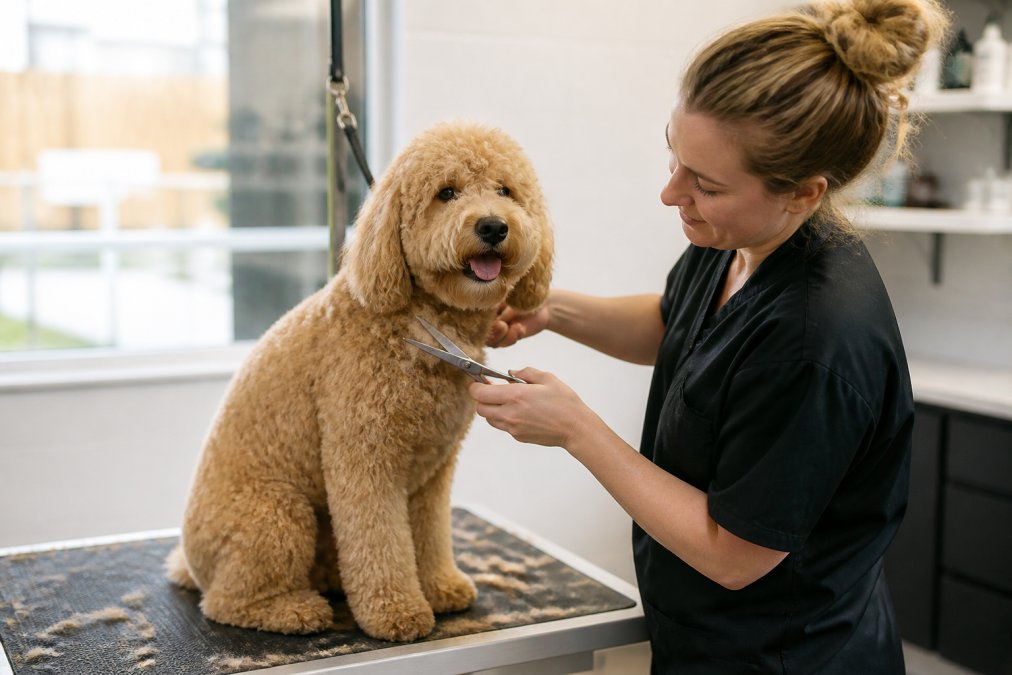
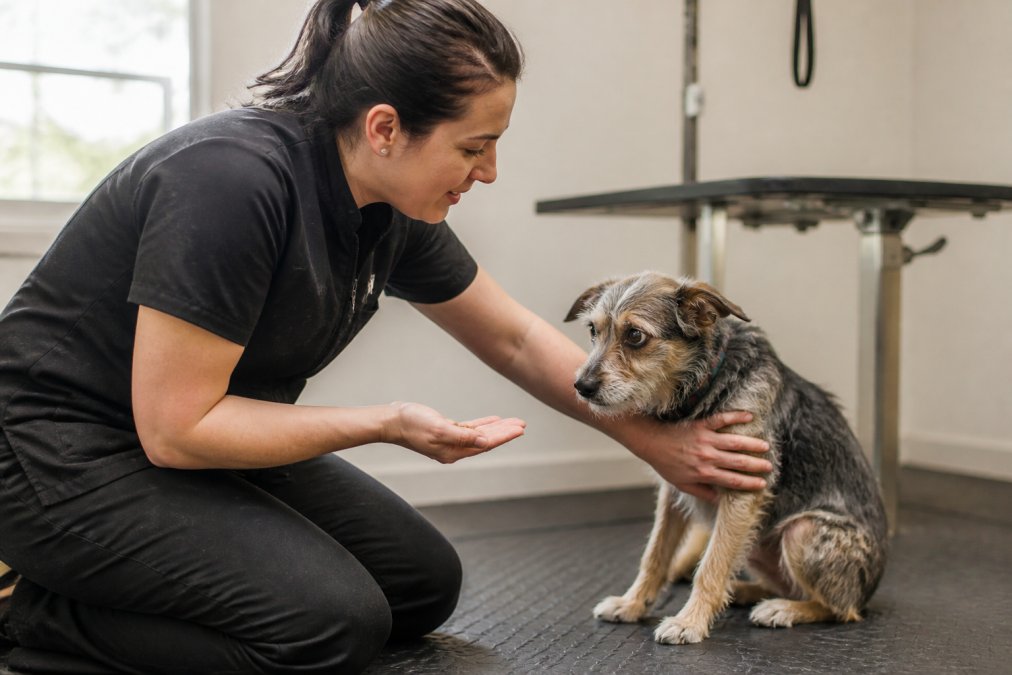
Low-stress handling starts before the dog is ever touched. The groomer's approach speed, body language, and voice all communicate information to the dog before any physical contact occurs. Groomers trained in fear-free handling crouch to the dog's level, avoid direct eye staring, and allow the dog to sniff and investigate before initiating contact.
Positive reinforcement during grooming means pairing each potentially aversive step with something the dog values: a high-value treat, verbal praise, or a brief pause. The goal is to build a consistent association between grooming steps and positive outcomes, so the dog's nervous system begins to predict safety rather than threat. Calming techniques include slow, deliberate movements; frequent check-ins between grooming steps; allowing the dog to sniff tools before they're used; and taking breaks for dogs that show early stress signals rather than pushing through.
Supervision Ratios and Safety Protocols in Open-Concept Salons
The groomer-to-dog ratio is the single most important safety variable in a cage-free environment. When dogs are not contained in kennels, the responsibility for managing their movement, interactions, and safety falls entirely on the staff present. A salon that markets itself as cage-free but runs a 1:6 groomer-to-dog ratio is not actually providing the supervision that model requires.
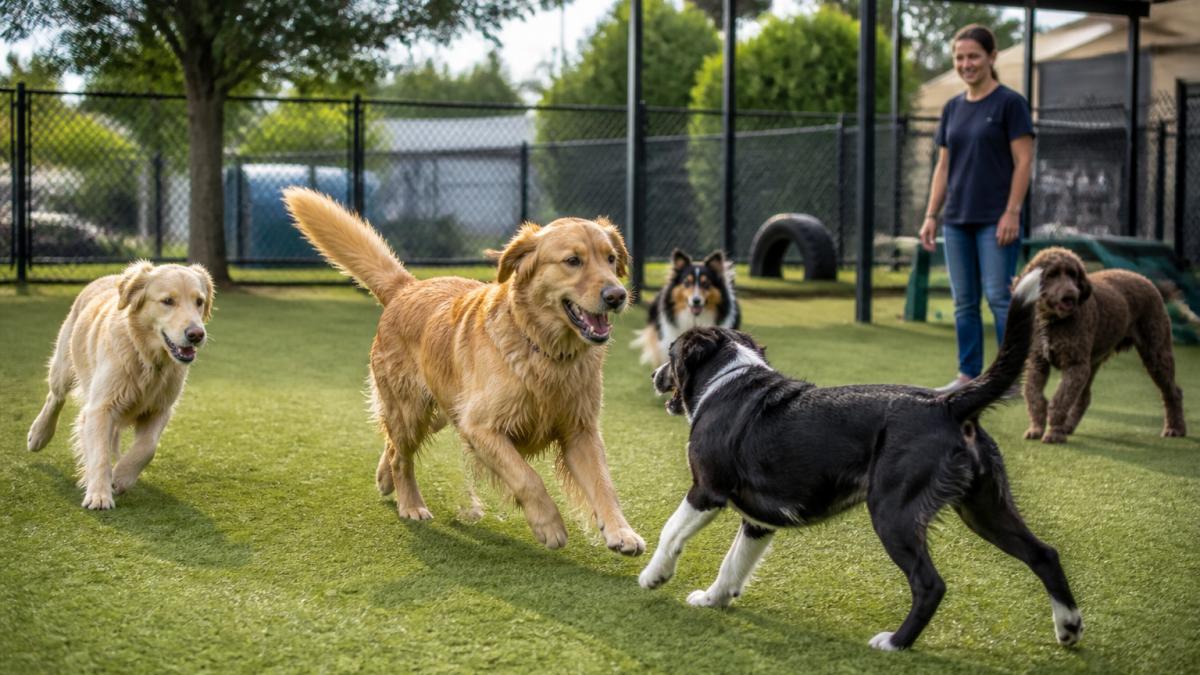
Responsible open-concept salons maintain clear protocols for how many dogs are in the grooming area at one time, how dogs are introduced to the space, what happens when a dog shows signs of stress or reactivity, and how the space is physically designed to prevent escapes or dog-to-dog incidents. A well-designed cage-free grooming space uses physical layout to create natural separation between dogs without resorting to crates. Half-walls, individual grooming stations, and thoughtful traffic flow all contribute to a safe environment.
How to Prepare an Anxious Dog for Grooming
Preparing an anxious dog for grooming is a process that starts at home, not in the parking lot of the salon. The more familiar a dog is with the sensations and sounds of grooming before the appointment, the less novel and threatening those inputs will feel.
A practical preparation framework includes: desensitizing to handling at home by practicing touching your dog's paws, ears, and mouth regularly in low-stakes contexts paired with treats; introducing grooming tools gradually by letting your dog sniff a brush or nail clipper before use; visiting the salon before the appointment so the dog can explore the space without grooming happening; keeping the first session short with just a brush-out and nail trim; and communicating with your groomer about specific triggers.
| Preparation Step | When to Do It | Frequency |
|---|---|---|
| Daily handling practice | 2+ weeks before appointment | Daily, 5-10 minutes |
| Tool desensitization | 1-2 weeks before appointment | Every other day |
| Pre-appointment salon visit | A few days before | Once |
| Short first session | First appointment | One-time |
| Post-appointment debrief with groomer | After each session | Every appointment |
According to the ASPCA's behavioral guidance on fear and anxiety in dogs, systematic desensitization paired with counterconditioning is the most evidence-supported approach for reducing fear responses to specific stimuli. Grooming preparation at home follows exactly that model.
Cage-Free vs. Traditional Grooming: A Side-by-Side Comparison
The comparison between cage-free and traditional grooming isn't simply about which is "better." It's about which model serves a specific dog's needs most effectively.
| Factor | Cage-Free Grooming | Traditional Grooming |
|---|---|---|
| Confinement during session | None | Kenneled between steps |
| Stress level for anxious dogs | Generally lower | Higher due to confinement |
| Supervision ratio required | Higher (more staff per dog) | Lower (crates contain dogs) |
| Suitability for reactive dogs | With proper protocols | Varies by facility |
| Suitability for senior dogs | High (less physical stress) | Moderate |
| Session duration | Often shorter (no kennel wait) | Can be longer |
| Environmental noise level | Lower (fewer dogs vocalizing) | Higher |
| Personalized attention | Higher | Variable |
The honest tradeoff is operational: cage-free grooming requires more staff per dog, which is reflected in pricing. For dogs with significant anxiety, that investment is usually worth it. The cumulative effect matters, a dog that has ten cage-free sessions with positive reinforcement develops a different behavioral trajectory than one with ten traditional grooming sessions with moderate stress.
Transitioning Your Dog From Traditional to Cage-Free Grooming
Transitioning from traditional to cage-free grooming requires patience, particularly for dogs that have already developed negative associations with grooming environments. A dog that has learned to dread grooming over two years won't unlearn that response after a single cage-free appointment. The new environment removes the confinement trigger, but the dog still carries the learned anxiety response.
A practical transition approach includes: starting with a consultation call to discuss your dog's history; booking a shorter first appointment like a bath and blow-dry without the full groom; spacing appointments two to three weeks apart initially to allow each positive experience to consolidate; and tracking behavioral changes in the car, recovery time, and body language in the salon.
Ruffin' It Ranch's approach to grooming is built around individualized care. Our staff is trained to work with dogs that have difficult grooming histories, including those with known reactivity or anxiety, and our cage-free environment removes the confinement layer that makes traditional salon transitions so difficult.
Anxious dogs deserve grooming experiences that don't make their anxiety worse. The cage-free model, when executed with proper supervision ratios, fear-free handling techniques, and genuine individualized attention, is the most effective grooming environment for dogs that struggle in traditional settings. Ruffin' It Ranch offers stress-free, cage-free grooming as part of our broader commitment to compassionate, professional pet care, with 24/7 on-site staff and a climate-controlled environment designed around your pet's comfort. Book your pet's stay now and see what a grooming experience built around your dog's needs actually looks like.
Frequently Asked Questions
Q: How does cage-free grooming differ from traditional grooming?
A: Traditional grooming typically places dogs in kennels or crates between grooming steps, which can trigger confinement anxiety and spike stress hormones. Cage-free grooming keeps dogs in an open-concept salon environment without crating, allowing them to rest comfortably on mats or in supervised spaces. The result can be a calmer grooming session, and fewer behavioral issues during handling. Dogs with separation anxiety or past grooming trauma tend to respond especially well to the kennel-free format.
Q: What can I do if my dog is too anxious to get groomed?
A: Start with a client consultation so the groomer understands your dog's specific anxiety triggers. Before the appointment, practice low-stress handling at home: touch paws, ears, and the muzzle area daily using positive reinforcement and treats. Choose a cage-free facility with a low groomer-to-dog ratio and fear-free handling protocols. For dogs with severe grooming anxiety, ask about shorter desensitization sessions that build tolerance gradually rather than attempting a full groom on the first visit.
Q: Is cage-free grooming safer for senior dogs?
A: Yes. Senior dogs often have joint pain, reduced mobility, or heart conditions that make confinement in a crate stressful and physically uncomfortable. A cage-free grooming environment eliminates the need to lift an older dog in and out of a kennel repeatedly and reduces the environmental stressors that can elevate heart rate. Groomers trained in low-stress handling can also adjust positioning and session duration to accommodate a senior dog's physical limitations, making the experience safer overall.
Q: Are dogs happier after grooming?
A: Most dogs are more comfortable after grooming once mats, overgrown nails, and dirty coats are addressed. However, if the grooming process itself was stressful, a dog may show signs of anxiety or fatigue afterward. Dogs groomed in a cage-free, fear-free environment tend to recover faster and show fewer post-grooming stress behaviors like hiding, excessive licking, or appetite changes. Consistent positive grooming experiences can build a dog's tolerance over time, making each session easier than the last.
This article was written using GrandRanker