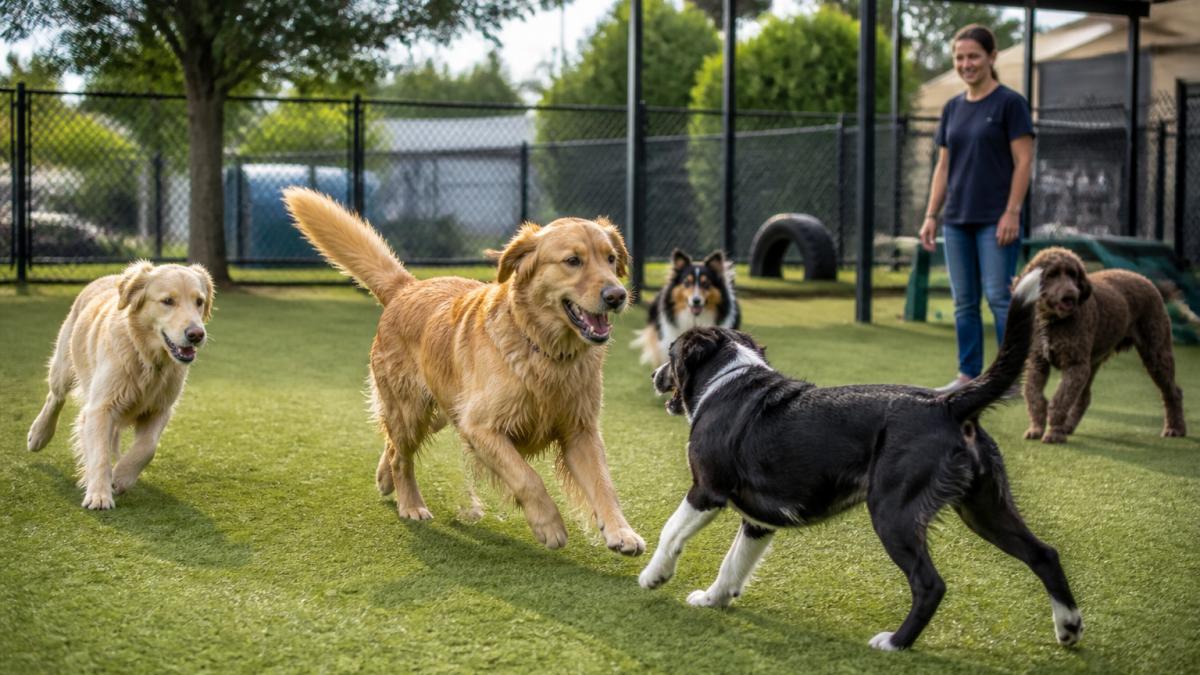
 ultimate-guide
Benefits of Supervised Dog Play: A 2026 Guide
Table of Contents
- Why Supervised Dog Play Matters for Your Dog's Health
- Dog Daycare Socialization Benefits: Building Confidence and Communication
- Signs of Healthy Dog Play: What to Watch For
- Physical and Mental Stimulation: The Exercise Your Dog Actually Needs
- Dog Daycare Safety Standards: What a Responsible Facility Looks Like
- Reducing Anxiety and Separation Stress Through Structured Play
- Post-Play Recovery and Transitioning to Group Play
- Conclusion: Finding the Right Supervised Play Environment
- Frequently Asked Questions
Last Updated: October 4, 2026
Why Supervised Dog Play Matters for Your Dog's Health
Supervised dog play is structured, staff-monitored interaction in a controlled environment where trained observers manage group dynamics, energy levels, and safety in real time.
The core difference between a dog park and a supervised play session is intervention: a trained handler reads body language, steps in before tension escalates, and pairs dogs by temperament rather than convenience.
Dog Daycare Socialization Benefits: Building Confidence and Communication
Dog daycare socialization benefits start with repeated, positive exposure to unfamiliar dogs and people in a safe setting, building what trainers call social fluency: the ability to read another dog's signals and respond appropriately.
How Group Play Teaches Social Manners
Group play teaches social manners through natural consequences and gentle correction. A dog that plays too rough gets a yelp or disengagement, and a good handler reinforces the calm behavior that follows. Dogs learn bite inhibition, turn-taking, and how to read a play bow versus a stiffened stance, skills solo backyard time can't replicate.
Confidence Building for Shy or Reactive Dogs
Confidence building for shy or reactive dogs works best in small, carefully matched groups. A nervous dog overwhelmed by ten boisterous playmates learns to shut down; the same dog in a pair or trio with calm, socially skilled partners learns other dogs can be safe. That's why Ruffin' It Ranch offers private and small-group play options.
Signs of Healthy Dog Play: What to Watch For
Healthy dog play has a recognizable rhythm: both dogs stay engaged, take turns, and pause to reset. According to the American Veterinary Medical Association's pet behavior resources, understanding canine body language is one of the most practical skills a pet owner can develop.
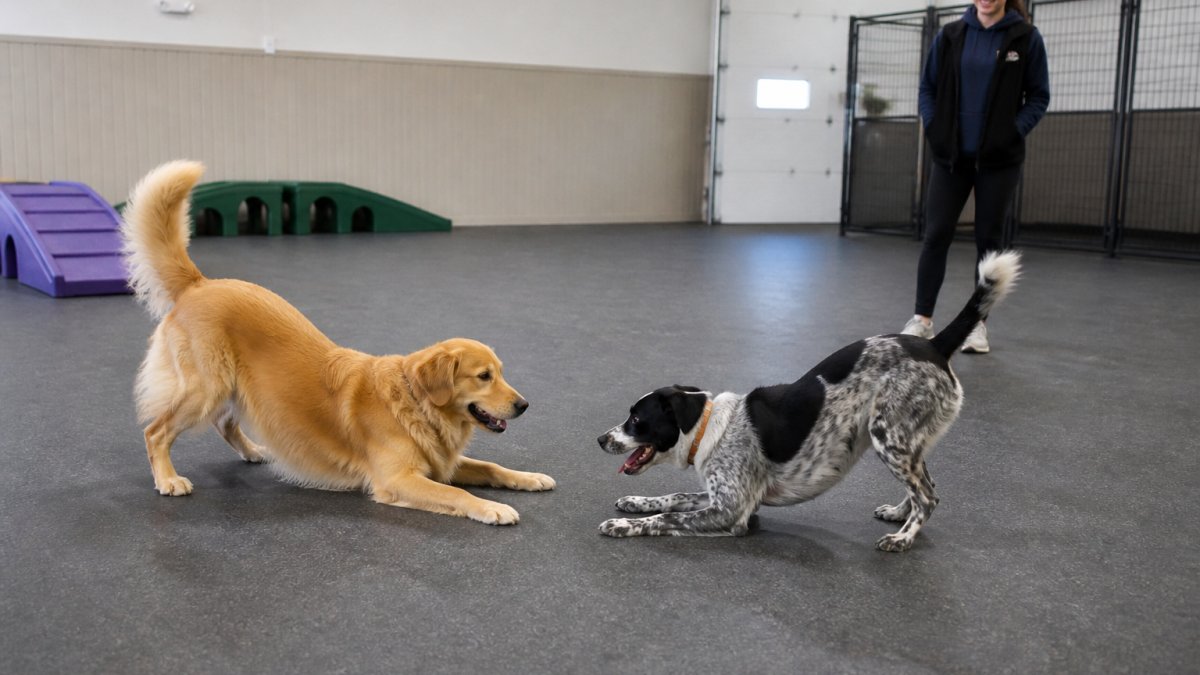
Green Flags: Body Language That Shows Play Is Going Well
Green flags include loose, wiggly bodies, open "play face" mouths, exaggerated movements, and frequent role reversals. A play bow, front legs down, rear up, is an explicit invitation. If both dogs keep returning for more, play is going well.
Red Flags: Signs of Overstimulation and When to Step In
Signs of overstimulation are the gap most owners miss: a dog that stops taking turns, pins another repeatedly, or goes stiff and still. A tucked tail, flattened ears, whale eye, or a dog trying to climb out all signal play has tipped into stress. Separate the dogs for a short break, a 60-second pause prevents most incidents.
Physical and Mental Stimulation: The Exercise Your Dog Actually Needs
Physical and mental stimulation are two different needs, and most dogs are shortchanged on the second. Physical fitness comes from running, chasing, and wrestling; mental stimulation comes from problem-solving, navigating group dynamics, and reading social cues.
Group play outperforms solo exercise mentally because it's unpredictable in a productive way. A ball lands where the human decides; a play partner feints, dodges, changes speed, and quits when it wants.
Breed-Specific Play Styles: Why Fit Matters More Than Volume
Not every dog plays the same way, and a mismatch can turn enrichment into stress. Most practitioners group play styles into a few broad buckets:
- Herding style, circling, stalking, and nipping at the other dog's heels or shoulders. Common in shepherd and collie types. This style is high-drive and can read as bullying to dogs that don't share it.
- Chase style, long, fast pursuit with frequent role reversal. Common in sighthounds, terriers, and many retrievers. Works best with partners who enjoy being chased and can keep up.
- Sniff-and-stroll style, low-contact parallel exploration. Common in seniors, brachycephalic breeds, and many anxious dogs. This is still enrichment; it just doesn't look like play.
A herding dog paired with a sniff-and-stroll senior frustrates both sides; a wrestling dog paired with a chase dog often works fine. The takeaway: ask any facility how it matches play styles, not just energy levels, "high energy" and "high energy" can still clash.
Energy Management: The Recovery Half of the Equation
Structured activity reduces cortisol, supports canine wellness, and gives dogs a healthy outlet for natural drives, but only with real recovery. Well-run facilities use a play-and-rest cycle: roughly 45 to 60 minutes of active group time followed by a comparable rest block, with water available throughout.
That hangover is normal: a dog that sleeps deeply, may skip dinner, and is grumpy the next morning, usually bouncing back within a day.
Reading the Aftermath: What Tells You It's Working
You don't need to watch the whole session to know if the stimulation is right, watch the dog afterward. A dog that had good physical and mental work comes home settled: loose body, normal appetite, willing to engage, sleeping soundly. An overstimulated dog comes home wired and unable to settle, or shut down and withdrawn.
Dog Daycare Safety Standards: What a Responsible Facility Looks Like
Dog daycare safety standards come down to three things: staff training, facility design, and how groups are matched. A responsible facility has protocols from intake screening to emergency response, not just a fenced yard.
Staff Training and Supervision Protocols
Staff training should cover canine behavior, body language, and first aid, not just kennel cleaning. One handler watching twenty dogs isn't supervision, it's crowd control, look for a documented staff-to-dog ratio and handlers who can name specific behaviors they watch for. Ruffin' It Ranch is PPCS Certified, meaning our team meets recognized professional standards for pet care.
Matching Play Styles and Managing Group Dynamics
Play style matching is where good facilities separate themselves. A herding breed that nips at heels plays nothing like a senior lap dog that prefers gentle sniffing, and group dynamics shift as energy rises and falls. The best facilities rotate dogs between groups, build in rest periods, and never force a dog into a group that doesn't suit its temperament.
Reducing Anxiety and Separation Stress Through Structured Play
Separation anxiety and general stress reduction improve when a dog has a predictable, positive routine. Structured play gives dogs something to anticipate, so a dog that spends its day with compatible playmates and caring handlers comes home calmer and more settled.
But be precise about what supervised play can and cannot do. It's a much weaker tool for true clinical separation anxiety, triggered specifically by the owner's absence and often showing up as destruction, escape attempts, or prolonged vocalization within minutes of the owner leaving.
Why Predictability Does the Work
The mechanism behind the benefit isn't the play itself, it's the predictability around it. Anxious dogs are pattern-seekers. When the same sequence happens every time (same drop-off, handler greeting, first play group, rest block, pickup), the dog stops scanning for what's next, and that freed-up bandwidth shows up at home as a calmer dog. A facility that rotates handlers, groups, and schedules randomly can make an anxious dog worse, even with plenty of play.
Matching the Environment to the Dog
For dogs with severe anxiety, the environment matters as much as the activity. Look for:
- Visual barriers between play areas so a dog that needs a break isn't watching other dogs play through a fence.
- Private or small-group options for dogs that shut down in a crowd. A nervous dog in a room of ten boisterous playmates learns to hide; in a pair or trio with calm, socially skilled partners, it learns other dogs can be safe.
- A quiet decompression space with soft bedding and low traffic, used proactively rather than only after a problem.
The Limits of Daycare as an Anxiety Fix
A few honest caveats most service-provider blogs skip:
- Daycare can mask separation anxiety, not resolve it. If the dog is only calm because it's never alone, the underlying issue is still there on the days it stays home.
- More days is not always better. For anxious dogs, two or three well-matched sessions a week often produce better results than five, because the dog needs recovery time to consolidate the positive experiences.
- A bad group can set progress back months. One overwhelming session can undo weeks of careful conditioning, which is why the intake assessment and gradual transition matter so much.
What Progress Actually Looks Like
Owners often expect a dramatic change after the first session. A realistic timeline: the first week is adjustment; by weeks two and three you see a dog that settles faster at home, greets other dogs with more confidence, and recovers from minor stressors more quickly. If nothing changes after three to four weeks of consistent, well-matched sessions, the issue probably isn't one group play addresses, talk to your veterinarian.
Post-Play Recovery and Transitioning to Group Play
Post-play recovery is the step almost nobody talks about. After intense play, dogs need a cool-down with water, rest, and quiet, skipping it is like going straight from a sprint to a meeting. A good facility builds rest cycles into the day, not just play blocks.
Transitioning to group play should be gradual: a temperament assessment, then short sessions with one or two compatible dogs, building up as confidence grows. Dogs pushed into large groups too fast often develop avoidance behaviors that take months to undo. For a smooth transition:
- Get a temperament assessment before the first group session
- Start with 1-2 calm, socially skilled play partners
- Keep first sessions short, under 20 minutes, then build up
Conclusion: Finding the Right Supervised Play Environment
Finding the right supervised play environment means finding people who treat your dog as an individual, not a number in a playroom.
At Ruffin' It Ranch, we've built our program around exactly that: 24/7 on-site professional staff, a climate-controlled facility with large private indoor and outdoor space, and care for every dog including puppies and those with special needs.
Frequently Asked Questions
Does dog daycare help with socialization?
Yes. Dog daycare provides structured opportunities for canine socialization that most dogs cannot get at home. In a supervised play environment, dogs learn social manners, practice reading body language, and build positive associations with other dogs. This is especially valuable for puppies during their critical development window and for adult dogs who need regular dog-to-dog interaction. The key is supervision: trained staff who understand group dynamics can prevent negative experiences and reinforce healthy play.
What are the risks of unsupervised dog play?
Without supervision, play can escalate quickly. Dogs may miss stress signals from a playmate, leading to scuffles, injuries, or lasting anxiety around other dogs. Overstimulation is a common risk: what starts as fun chasing can tip into frantic, reactive behavior. Unsupervised groups also risk bullying, where one dog repeatedly pins or corners another. Trained staff watch for signs of overstimulation, intervene early, and separate dogs when needed, which keeps play safe and positive for every dog in the group.
Can supervised play help reduce dog anxiety?
Supervised play can reduce anxiety by giving dogs a predictable routine, positive social contact, and physical outlets for nervous energy. For dogs with separation anxiety, a structured daycare environment offers distraction and companionship during the hours their owner is away. The emotional development that comes from repeated positive experiences with other dogs builds confidence over time. Facilities equipped to handle anxious dogs, including those with special needs, can tailor play sessions to each dog's comfort level.
What should I look for in a supervised daycare environment?
Look for trained staff on-site at all times, clear protocols for matching dogs by size and play style, and separate areas for rest and recovery. Ask how the facility handles overstimulation, what staff-to-dog ratios they maintain, and whether they can accommodate dogs with special needs or behavioral challenges. A quality facility will also offer updates so you know how your dog is doing. Climate-controlled spaces, clean play areas, and structured activity schedules are signs of a professional operation.
If you've been searching for a place where your dog gets real supervision, individualized care, and a safe space to build confidence, Ruffin' It Ranch is built for exactly that. Our team is equipped to handle everything from shy puppies to dogs other facilities turn away. Book your pet's stay now and see the difference structured, compassionate care makes.