 listicle
Best Calming Supplements for Dogs Before Boarding 2026
Table of Contents
- Why Boarding Stress Hits Some Dogs Harder
- Best Calming Supplements for Dogs Before Boarding 2026: Quick Comparison
- Product-by-Product: Calming Chews, Capsules, and Powders Reviewed
- Dog Anxiety Supplements: What the Ingredients Actually Do
- Dosing, Timing, and Safety Screening With Your Vet
- How to Calm a Dog Before Boarding: A Boarding-Specific Plan
- Dog Boarding Preparation Checklist and What to Pack
- Conclusion
- Frequently Asked Questions
Last Updated: October 21, 2026
Why Boarding Stress Hits Some Dogs Harder
Boarding stress is the anxiety a dog shows when its routine, people, and territory change at once, and it hits hardest in dogs already sensitive to novelty.
The dogs that struggle most tend to be attached to one person, have never spent a night away from home, or are reactive to new environments.
Calming support is only half the job. The other half is preparation: what you pack, when you drop off, and how you brief the staff.
Best Calming Supplements for Dogs Before Boarding 2026: Quick Comparison
Here is our side-by-side look at the leading calming supplements for dogs, ranked by format, intended use, and boarding fit.
| Product | Format | Best For | Listed Price | Key Caveat |
|---|---|---|---|---|
| Zylkene Capsules | Capsule | Dogs that accept pills | Not verified | Dosing not shown in listed sources |
| Solliquin Soft Chews | Soft chew | Dogs that refuse capsules | Not verified | Ingredient details not verified |
| Purina Pro Plan Calming Care | Powder | Unfamiliar situations, separation | Not verified | No boarding-specific claim |
| VetriScience Composure | Chew | General anxiety support | From $35 | Package size and dosing not shown |
| Advanced K9 Calming Care | Varies | Daily-cost comparison | From $1.50/day | Ingredients not shown |
Product-by-Product: Calming Chews, Capsules, and Powders Reviewed
We reviewed each product on format, active ingredients, dosing, timing before a stressor, and boarding fit. Prices come from listed retail sources and may vary. None of these products is a sedative, and none substitutes for a veterinary safety check.
Zylkene Capsules
Zylkene is a capsule-format supplement built on hydrolyzed milk protein (alpha-casozepine), the same class of ingredient used in several veterinary calming products, which is why many vets already know it. The trade-off for boarding is format: capsules are the hardest form to hide in food, and a stressed dog may refuse a pill it takes willingly at home. If your dog is pill-averse, ask your vet whether the capsule can be opened and mixed into food, and confirm that with the facility.
Solliquin Soft Chews
Solliquin comes as a soft chew, which solves the palatability problem for dogs that turn their nose up at capsules and is the easiest format for boarding staff to hand out like a treat. The listed sources do not confirm product-specific ingredient detail, so read the label and confirm the actives with your vet. The boarding advantage is compliance: a chew staff can give in ten seconds is more likely to be given on schedule than a powder mixed into a meal the dog may not finish.
Purina Pro Plan Calming Care
Purina describes this veterinary supplement as helping dogs cope with external stressors, including separation, unfamiliar visitors, and novel situations, which fits boarding closely. It is a powder that mixes into food, suiting dogs that eat well even when anxious but failing for dogs that go off food in new places. The listed sources do not establish a boarding-specific effect, so treat it as general stress support.
VetriScience Composure
Composure is a chew-format calming aid that a tested-and-reviewed roundup named as its favorite, reporting that veterinarians recommend it to decrease anxiety in dogs. Listed pricing starts around $35, though package size and dosing are not shown. It is a reasonable starting point for mild general anxiety, but confirm the serving size for your dog's weight on the label. For boarding, the chew format is a plus, but trial it at home first so you know your dog will eat it.
Advanced K9 Calming Care
This one is worth noting because the listed source quotes a starting cost of $1.50 per day, making daily-cost comparison possible. The guide discussing it also makes a point we agree with: calming supplements are not sedatives. They do not knock a dog out; they support coping. Ingredients and serving details are not shown, so verify them before buying. Daily-cost framing matters because a multi-night stay plus a pre-boarding trial means you are buying more than a single dose.
Dog Anxiety Supplements: What the Ingredients Actually Do
Dog anxiety supplements work by supporting the nervous system, not by sedating it, and the ingredients used most often fall into a few recognizable groups.
- Hydrolyzed milk protein (alpha-casozepine) is the basis of several veterinary products and is used for stress support in novel situations. It is typically positioned as daily support rather than an acute dose, which means it needs to be started before the stressor, not on the morning of drop-off.
- L-theanine, an amino acid found in tea, is used for calm behavior support without drowsiness. It is one of the more commonly studied single ingredients in this category, but product doses vary widely, so the label matters more than the marketing.
- Botanicals like chamomile and valerian root are traditional calming ingredients, often blended together. Evidence is generally weaker and more anecdotal than for the amino-acid and milk-protein ingredients, and blends make it hard to know which ingredient is doing the work.
- Melatonin is typically used for settling at night or during travel. It can cause drowsiness, which is a trade-off at a boarding facility where staff need your dog alert enough to eat and settle normally.
- Hemp-based formulas are popular, but quality and labeling vary a lot between products, and the regulatory picture for hemp-derived pet products is not uniform. Treat label claims with extra scrutiny.
Ingredient-specific effectiveness varies, and many products lean on blend claims rather than single-ingredient proof.
For boarding, the evidence tier changes your timing plan. Ingredients positioned as daily support need a runway of days before drop-off; ingredients used for acute settling are given closer to the event but carry more risk of drowsiness.
Dosing, Timing, and Safety Screening With Your Vet
Dosing and timing decide whether a calming supplement helps or does nothing at all. Serving size is weight-based for nearly every product, so a dose that works for a Chihuahua is not the dose for a Labrador.
We recommend a simple screening routine before any supplement:
- Confirm the product is labeled for dogs and lists active ingredients clearly
- Ask your vet whether it interacts with any medication your dog already takes
- Check weight-based dosing on the label, not on a review site
- Start the product at home days before boarding to watch for side effects
- Note any vomiting, lethargy, or behavior change and stop if it appears
Medication interactions are the part owners skip most often. The FDA's guidance on pet medications and supplements is a useful starting point for understanding how these products are regulated, and the AAHA's veterinary practice resources can help you find a vet who will review your dog's full medication list.
How to Calm a Dog Before Boarding: A Boarding-Specific Plan
Calming a dog before boarding comes down to three things: reducing novelty, tiring the dog out, and keeping your own departure calm.
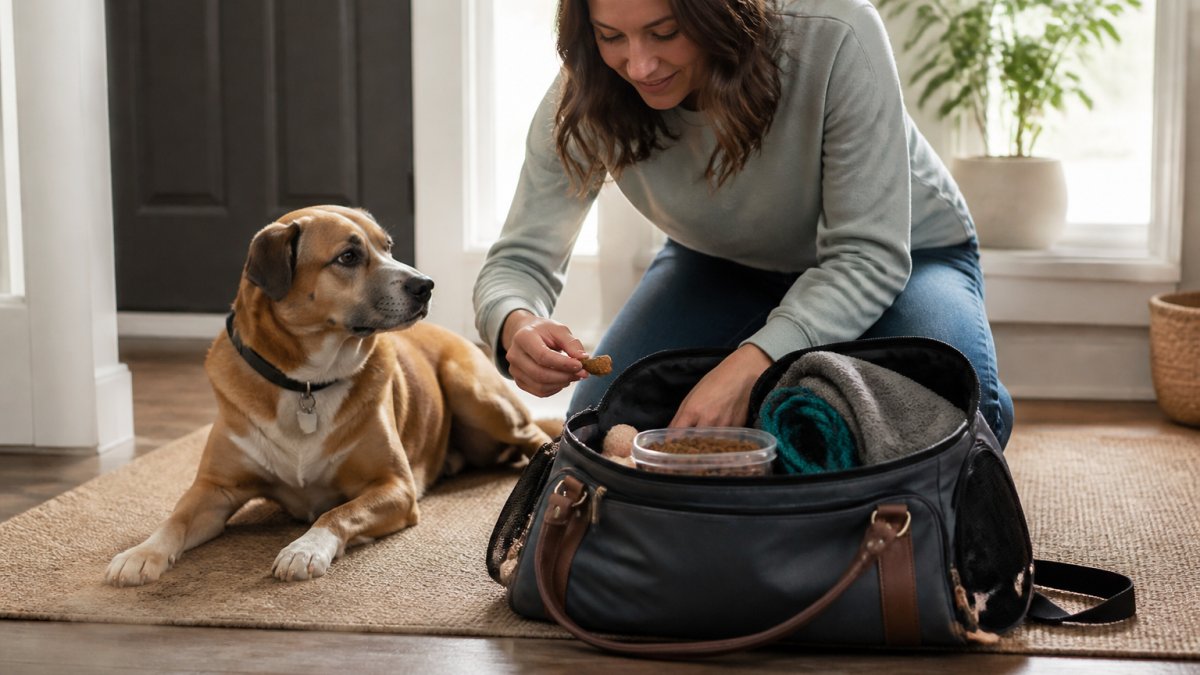
Here is the plan we walk owners through:
- Visit or tour the facility beforehand so the building is not brand new on drop-off day.
- Exercise your dog in the morning so it arrives tired rather than wired.
- Bring familiar items: a blanket, a toy, and the food your dog already eats.
- Keep drop-off short. A long goodbye signals danger. Hand over and go.
- Brief the staff in writing on your dog's quirks, fears, and feeding routine.
- Ask about updates so you are not guessing how the first night went.
That last point matters more than owners expect. A facility that sends photos or updates removes the worst part of boarding: the not knowing.
The non-supplement side deserves equal weight. A tired dog, a familiar blanket, and a short goodbye often do more for boarding anxiety than any chew.
Dog Boarding Preparation Checklist and What to Pack
Boarding preparation is the part you control, and it starts about a week out. The goal is to make the facility feel less foreign and give staff everything they need to care for your dog the way you do.
Work through this dog boarding preparation checklist before drop-off:
- Book the stay and confirm drop-off and pickup times
- Confirm the facility's vaccination requirements and send records
- Ask about their policy on calming supplements and medications
- Start any new supplement at home and watch for reactions
- Label food, treats, and any medication with your dog's name and dosing
- Pack a familiar blanket and one or two toys
What to Pack for Dog Boarding
What to pack for dog boarding is simpler than most owners make it. Bring enough regular food for the full stay plus a buffer, any medication in its original container with written dosing, a familiar blanket, one or two durable toys, and a copy of vaccination records.
Add a written note describing your dog's routine, fears, and command words; it helps staff settle your dog faster than any product. Facilities that offer individualized care, like our team at Ruffin' It Ranch, will use that note from the first hour.
Conclusion
The hardest part of boarding is the first night, and the gap between a smooth stay and a stressful one usually comes down to preparation, not products. If your dog is anxious, sensitive, or has special needs, the right facility matters as much as the right supplement. Ruffin' It Ranch offers 24/7 on-site professional staff, climate-controlled private indoor and outdoor runs, individualized care for puppies and dogs that need extra handling, and a signature crafted raw diet for dogs with specific feeding needs.
Frequently Asked Questions
Should I give my dog a calming supplement before boarding?
It depends on your dog and the trip. Calming supplements can support dogs through unfamiliar situations, and Purina's Calming Care is described for stressors like separation and novel settings. They are not sedatives, so they will not knock a dog out. Ask your veterinarian first, especially if your dog takes prescription medication or has health issues. Then test the product at home at least one to two weeks before the stay so you know how your dog responds before a boarding facility is involved.
How far in advance should I try a calming supplement before boarding?
Start a trial at home well before the boarding date, ideally one to two weeks out. Some ingredients need consistent daily use to build up, while others work within hours. A home trial shows you whether your dog accepts the format (chew, capsule, or powder), whether any side effects appear, and whether the serving size suits your dog's weight. If something goes wrong, you still have time to adjust with your vet rather than discovering it at drop-off.
Can I give my dog calming supplements with prescription medication?
Only with veterinary guidance. Ingredients like L-theanine, melatonin, valerian root, and hemp can interact with prescription anxiety or sedative medications, and the supplied research does not verify safety for combined use. Bring the exact product label, including the full ingredient list and serving size, to your vet. Tell the boarding facility which supplements and medications your dog receives, with written instructions, so staff can follow the same routine and watch for side effects.
What should I tell the boarding facility about my dog's supplements?
Give the facility written details: product name, active ingredients, serving size, timing, and how your dog takes it (mixed into food, wrapped in a treat, or given directly). Note any prescription medications separately and flag known side effects or allergies. Confirm the facility's policy on outside food and supplements before drop-off, since some have restrictions. A facility with 24/7 on-site staff, like Ruffin' It Ranch, can follow a consistent schedule and report back on how your dog is eating and settling in.