 listicle
7 Benefits of One-on-One Grooming for Dogs
Table of Contents
- Why One-on-One Grooming Changes the Experience for Dogs
- 1. Individual Attention From Start to Finish
- 2. A Calmer, Quieter Environment With Fewer Stress Triggers
- The Benefits of Cage-Free Grooming for Anxious Dogs
- Dog Grooming for Anxious Dogs: Reading Body Language and Comfort Level
- What to Tell a Dog Groomer Before the First Appointment
- Which Dogs Benefit Most From One-on-One Grooming
- Frequently Asked Questions
Last Updated: October 14, 2026
Why One-on-One Grooming Changes the Experience for Dogs
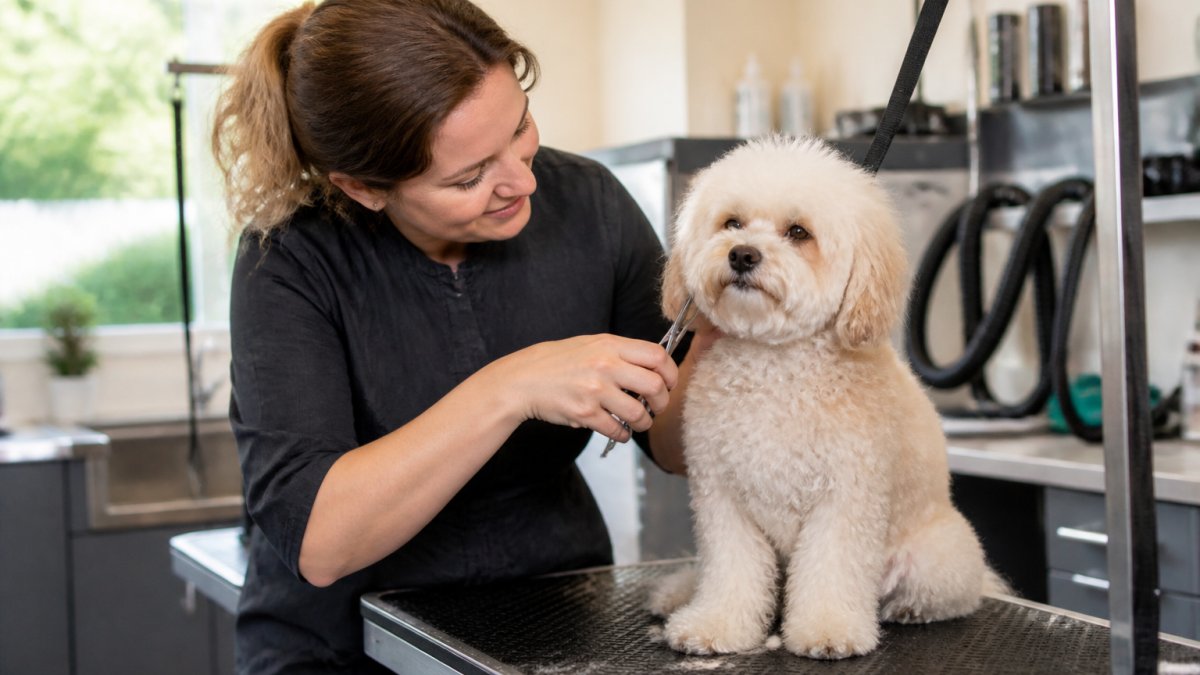
One-on-one grooming is a service model where a single groomer works with one dog at a time, from the first brushstroke to the final nail trim, without kennel time or a crowded salon floor.
Ask any groomer who has worked both models and they will tell you the same thing: dogs behave differently when they are not surrounded by other animals. The barking stops mattering. The waiting stops existing.
Below, we break down seven benefits of one-on-one grooming, plus what to expect at a first appointment and how to tell whether your dog actually needs this level of service.
1. Individual Attention From Start to Finish
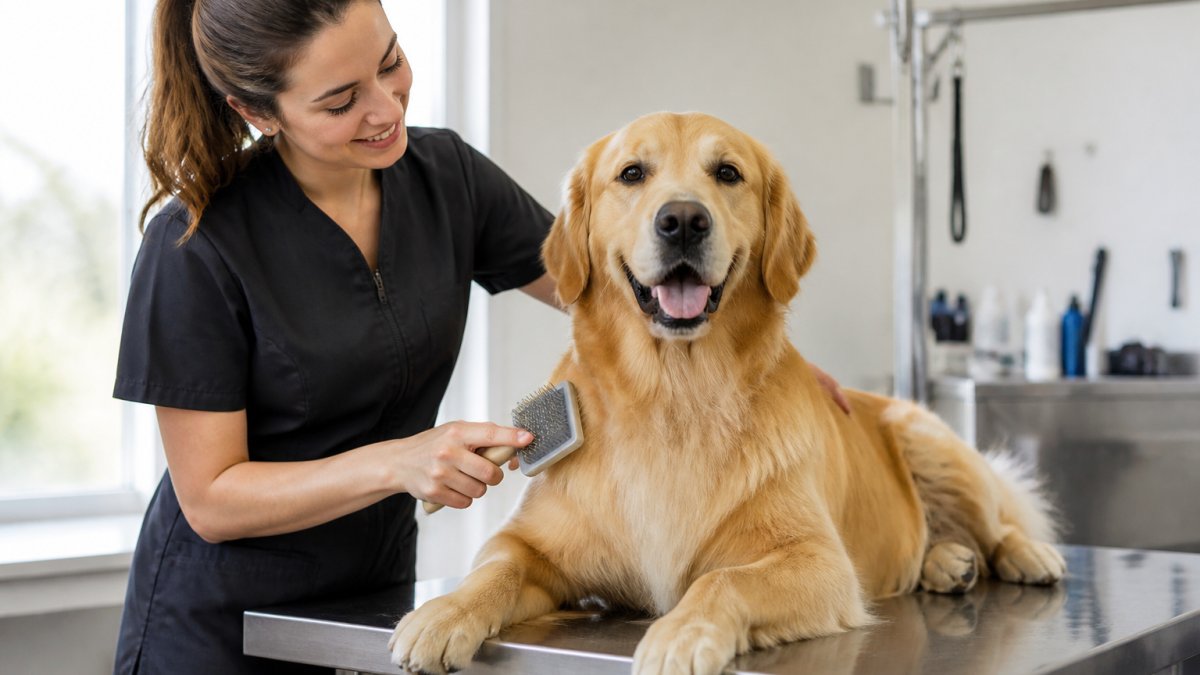
Individual attention means the groomer's hands, eyes, and focus stay on one dog for the whole session. Nothing gets rushed because three other dogs are waiting.
The practical difference shows up in small things. A groomer working one-on-one notices a hot spot forming behind the ear. They catch a cracked nail before it splits.
2. A Calmer, Quieter Environment With Fewer Stress Triggers
A calm grooming environment is one of the biggest factors in how a dog handles the appointment. Salons with multiple dogs create a constant stream of triggers: barking, whining, the sound of dryers, the smell of unfamiliar animals.
For a nervous dog, that is a lot to process on top of being handled by a stranger.
One-on-one grooming strips most of that away. There is no waiting area full of other animals. There is no chorus of barking from the back room.
Many owners report that their dogs are noticeably more relaxed at pickup after switching to a one-on-one setting. Some dogs that used to tremble at the door now walk in without hesitation.
The Benefits of Cage-Free Grooming for Anxious Dogs
The benefits of cage-free grooming for anxious dogs come down to one thing: no confinement between steps.
Cage-free grooming removes that piece of the experience. The dog stays with the groomer or in an open, supervised space for the entire appointment.
This matters most for dogs who have had a bad experience before. A dog that was once left in a kennel for hours may associate the entire building with that feeling.
At Ruffin' It Ranch, our grooming service is built around a stress-free, cage-free environment. Dogs are not left waiting in a run between steps.
Dog Grooming for Anxious Dogs: Reading Body Language and Comfort Level
Dog grooming for anxious dogs starts with reading the dog, not the clock. A skilled groomer watches for the signals that say "slow down" long before a dog escalates to growling or snapping.
Common signs a dog is reaching its limit:
- Tucked tail or stiff, frozen posture
- Whale eye, where the dog turns its head away but keeps its eyes on the groomer
- Lip licking or yawning when neither hunger nor tiredness applies
- Sudden stillness after previously squirming
- Pulling paws away during nail trimming
- A hard stare or a growl that seems to come out of nowhere
A one-on-one setting makes it possible to respond to these signals immediately. The groomer can pause, switch to a different part of the body, offer a break, or simply slow down. In a busy salon, that flexibility often does not exist.
What a groomer should do when a dog shows stress
Reading the signal is only half the job. The response is what separates a careful groomer from a rushed one. A reasonable protocol looks like this:
- Pause the current step. Stop the clipper, the dryer, or the nail trim. Give the dog a few seconds of stillness.
- Change the approach. Switch to a different body area, use a different tool, or change the groomer's position relative to the dog.
- Offer a break. Some dogs settle after 30 to 60 seconds of standing calmly with no handling at all.
- Reduce the scope. If the dog is done for the day, the groomer finishes what is safe and reschedules the rest. A partial groom today beats a traumatic full groom that sets the dog back months.
- Stop if needed. If the dog is escalating despite adjustments, the appointment ends. No groom is worth a bite injury to the dog or the groomer.
A groomer who cannot describe this kind of sequence is a groomer who has not thought carefully about anxious dogs.
Safety protocols that should be in place
Safety claims are easy to make and hard to verify. These are the concrete practices worth asking about before you book:
- One dog at a time on the table. No dog waits in a kennel while another is being worked on.
- Non-slip surfaces. A dog that slips on a table panics. Rubber mats and belly straps (used correctly, not as restraint) reduce falls.
- Sanitized tools between dogs. Clippers, blades, and scissors should be cleaned and disinfected between appointments, not just wiped down.
- Secure door and gate practices. A dog that bolts during a stressful moment is a serious risk. Ask how the space is contained.
- A first-aid kit on site. Cuts, nicks, and quicked nails happen. The groomer should have styptic powder, gauze, and a plan.
- A vet contact on file. For senior or medically fragile dogs, the groomer should know which clinic to call and have your authorization to do so.
What happens if a dog becomes distressed mid-appointment
This is the question most benefit-focused articles skip. A good answer covers three things: the groomer stops the stressful step, the dog is given space and time to settle, and the owner is contacted if the dog cannot continue safely. Some groomers will finish a partial groom and send the dog home; others will call for pickup. Either is reasonable. What is not reasonable is pushing through a dog that is panicking.
What to Tell a Dog Groomer Before the First Appointment
What to tell a dog groomer before the first appointment determines how smoothly that visit goes. The more useful context you provide upfront, the better the groomer can plan the session around your dog.
Cover these points before the first visit:
- Handling history. Has your dog been groomed before? Any bad experiences, injuries, or reactions to specific tools?
- Touch sensitivity. Does your dog dislike having paws, ears, or the tail handled? Any spots that are off-limits?
- Health conditions. Skin issues, allergies, arthritis, recent surgeries, or medications that affect coat or behavior.
- Behavior notes. Does your dog resource guard, startle easily, or react to other animals? Be honest, not optimistic.
- Coat goals. Do you want a specific length, a breed standard cut, or just a practical trim for summer?
- Vaccination status. Most professional groomers require current vaccinations, and it protects every dog in the building.
A short written note works better than a rushed verbal summary at drop-off. It gives the groomer something to refer back to mid-session.
Which Dogs Benefit Most From One-on-One Grooming
One-on-one grooming helps almost every dog, but it matters most for a specific group. Senior dogs, puppies, dogs with anxiety, dogs with special needs, and dogs that have been turned away from other salons tend to see the biggest difference. The table below is a starting point, not a diagnosis, use it to frame the conversation with your groomer.
| Dog Profile | One-on-One Grooming | Standard Salon |
|---|---|---|
| Anxious or reactive | Strongly recommended | Often stressful |
| Senior with mobility issues | Strongly recommended | Tiring, may need breaks |
| Puppy, first grooms | Recommended | Can work if calm |
| Confident, easy coat | Helpful, not essential | Usually fine |
| Medically fragile or post-surgery | Strongly recommended | Higher risk of setback |
| Dog with a bite history | Often the only option | Frequently turned away |
When one-on-one grooming is clearly the right call
- The dog has been turned away elsewhere. A salon that refuses service is usually reacting to a real handling risk. A one-on-one groomer can build a plan around it instead of declining.
- The dog has a bite or snap history. Even a single incident changes the liability picture. One-on-one removes the other dogs and other people that make a reactive dog more likely to escalate.
- The dog is senior or medically fragile. Arthritis, heart conditions, and recent surgeries all argue for a slower appointment with no kennel time and no waiting.
- The dog has never been groomed and is past the socialization window. A first experience that goes badly at 4 years old is much harder to undo than one that goes well at 4 months old.
- The owner has been told the dog is 'difficult.' That label usually means the dog needs a different environment, not a different dog.
When one-on-one grooming may not be necessary
A confident, easygoing dog with a simple coat, a short-haired breed that only needs a bath, nail trim, and ear cleaning, may do perfectly well in a well-run multi-dog salon. The same is true for a dog that has been groomed regularly since puppyhood and shows no stress signals at drop-off or pickup.
If your dog falls into that group, the extra cost of one-on-one may not buy you much. The honest answer is that the right model depends on temperament, health, coat type, and history, not on a blanket rule.
A simple decision framework
Ask yourself three questions before booking:
- Does my dog show stress at the door, in the car, or at pickup? If yes, one-on-one is worth trying.
- Has any groomer ever refused service or asked me to pick up early? If yes, one-on-one is likely the only viable option.
- Does my dog have a health condition that makes standing, waiting, or handling risky? If yes, one-on-one is the safer choice.
If the answer to all three is no, a standard salon may be fine. If any answer is yes, one-on-one is the model to pursue.
If you are unsure which model fits your dog, ask a groomer directly. A professional will tell you honestly whether your dog needs the one-on-one setup or would be fine either way.
Frequently Asked Questions
How can one-on-one grooming help an anxious dog?
One-on-one grooming removes the two biggest stress triggers for nervous dogs: other animals and long waits in a kennel or holding area. With individual attention, the groomer can read your dog's body language in real time, pause when stress signals appear, and adjust handling on the spot. This builds trust over repeated visits, so many anxious dogs gradually become more comfortable with bathing, nail trimming, and coat care.
What should I tell a dog groomer before my dog's appointment?
Share your dog's temperament, any history of biting or handling sensitivity, known anxiety triggers (clippers, dryers, other dogs), current medications, skin conditions, and the specific look you want. Mention if your dog is a senior or has mobility issues. Clear communication helps the groomer plan a slower, more tailored session and decide whether a one-pet-at-a-time appointment is the right fit.
Is one-on-one grooming less stressful for dogs than a busy salon?
For many dogs, yes. A quiet environment with fewer distractions, no barking, and no waiting area reduces anxiety triggers. The groomer works start-to-finish with one pet, so there is no cage drying and no rotating between animals. Dogs who previously trembled or resisted grooming often settle faster when they receive close supervision and handling tailored to their comfort level.
How long does a one-on-one dog grooming appointment take?
Most one-on-one sessions run 60 to 90 minutes depending on breed, coat condition, and services like bathing, nail trimming, and trimming. Because the groomer works uninterrupted from start to finish, the appointment is often more efficient than a group setting where dogs wait between stages. Ask the groomer for a time estimate when you book.