 comparison
Is Cage-Free Grooming Better for Puppies?
Table of Contents
- Cage-Free vs. Kennel Dog Grooming: What's the Difference
- Puppy Grooming Age: When to Start Cage-Free Grooming
- Pros and Cons of Cage-Free Grooming for Puppies
- Puppy Grooming Safety: What to Look For in a Cage-Free Environment
- Preparing Your Puppy's First Grooming Appointment
- Is Cage-Free Grooming Right for Your Puppy?
- Frequently Asked Questions
Last Updated: October 10, 2026
Cage-Free vs. Kennel Dog Grooming: What's the Difference
When choosing a groomer, you'll decide between cage-free and kennel-based grooming, and understanding whether is cage free grooming better for puppies requires considering how each shapes your puppy's experience differently.
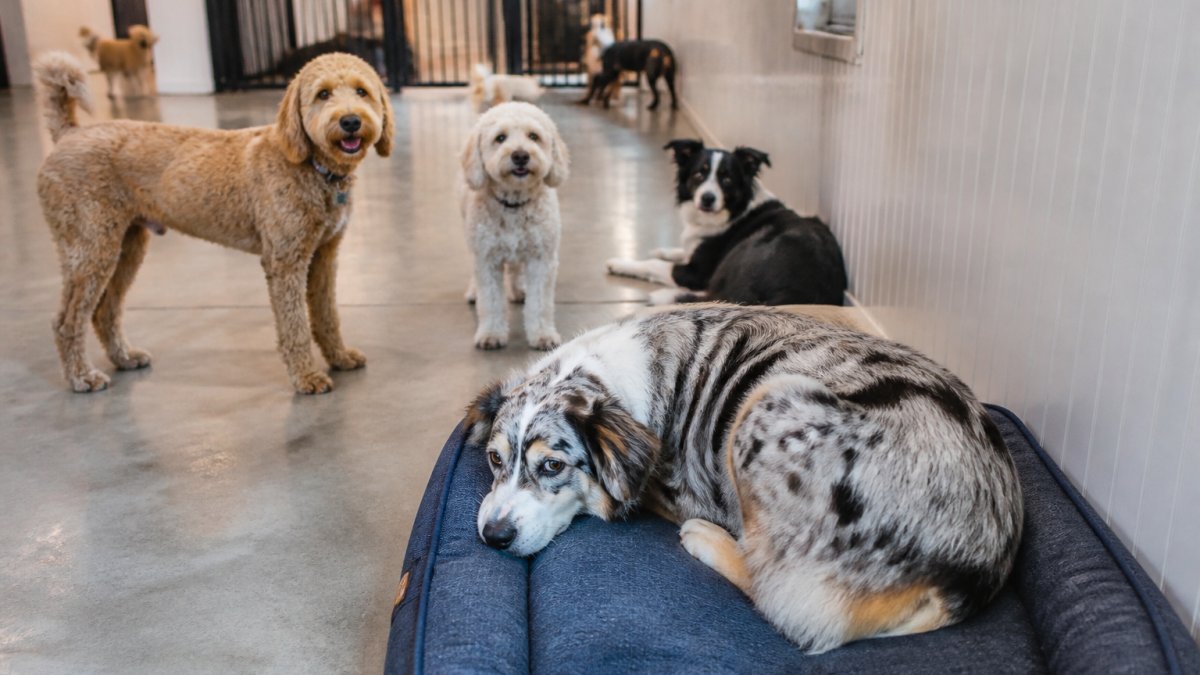
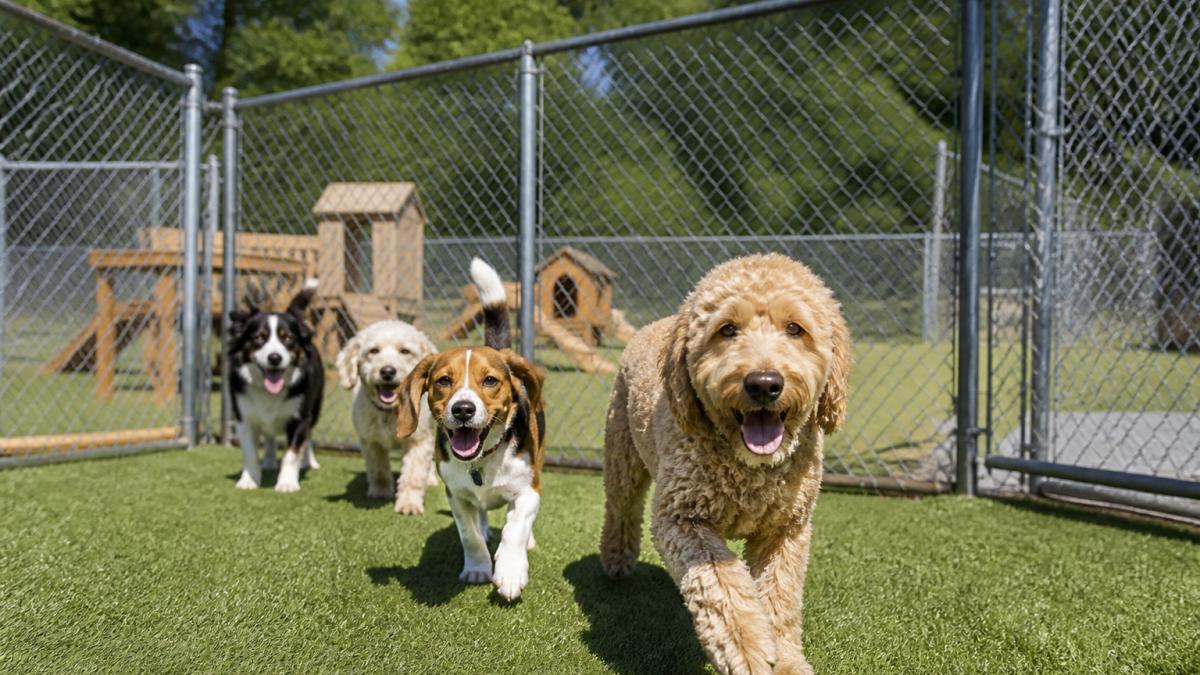
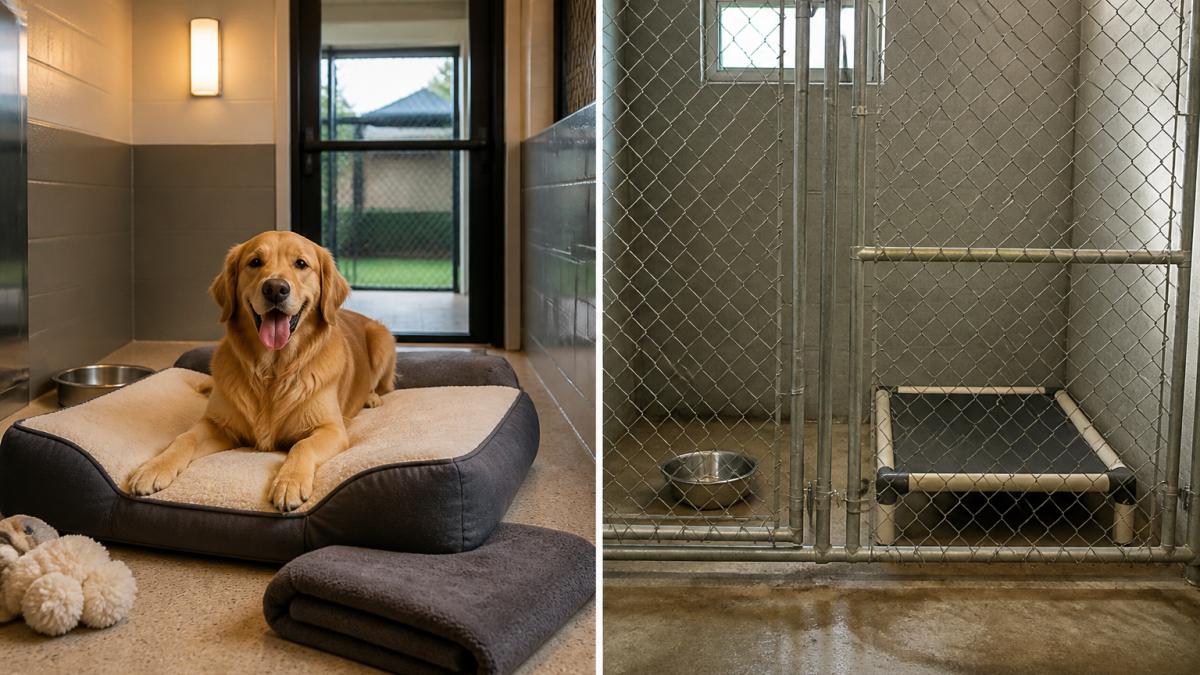
Kennel-based salons use individual crates during drying and waiting periods. Cage-free grooming keeps puppies in supervised open spaces where they move freely. Cage-free prioritizes movement and reduces confinement anxiety; kennel-based offers practical containment and simplified workflow.
Many salons use a hybrid approach: kennels for drying, open space during bathing and styling. Clarify what "cage-free" means at your chosen groomer.
Puppy Grooming Age: When to Start Cage-Free Grooming
Begin grooming between 8 and 12 weeks, but age alone doesn't determine cage-free readiness. Vaccination status, socialization, and prior handling matter equally.
Vaccination and Disease Exposure Readiness
Cage-free grooming exposes puppies to other dogs, making vaccination critical. Most veterinarians recommend completing the DHPP booster series (typically by 16 weeks) before cage-free grooming. Puppies with fewer than two DHPP shots face elevated disease risk in shared spaces.
Many facilities require rabies vaccination proof before cage-free admission. If your puppy is under 14 weeks or has fewer than two DHPP boosters, kennel-based grooming is safer.
Socialization Window and Confidence Building
The critical socialization window (3-14 weeks) benefits from positive exposure to new people, environments, and other dogs. Cage-free grooming can support this, but only if your puppy has experienced home handling and shows curiosity rather than fear.
Puppies groomed one-on-one at 8-12 weeks often adapt to cage-free grooming by 14-16 weeks. Those showing fear responses should start kennel-based or private to build positive associations first.
Prior Handling Experience and Gradual Acclimation
Begin home desensitization by 6 weeks: handle paws, ears, and face; introduce running water sounds; use soft brushes. Puppies with 4-6 weeks of positive home handling adapt faster to grooming.
For cage-free grooming, start with a quiet, controlled setting (kennel-based or one-on-one). After 1-2 successful appointments with calm behavior, transition to cage-free if desired.
Age and Temperament Benchmarks
8-12 weeks: First grooming in private or kennel-based setting; vaccination incomplete.
12-14 weeks: Ready for cage-free if two DHPP boosters completed, confident in new environments, and 1-2 prior appointments without stress.
14-16 weeks: Developmentally ready if vaccination on track, consistent socialization, and positive prior experiences.
16+ weeks: Good candidates with complete vaccination, positive socialization, and prior grooming experience.
Work with your groomer and veterinarian to assess your individual puppy's readiness rather than assuming cage-free is appropriate at any specific age. A puppy's behavior and health status matter far more than the calendar.
Pros and Cons of Cage-Free Grooming for Puppies
Potential Benefits
The primary benefit is reduced confinement anxiety. Puppies stressed in enclosed spaces often calm when allowed to move freely in supervised environments, leading to more cooperative sessions.
Puppies can shift position, stretch, and stay comfortable rather than sitting in crates, valuable for high-energy puppies.
Cage-free environments support socialization through controlled interaction with other dogs, building confidence and reducing fear responses during the critical socialization window.
Potential Drawbacks and Safety Risks
Cage-free grooming increases escape risk if supervision lapses. Frightened puppies may bolt, and constant vigilance becomes harder during busy schedules.
Dog-to-dog interactions risk injury. Play between unfamiliar puppies can escalate into conflict, causing nips, scratches, or collisions.
Infectious disease spreads more easily in shared space. Parasites, skin conditions, and respiratory infections risk incomplete vaccination schedules.
Some puppies become overstimulated by open space and other dogs, extending grooming time and creating negative associations.
Open areas require continuous cleaning between puppies; kennels isolate and sanitize more systematically.
| Aspect | Cage-Free Grooming | Kennel-Based Grooming |
|---|---|---|
| Confinement Stress | Lower for most puppies | Higher for anxiety-prone puppies |
| Escape Risk | Higher | Lower |
| Disease Exposure | Higher in shared spaces | Lower with individual containment |
| Socialization Opportunity | Possible with supervision | Minimal |
| Overstimulation Risk | Moderate to high | Lower |
| Sanitation Control | More challenging | Easier to manage |
| Best For | Confident, well-socialized puppies | Anxious or very young puppies |
Puppy Grooming Safety: What to Look For in a Cage-Free Environment
If choosing cage-free grooming, inspect the facility thoroughly and verify safety systems before booking.
Physical Containment and Escape Prevention
Secure, fully enclosed areas with latching doors prevent escape. Non-slip flooring prevents injuries. Ask about past escape incidents; refusal to discuss is a red flag.
Check for hazards: exposed cords, chemicals, sharp tools, door gaps. Confirm temperature control; puppies overheat easily.
Staff-to-Puppy Ratios and Supervision
Staff-to-puppy ratio is the most important safety factor. Ideal: one staff member per puppy or two puppies with two staff. A single groomer managing three+ puppies cannot maintain vigilance.
Confirm supervision is continuous, not intermittent. Staff should be visibly present and actively watching, not checking in periodically.
Observe staff during a visit. Rushed or distracted groomers miss early warning signs of conflict or overstimulation.
Vaccination Verification and Health Screening
Reputable facilities require proof of DHPP and rabies vaccination. Direct verification with your veterinarian is more reliable than owner-provided documentation.
Ask about puppies with incomplete vaccination. Responsible facilities recommend kennel-based or one-on-one grooming for under-vaccinated puppies.
Ask about health screening: exposure to sick dogs, diarrhea, coughing, recent antibiotics, or ongoing medication. Thorough screening protects all puppies.
Temperament Screening and Separation Protocols
Ask about temperament screening. Groomers should observe whether puppies approach new people with curiosity or retreat, startle easily, or show resource guarding or fear aggression.
Puppies showing fear aggression, extreme anxiety, or resource guarding should be groomed kennel-based or one-on-one. Groomers insisting all puppies succeed in cage-free are not honest about individual differences.
Confirm puppies are isolated during bathing and drying for safety and sanitation. Keeping puppies together during these steps increases cross-contamination and injury risk.
Ask if the facility uses play pens or zones within the cage-free space to reduce overstimulation while maintaining benefits.
Emergency Protocols and First Aid
Ask about emergency protocols: documented procedures, on-call veterinarian, staff first aid/CPR training, and examples of past incidents.
Confirm a plan for separating puppies if conflict occurs, ideally a quiet room. Ask if they intervene proactively or reactively.
Request emergency vet contact information. Inability to name an emergency vet signals lack of preparedness.
Sanitation and Disease Prevention
Observe cleaning practices: bowl sanitization, floor cleaning frequency, hand washing between puppies, tool sanitization.
Ask about protocols for puppies with skin conditions, parasites, or respiratory infections. Responsible facilities refuse or isolate affected puppies.
Ask about past disease outbreaks and changes implemented. Downplaying or refusing to discuss incidents is a warning sign.
Questions to Ask Before Booking
Use this checklist during your facility visit or phone consultation:
- How many puppies are supervised simultaneously, and is supervision continuous?
- What is your vaccination requirement, and do you verify records directly with veterinarians?
- What is your temperament screening process, and which puppies are not appropriate for cage-free grooming?
- Are puppies separated during bathing and drying?
- Do you have a documented emergency protocol and a veterinarian on-call?
- How are food, water, and grooming tools sanitized between puppies?
- Have you experienced any disease outbreaks in the past year, and what changes did you make?
- Can you provide references from other puppy parents?
Trust your instincts. If a facility seems disorganized, staff appear overwhelmed, or the groomer cannot answer your questions clearly and confidently, choose a different groomer. Your puppy's safety depends on it.
Preparing Your Puppy's First Grooming Appointment
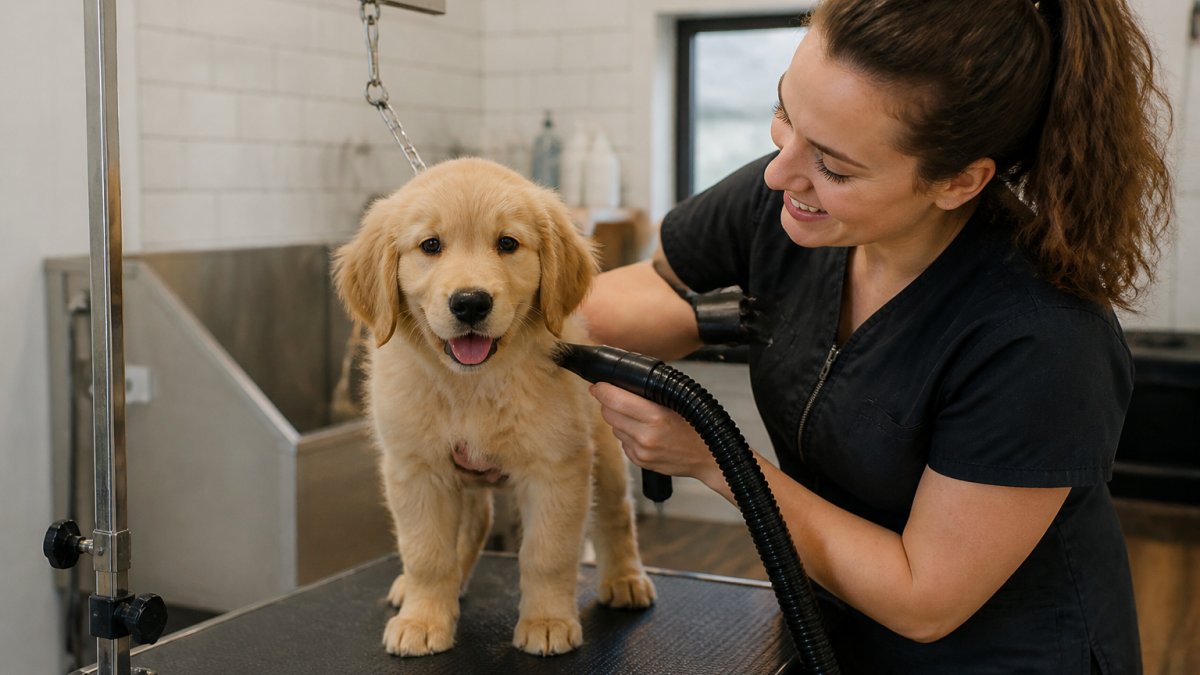
Your puppy's first grooming experience sets the tone for all future appointments. Preparation dramatically improves outcomes, regardless of whether you choose cage-free or kennel-based grooming.
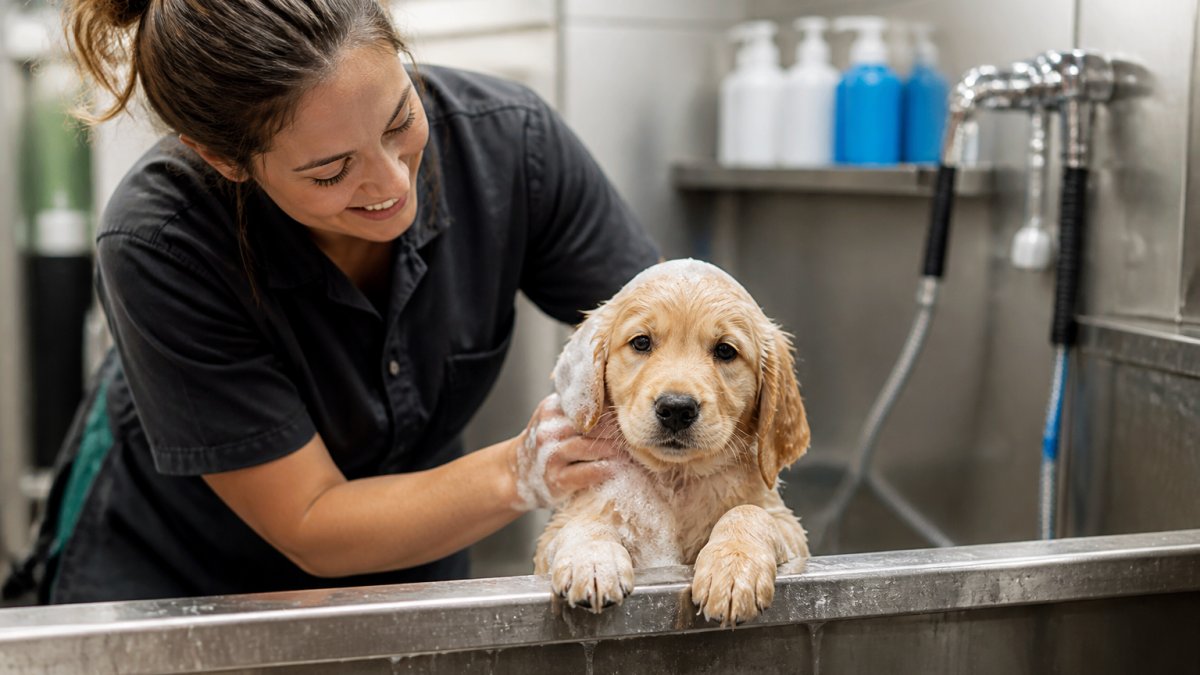
Start handling your puppy at home weeks before the appointment. Gently touch their paws, ears, face, and belly. Run your hands over their coat in the direction grooming tools will move.
Introduce your puppy to the grooming facility before the appointment if possible.
Communicate your puppy's temperament clearly with the groomer. Provide information about fear responses, handling sensitivities, and any previous negative experiences. If your puppy startles easily or has shown anxiety in new environments, mention this explicitly.
Avoid scheduling the first appointment during peak hours. A quieter time allows the groomer to move slowly, take breaks if your puppy becomes stressed, and provide extra reassurance.
Keep pre-appointment routines calm. Don't convey nervous energy to your puppy through your own behavior. A relaxed puppy parent helps create a relaxed puppy.
Ask about post-appointment feedback. What was your puppy's behavior like? Did they show stress signals? How did they respond to specific grooming steps?
Is Cage-Free Grooming Right for Your Puppy?
Whether is cage free grooming better for puppies depends on your puppy's individual temperament, age, and health status.
Puppies with a history of separation anxiety, fear-based reactivity, or previous negative experiences often do better in a kennel-based setting initially.
Age matters significantly. Puppies under 12 weeks may benefit from the security of a kennel during their first grooming experience. Older puppies (16+ weeks) with positive early socialization typically adapt well to cage-free environments.
Health considerations are paramount. If your puppy's vaccination series isn't complete, kennel-based grooming with strict sanitation protocols is safer than shared cage-free space. Puppies recovering from illness or currently on medication should be groomed in isolated settings.
Consider your groomer's expertise with cage-free methods. Not all groomers are equally skilled at managing puppies in open environments.
The best decision combines your puppy's personality, your groomer's capabilities, and realistic assessment of the specific facility. Ask detailed questions, observe the environment, and trust your instincts about whether the setup feels right for your puppy.
Choosing the right grooming environment for your puppy is an investment in their long-term comfort and behavior. Whether your puppy needs a gentle introduction to grooming or specialized care for anxiety-related concerns, we're equipped to provide the compassionate, professional experience your puppy deserves. Learn more about our grooming services and schedule your puppy's first appointment to see how we can make grooming a positive experience for your pet.
Frequently Asked Questions
At what age can puppies safely start grooming?
Most puppies can begin basic grooming at 6-8 weeks old, after their first vaccines. However, full grooming sessions typically start around 12-16 weeks when puppies are more physically and behaviorally ready. Early grooming visits should be short and positive to build comfort. Always confirm vaccination status with your veterinarian before your puppy's first grooming appointment, especially in a cage-free environment where other dogs may be present.
Is cage-free grooming less stressful for puppies?
Cage-free grooming can reduce stress for some puppies by allowing movement and avoiding confinement anxiety. However, the environment's quality matters more than the cage-free label itself. A calm, well-supervised cage-free salon with attentive staff and limited dog-to-dog interaction typically produces better outcomes than a chaotic one. Puppies with separation anxiety or fear-based responses may benefit from cage-free settings, but overstimulation from other dogs present is a real risk if supervision is poor.
What should I ask a groomer about puppy supervision and safety in a cage-free setting?
Ask how many dogs are in the grooming space at once, how staff monitor interactions, and whether your puppy will have one-on-one handling during bathing, drying, and nail trimming. Inquire about vaccination requirements for all dogs in the facility, protocols for separating puppies from adult dogs, and how they manage puppies showing stress signals like trembling or excessive barking. Request details on rest periods between grooming steps and whether your puppy will be supervised during waiting time and potty breaks.
How can I prepare my puppy for their first grooming appointment?
Start by choosing a groomer experienced with puppies and discussing your puppy's temperament beforehand. At home, gently handle your puppy's paws, ears, and face to build comfort with touch. Schedule a brief meet-and-greet visit if possible. On appointment day, keep the morning calm and take your puppy out for a potty break beforehand. Arrive a few minutes early so your puppy can acclimate to the space. Ask the groomer to keep the first session short and focus on positive experiences rather than a full groom.
What are the main safety concerns with cage-free grooming for puppies?
Key concerns include disease exposure if vaccination protocols are lax, injury risk from unsupervised dog-to-dog interaction, escape risk in an open environment, and overstimulation leading to anxiety or behavioral issues. Puppies are also vulnerable to stress from excessive noise, unfamiliar dogs, or inadequate rest periods between grooming steps. A safe cage-free grooming environment requires small group sizes, strict health screening, trained staff attentive to each puppy's stress signals, and clear protocols for separating puppies by age and temperament.