 how-to
How Long Does Dog Socialization Take? A Practical Guide
Table of Contents
- How Long Does Dog Socialization Take? The Direct Answer
- Puppy Socialization Timeline: What Happens at Each Stage
- How Often to Socialize a Puppy for Steady Progress
- Safe Exposures: Balancing Vaccination Status and New Experiences
- How to Socialize an Adult Dog or an Undersocialized Rescue
- Socializing a Fearful Dog Without Forcing Interaction
- How to Tell if Your Dog Is Coping Well (and What to Do After the Window)
- Frequently Asked Questions
Last Updated: October 15, 2026
How Long Does Dog Socialization Take? The Direct Answer
Dog socialization is the process of gradually introducing a dog to new people, animals, places, and experiences so it learns to respond with confidence instead of fear.
That surprises most owners. They picture a few weeks of puppy classes and assume the job is done.
The early window matters most. The months after it decide whether the foundation holds.
American Veterinary Medical Association guidance on puppy socialization stresses that the window closes faster than owners expect, which is why the timing question matters so much.
Here is the short version:
- Core window: 3 to 16 weeks
- Formative period: up to about 12 to 18 months
- Maintenance: ongoing, lifelong
Below, we break down each stage and give you a week-by-week plan you can actually follow.
Puppy Socialization Timeline: What Happens at Each Stage
The puppy socialization timeline runs in three phases: the early window from 3 to 16 weeks, the adolescent stretch from 4 to 12 months, and adult maintenance beyond that. Each stage asks something different of you.
The Socialization Window: 3 to 16 Weeks
The socialization window, sometimes called the sensitive period, is the developmental stage when a puppy's brain is most open to new experiences. What a puppy meets during this time tends to stick. What it misses can become a lifelong gap.
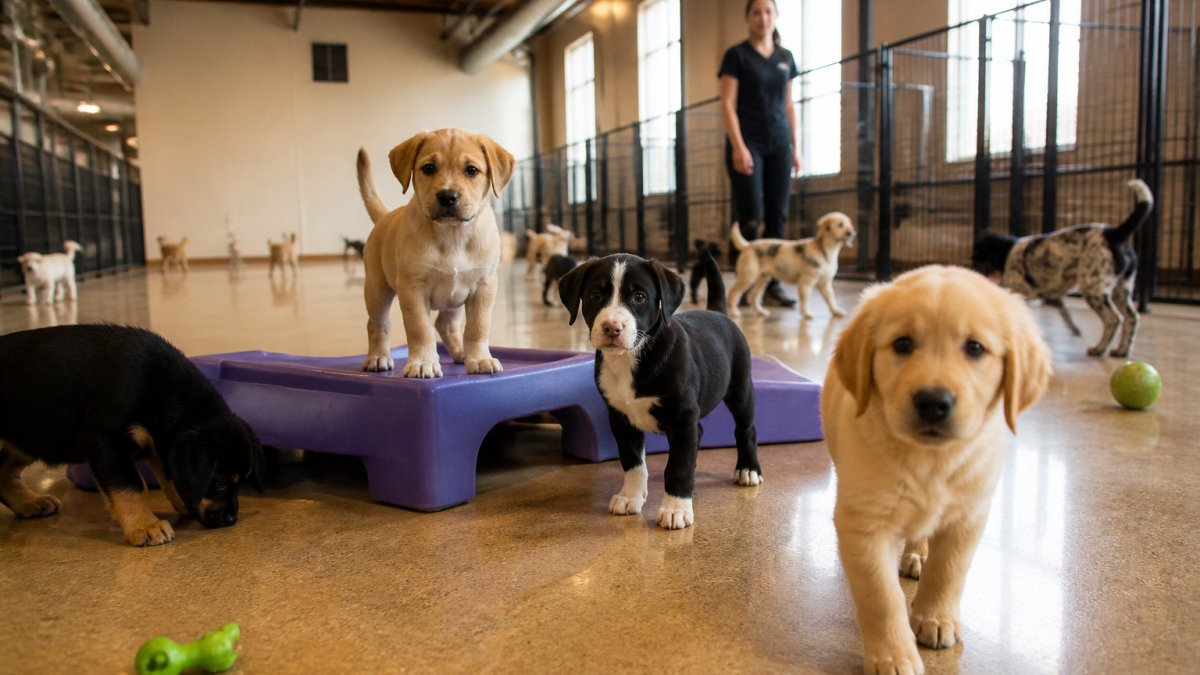
Most breeders start the process before you ever bring your puppy home. This is called breeder socialization, and it includes handling, household sounds, and early human contact. Ask any breeder what they exposed your puppy to. That answer tells you where to pick up the work.
The window does not stay open. By roughly 16 weeks, new experiences start producing caution instead of curiosity. That is why timing matters more than perfection.
A Week-by-Week Socialization Plan
A structured plan beats random exposure. The key is not the number of experiences but the quality of each one and whether your puppy ends it calm. Use the schedule below as a starting frame, then adjust the pace to your puppy's comfort.
| Week | Focus | Example experiences | Advance when... |
|---|---|---|---|
| 8-9 | Home base | Household sounds (vacuum, doorbell recording), handling paws and ears, different floor textures, crates and gates | Puppy takes treats and relaxes within a minute of each new sound or surface |
| 10-11 | People | Visitors of different ages, hats, uniforms, calm children, someone in a wheelchair or with a cane | Puppy approaches a new person voluntarily and accepts a treat from their hand |
| 12-13 | Places | Car rides, vet lobby visits (no exam), quiet outdoor environments, pet-store doorway from a distance | Puppy settles on a mat in a new place and eats treats within two minutes |
| 14-15 | Animals | Known, healthy adult dogs, a reputable puppy class, a calm cat behind a gate | Puppy offers play bows or relaxed sniffing rather than freezing or hiding |
| 16 | Review | Repeat anything your puppy found stressful, at a lower intensity | Puppy recovers from a startle within 30-60 seconds |
Keep each session short. Five to ten minutes of calm exposure beats an hour of chaos. A useful rule of thumb is one new thing per session, three to five sessions per week, and a rest day between harder outings.
Progression is not a straight line. If your puppy freezes, tucks its tail, or stops eating, you have moved too fast. Drop back to the last setup that worked, repeat it two or three times, and only then add difficulty.
Socialization Versus Forced Interaction
A common mistake is treating socialization as a checklist of greetings. It is not. Successful socialization means your puppy learns that new people, animals, and places are safe and predictable, not that it must greet every one of them.
That distinction matters because forced greetings backfire. A puppy that is passed around a party, held while strangers pet its face, or pushed toward a dog it wants to avoid learns that new experiences are something to endure. Choice, distance, and positive associations do the real work.
If a puppy chooses not to interact, that is not a failure. It is information. Note what it avoided, lower the intensity next time, and try again when it is rested and hungry.
How Often to Socialize a Puppy for Steady Progress
Aim for one or two short, positive exposures per day rather than one long outing per week. Frequency builds familiarity, and familiarity is what creates confidence. Short sessions also let you stop before your puppy gets overwhelmed.
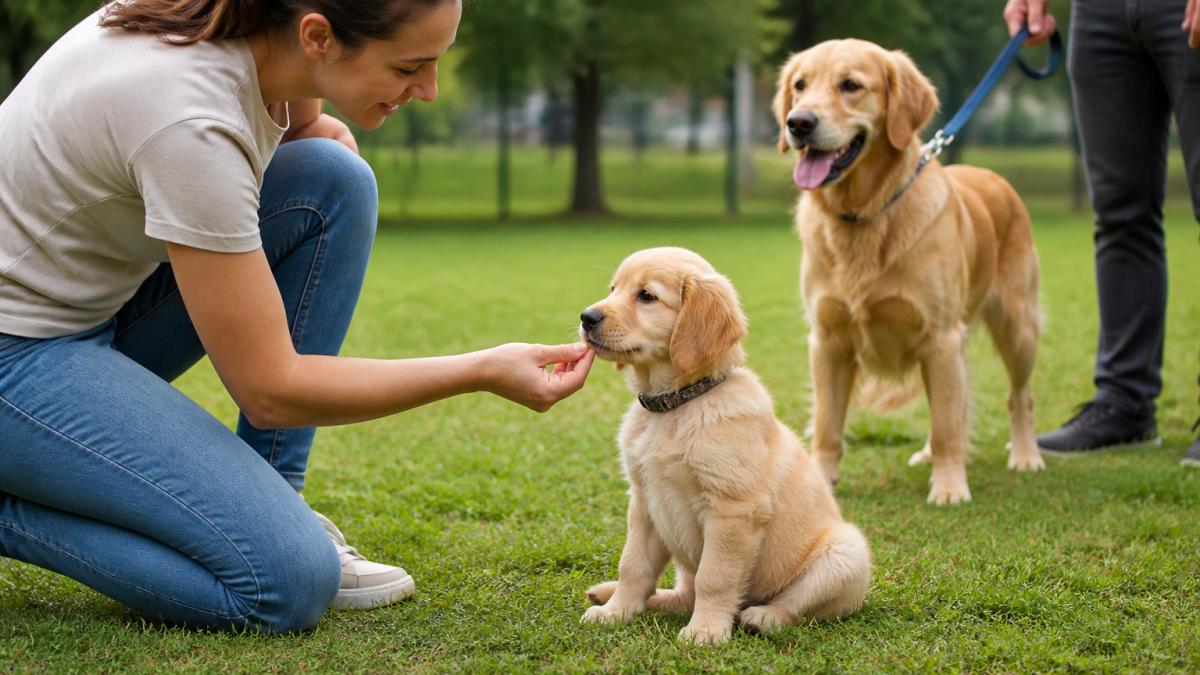
Variety matters as much as repetition. A puppy who meets ten strangers in one afternoon learns less than one who meets two strangers on five different days. Spacing the experiences out gives the brain time to file each one as safe.
Watch for overstimulation. Signs include frantic zooming, nonstop biting, and refusing treats. When you see them, end the session. A bad experience can undo several good ones.
Safe Exposures: Balancing Vaccination Status and New Experiences
You can socialize a puppy before its vaccination series is complete, but you have to choose the setting carefully. Disease risk is real, and so is the cost of waiting until 16 weeks to start.
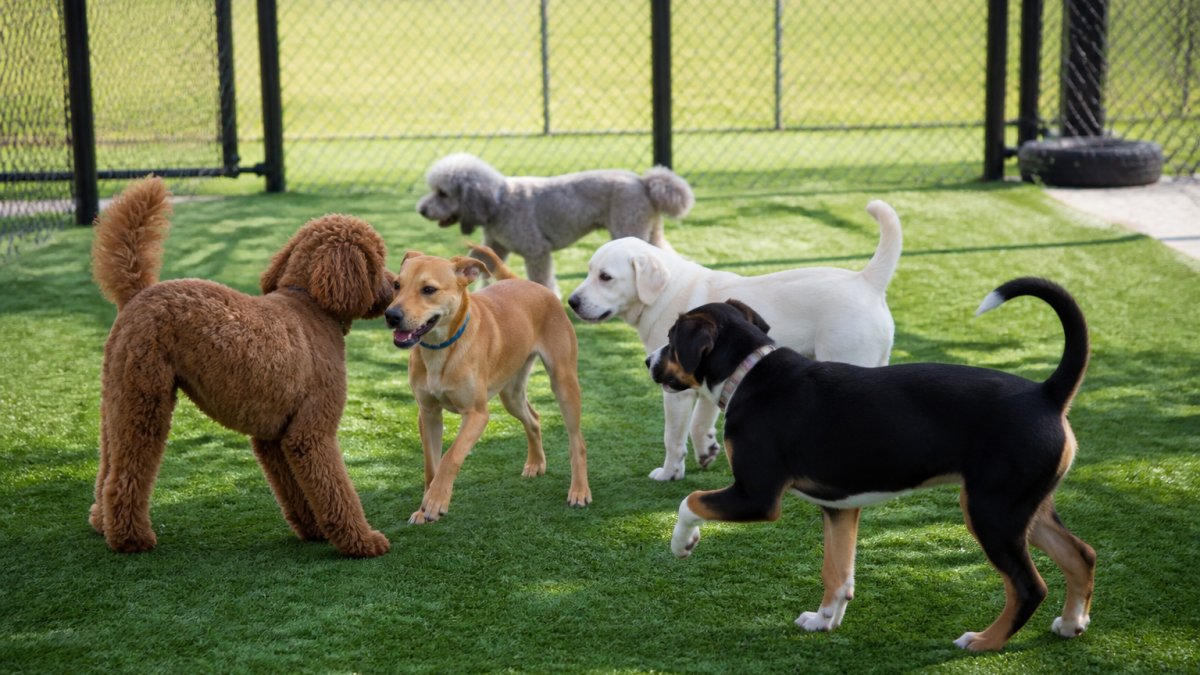
The middle path is controlled exposure. Carry your puppy in public rather than letting it walk on unknown ground. Meet healthy, vaccinated, known dogs in private yards instead of dog parks. Invite people to your home, where you control who comes in and what they bring.
Avoid high-traffic areas where unknown dogs eliminate, such as dog parks and busy sidewalks. Your veterinarian knows your local risk level best, so follow their guidance on what is safe before puppy shots are finished.
AVMA resources on canine vaccination and preventive care explains why vets weigh local disease risk against the cost of a missed socialization window.
How to Socialize an Adult Dog or an Undersocialized Rescue
Adult dogs can absolutely learn to handle new experiences. It just takes longer and moves in smaller steps. The sensitive period is closed, so progress comes from repetition and patience rather than a developmental shortcut.
Start with distance. Let your dog observe a trigger from far enough away that it stays calm. Pair the sight with treats. Then shrink the distance over days or weeks, never faster than your dog can handle.
Rescues often carry unknown history. A dog that flinches at raised hands or bolts from men may have a reason. Do not force contact. Let the dog set the pace and choose when to approach.
Practical steps for adult dogs:
- Identify the specific triggers, not "everything"
- Work one trigger at a time
- Keep sessions under ten minutes
- Track calm behavior, not just absence of reaction
- Repeat the same setup several times before adding difficulty
Socializing a Fearful Dog Without Forcing Interaction
Socializing a fearful dog means changing how the dog feels, not just what it does. Forcing interaction produces obedience at best and a bite at worst. The goal is a dog that chooses to engage because the world has become predictable.
Read body language constantly. A tucked tail, pinned ears, whale eye, or stiff posture all say "too much, too fast." Stress signals like panting without exercise or refusing food mean you have crossed the line.
Let the dog approach you, not the reverse. Toss treats behind the dog to encourage movement away from a trigger, which lowers pressure. Give it an escape route and never corner it.
Progress is not linear. A dog that does great on Tuesday may regress on Thursday. That is normal, not failure. Drop back a step and rebuild.
How to Tell if Your Dog Is Coping Well (and What to Do After the Window)
A dog is coping well when it recovers quickly from a startle, takes treats in new places, and shows loose, wiggly body language. Recovery speed is the clearest signal. Every dog gets startled sometimes. The question is how fast it bounces back.
Reading the Signals
Comfort and stress show up in the body before they show up in behavior. Watch for these pairs:
- Relaxed: soft eyes, loose tail with a gentle wag, ears in a neutral position, weight shifted evenly, curious sniffing, taking treats gently.
- Stressed: lip licking, yawning out of context, whale eye (whites showing), tucked tail, pinned ears, stiff posture, panting without exercise, turning away, refusing food, sudden scratching or sniffing the ground as a displacement behavior.
A single stress signal is not a crisis. A cluster of them, or a signal that does not resolve within a minute or two, means the setup is too intense. Increase distance, reduce the number of people or dogs, shorten the session, or end it and try again another day.
Three Questions to Ask After Every Session
Track three things:
- Did the dog eat treats in the new setting?
- Did it return to normal within a minute or two?
- Did it move toward new things or away from them?
If the answer is no on all three, you have moved too fast. Slow down. If the answer is yes on all three, you can add one small variable next time, a slightly closer distance, one more person, a new surface.
What to Do After the Early Window Closes
After the early socialization window closes, the work does not stop. It shifts. Instead of introducing everything for the first time, you maintain what your dog already knows and fill gaps carefully. Ongoing exposure, positive reinforcement, and gradual progress keep a well-rounded dog that way.
Realistic expectations matter here. A dog that missed early exposure will not become a different dog overnight, and progress is usually measured in weeks and months, not days.
Maintenance looks different from early socialization. It is not a daily project. A weekly or biweekly outing to a familiar but slightly novel place, a different walking route, a friend's yard, a quiet cafe patio, is often enough to keep a confident dog confident. The goal is to prevent drift, not to re-run puppyhood.
Frequently Asked Questions
How much should I socialize my puppy each day?
Short, frequent sessions work better than long ones. Aim for two to three brief outings or introductions daily, each lasting five to ten minutes. Puppies tire quickly and can become overwhelmed, so end every session while your puppy is still relaxed and curious. Quality matters more than quantity: one calm walk past a busy playground teaches more than an hour of chaotic exposure. Track what your puppy handled well and build from there.
Can an older dog still be socialized?
Yes. The early socialization window closes around 16 weeks, but dogs of any age can learn to feel safer around new people, animals, and places. Progress is usually slower and requires more patience than with a puppy. Start with low-intensity exposures at a distance, reward calm behavior, and increase difficulty gradually. An adult dog with a history of fear or aggression benefits from working with a certified trainer or behaviorist who can tailor the pace to the individual dog.
How do I know if my dog is overwhelmed during socialization?
Watch for stress signals: tucked tail, flattened ears, lip licking, yawning, whale eye (showing the whites), stiff body posture, or attempts to hide or pull away. These mean the dog needs more distance or an end to the session. A dog coping well stays curious, takes treats, and recovers quickly after a startle. If your dog stops eating treats or freezes, that is a clear sign to back off and try again later at a lower intensity.
What happens if I miss the socialization window?
Missing the 3-to-16-week window does not mean your dog cannot learn. It means socialization becomes training rather than a natural developmental process. You will need more structured, gradual introductions and realistic expectations. Focus on one new experience at a time, use positive reinforcement, and keep sessions short. Many undersocialized dogs make significant progress with consistent effort over several months, especially with professional guidance from a trainer or a structured daycare environment.