 how-to
How Often Should a Senior Dog Be Groomed? Vet-Backed Guide
Table of Contents
- How Age Changes Senior Dog Grooming Needs
- How Often Should a Senior Dog Be Groomed? A Schedule by Coat Type
- How Often to Bathe an Older Dog
- Nail Trimming, Haircuts, and Sanitary Trims for Aging Dogs
- Grooming Older Dogs With Arthritis: Comfort and Safety First
- At-Home Grooming for Senior Dogs That Can't Tolerate Salon Visits
- Professional Grooming for Senior Dogs: What to Ask Before You Book
- Warning Signs a Grooming Session Should Stop
- Frequently Asked Questions
Last Updated: October 19, 2026
How Age Changes Senior Dog Grooming Needs
The short answer: most senior dogs need grooming every 4 to 6 weeks, but age changes the rules more than the calendar. At Ruffin' It Ranch, we see it constantly.
Senior dog grooming is the practice of adjusting coat care, bathing, nail trims, and trimming to an older dog's skin, joints, and energy levels.
Here's what shifts:
- Coat condition dulls. Oil production drops, so fur dries out and mats faster.
- Mobility drops. Dogs who once scratched their own backs stop doing it, and mats form in places they can't reach.
- Skin gets fragile. Thin skin tears easily, so rough brushing does real damage.
That means grooming isn't just cosmetic anymore. It's health maintenance.
How Often Should a Senior Dog Be Groomed? A Schedule by Coat Type
How often should a senior dog be groomed? The honest answer depends on the coat. A short-coated senior may only need a full groom every 8 to 12 weeks. A curly-coated senior needs professional grooming every 4 to 6 weeks, sometimes more. But coat type is only the starting point. The real skill is adjusting that baseline for the individual dog in front of you.
Use this table as a starting point, then apply the decision guide below:
| Coat Type | Professional Grooming | Brushing at Home | Bathing |
|---|---|---|---|
| Short, smooth | Every 8-12 weeks | Weekly | Every 4-6 weeks |
| Long or double | Every 4-6 weeks | 3-4 times weekly | Every 4-6 weeks |
| Curly or wool | Every 4-6 weeks | Daily | Every 3-4 weeks |
Short, Smooth Coats
These are the easiest seniors to maintain. A weekly brush with a rubber curry keeps shedding in check. Book a professional groom every 8 to 12 weeks for bathing, nail trimming, and a sanitary trim. Watch for dry skin, which shows up as flaking along the back. Breeds in this group include Beagles, Boxers, and Labrador Retrievers. A senior Lab with arthritis may still only need a full groom every 10 to 12 weeks, but nail trims every 3 to 4 weeks become non-negotiable because long nails shift weight onto sore joints.
Long and Double Coats
Long and double coats mat fast once a dog stops self-grooming. Brush three to four times a week, focusing on the hindquarters, behind the ears, and under the collar. Professional grooming every 4 to 6 weeks keeps tangles from tightening into felt. Never shave a double coat down to the skin. Breeds include Golden Retrievers, German Shepherds, and Collies. A senior Golden with hip dysplasia may need brushing every other day in the pants and tail, because lying down more often compresses those areas and speeds matting.
Curly and Wool Coats
Curly coats need the most attention. Daily brushing prevents tight matting, and professional grooming every 4 to 6 weeks is the norm. Wool coats hold moisture near the skin, so dry thoroughly after every bath to protect skin health. Breeds include Poodles, Bichons Frises, and Portuguese Water Dogs. A senior Poodle with Cushing's disease may have thinner skin and slower hair regrowth, so ask the groomer to use a shorter clip and avoid close shaving.
How to Adjust the Schedule for Health and Mobility
A baseline schedule is only useful if you can bend it. Use these questions to adapt the table to your dog:
- Can the dog still scratch its own back and ears? If not, add one home brushing session per week and target those spots first.
- Does the dog have arthritis or hip pain? Shorten professional visits and ask for breaks. Nail trims may need to happen every 3 weeks instead of 4 because long nails worsen joint strain.
- Does the dog have incontinence? Add spot cleaning as needed and a sanitary trim every 2 to 3 weeks. Full baths may move to every 3 to 4 weeks.
A common pattern among groomers who work with seniors is to set the coat-type interval as the maximum and then shorten it based on mobility, incontinence, and skin condition. The dog's comfort, not the calendar, sets the final date.
How Often to Bathe an Older Dog
Bathe most senior dogs every 4 to 6 weeks, or every 3 to 4 weeks for curly coats. Bathing more often strips natural oils from already-dry senior skin.
How often to bathe an older dog also depends on incontinence. Many seniors leak a little, and that warrants spot cleaning or a full bath as needed rather than a strict schedule.
A few rules for bath day:
- Use lukewarm water, never hot.
- Choose a gentle shampoo made for sensitive skin.
- Support the chest and hindquarters so the dog doesn't slip.
- Dry thoroughly, especially in winter.
Nail Trimming, Haircuts, and Sanitary Trims for Aging Dogs
Nails need trimming every 3 to 4 weeks for most seniors.
Haircuts follow the coat schedule above. But seniors often need a simpler cut: shorter around the sanitary areas, face, and paws, with less styling overall.
Sanitary trims keep hygiene manageable, especially for dogs with incontinence or reduced mobility. Ask for a "comfort clip" rather than a full show groom.
Grooming Older Dogs With Arthritis: Comfort and Safety First
Grooming older dogs with arthritis is a different job than grooming a young, flexible dog. Standing for long stretches hurts. Slick tub floors scare them. Being lifted onto a table can be genuinely painful. The goal is not a show-ring finish.
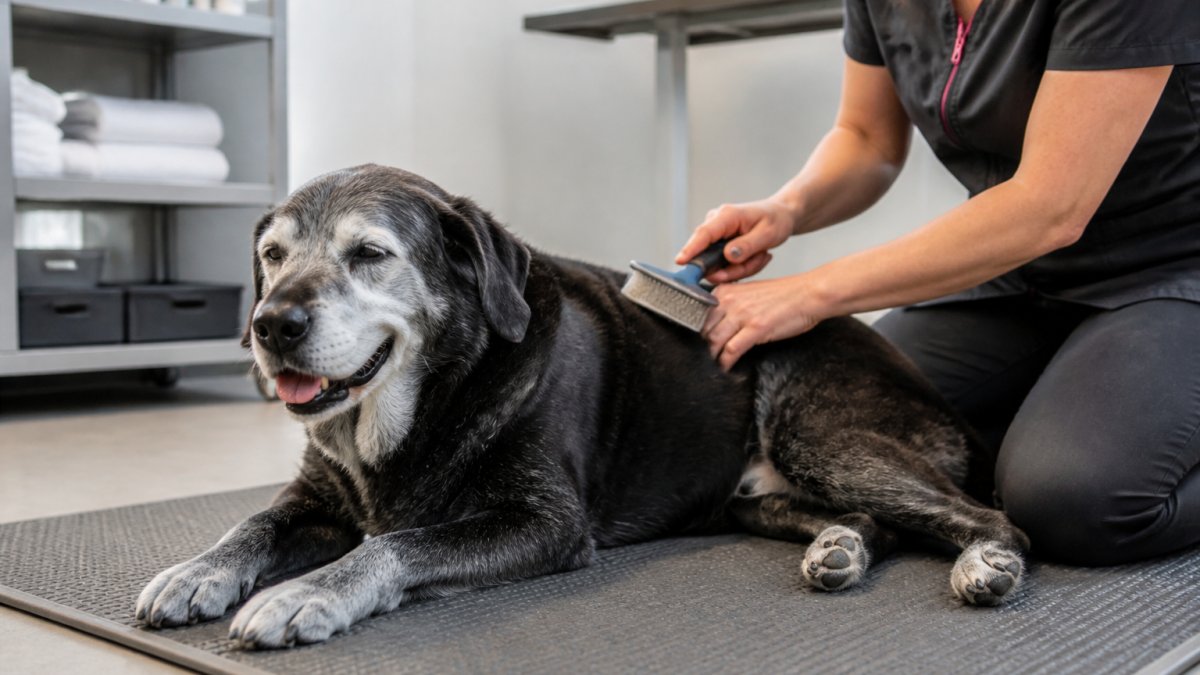
The fixes are simple but specific:
- Non-slip surfaces. Rubber mats on tables and tub floors. A bath mat with suction cups works in a home tub.
- Shorter sessions. Split grooming into two visits if needed. A 45-minute groom can become two 20-minute sessions with a rest in between.
- Breaks. Let the dog lie down between stages. Ten minutes of rest between bathing and drying makes a real difference.
- Gentle handling. Support the belly and hips instead of lifting by the front legs. For a large senior with hip arthritis, use a sling under the hindquarters rather than lifting the back end by the tail or legs.
Breed and Condition Examples
Arthritis looks different across breeds and sizes:
- Large breeds (Labrador Retrievers, Golden Retrievers, German Shepherds). These dogs often have hip dysplasia alongside arthritis. They may not be able to stand for a full nail trim on all four feet. Trim the front nails in one session and the back nails in another.
- Small breeds (Dachshunds, Shih Tzus, Toy Poodles). Back arthritis is common in Dachshunds. Avoid holding them stretched out. Support the chest and rear together.
- Double-coated seniors. A senior with arthritis may not tolerate long brushing sessions. Use a undercoat rake in short passes and stop before the dog stiffens.
- Dogs with incontinence. Arthritis can make it hard to squat. Keep the sanitary area clipped short and use gentle wipes between baths.
When to Involve Your Veterinarian
Grooming is not a substitute for veterinary care. Talk to your vet before a grooming session if:
- The dog yelps when a specific joint is touched.
- The dog is limping or refusing to bear weight.
- The dog is on pain medication and you are unsure about timing around a groom.
- The dog has a heart condition that affects how long it can stand or how it handles stress.
A veterinarian can also advise on whether a short course of pain medication before a groom is appropriate. Do not give human pain relievers to a dog without veterinary guidance.
At Ruffin' It Ranch, our stress-free, cage-free grooming setup lets older dogs rest between steps instead of standing rigid in a kennel. That matters for arthritic joints. But the same principles apply at home: warm room, non-slip mat, short sessions, and a groomer or owner who stops when the dog says stop.
At-Home Grooming for Senior Dogs That Can't Tolerate Salon Visits
Some seniors can't handle a salon at all. At-home grooming for senior dogs is a solid option when travel or noise causes real distress.
Start small and build a routine:
- Set up a quiet space. A non-slip mat in a warm room works well.
- Brush in short bursts. Five minutes at a time, then rest.
- Trim nails carefully. Use sharp clippers and take tiny slivers.
- Bathe with a handheld sprayer. It's less startling than a full tub.
- Keep sessions calm. Talk softly and stop before the dog tires.
If your dog snaps, panics, or can't be safely handled at home, that's your cue to get professional help. A groomer trained in gentle handling can often do in 20 minutes what takes you an hour of struggle.
Professional Grooming for Senior Dogs: What to Ask Before You Book
Professional grooming for senior dogs should always start with a conversation. Call ahead and ask direct questions:
- Do you have experience with senior dogs? Ask specifically.
- Can you do shorter sessions? Many seniors do better split across two visits.
- What's your handling policy? Look for gentle handling and no forced restraint.
- Is the environment cage-free? Less time in a kennel means less stress.
Ask about breaks, drying methods, and what happens if the dog gets anxious. A good groomer welcomes these questions.
Warning Signs a Grooming Session Should Stop
Stop the session if the dog shows pain, extreme stress, or trouble breathing. Watch for these signals:
- Panting heavily when it isn't hot
- Trembling or trying to bolt
- Snapping, growling, or freezing in place
- Whining when a joint is touched
Any one of these means the session ends. A groomer who pushes through pain or panic isn't worth your dog's comfort. Split the groom into shorter visits next time, or talk to your vet about pain management before grooming.
Frequently Asked Questions
Do senior dogs need more frequent grooming?
Not always more often, but often differently. Older dogs produce less natural coat oil, their skin thins, and reduced mobility means they can't scratch or self-clean as effectively. Many senior dog grooming schedules land in the 4-6 week range for brushing and nail checks, with full haircuts every 6-8 weeks. Dogs with arthritis or incontinence may need more frequent sanitary trims and spot baths. Your vet can flag skin conditions or lumps that change the schedule.
Can a dog be too old to go to the groomer?
Age alone rarely disqualifies a dog from professional grooming. What matters is overall health, mobility, and stress tolerance. A senior dog with controlled arthritis can usually still visit a groomer that offers gentle handling, non-slip surfaces, and breaks. Dogs with advanced heart, respiratory, or cognitive conditions may do better with at-home grooming or a mobile groomer. Ask your vet before booking, and choose a groomer experienced with senior dogs.
How often to bathe an older dog with skin issues?
For most older dogs, a bath every 4-6 weeks supports skin and coat health. Dogs with diagnosed skin conditions may need medicated baths every 1-2 weeks, but only under veterinary direction. Over-bathing strips natural oils and can worsen dryness, itching, and flaking in seniors. Use a gentle, senior-friendly shampoo, lukewarm water, and dry thoroughly, especially around skin folds, to prevent irritation and chill.
What grooming tasks should I do at home between appointments?
Brush your senior dog 2-3 times per week, daily for long or double coats, to prevent matting and shedding buildup. Check nails every 2 weeks and trim or file as needed. Wipe eyes and clean ears weekly, and do quick body checks for lumps, sores, or parasites. Short 5-10 minute sessions work better than long ones for older dogs. Keep treats handy and stop if your dog shows signs of pain or fatigue.
Grooming a senior dog takes patience, the right setup, and a team that understands aging bodies. If your older dog needs a calmer experience, Ruffin' It Ranch offers stress-free, cage-free grooming in a climate-controlled space, with 24/7 on-site staff and individualized care for dogs with special needs. Book your pet's stay or grooming appointment with us and give your senior the gentle handling they deserve.