 how-to
Can Grooming Cause Stress in Dogs? Signs and Solutions
Table of Contents
- Can Grooming Cause Stress in Dogs? What Owners Need to Know
- Signs of Stress in Dogs During and After Grooming
- What Triggers Grooming Anxiety: Noise, Handling, and Past Experiences
- How to Calm a Stressed Dog Before, During, and After Grooming
- Desensitizing a Dog to Grooming: A Step-by-Step Plan
- How Long Does Grooming Stress Last in Dogs?
- Grooming Accommodations for Puppies, Senior Dogs, and Special Needs
- When to Seek Veterinary Support for Grooming Anxiety
- Frequently Asked Questions
Last Updated: October 17, 2026
Can Grooming Cause Stress in Dogs? What Owners Need to Know
Yes, grooming can cause real stress in dogs. The American Veterinary Medical Association's pet care resources notes that unfamiliar handling, noise, and restraint are common fear triggers for pets.
The good news? Most grooming stress is predictable. Once you know the triggers, you can prevent most of it.
Below, we'll show you exactly how to spot stress, calm your dog, and build a step-by-step plan that makes grooming easier over time.
Signs of Stress in Dogs During and After Grooming
Stress signals show up in the body before they show up in behavior. Learn the early signs and you can intervene before your dog panics.
Body Language and Stress Signals to Watch For
Watch for these signs of stress in dogs during a grooming session:
- Lip licking and yawning when not tired
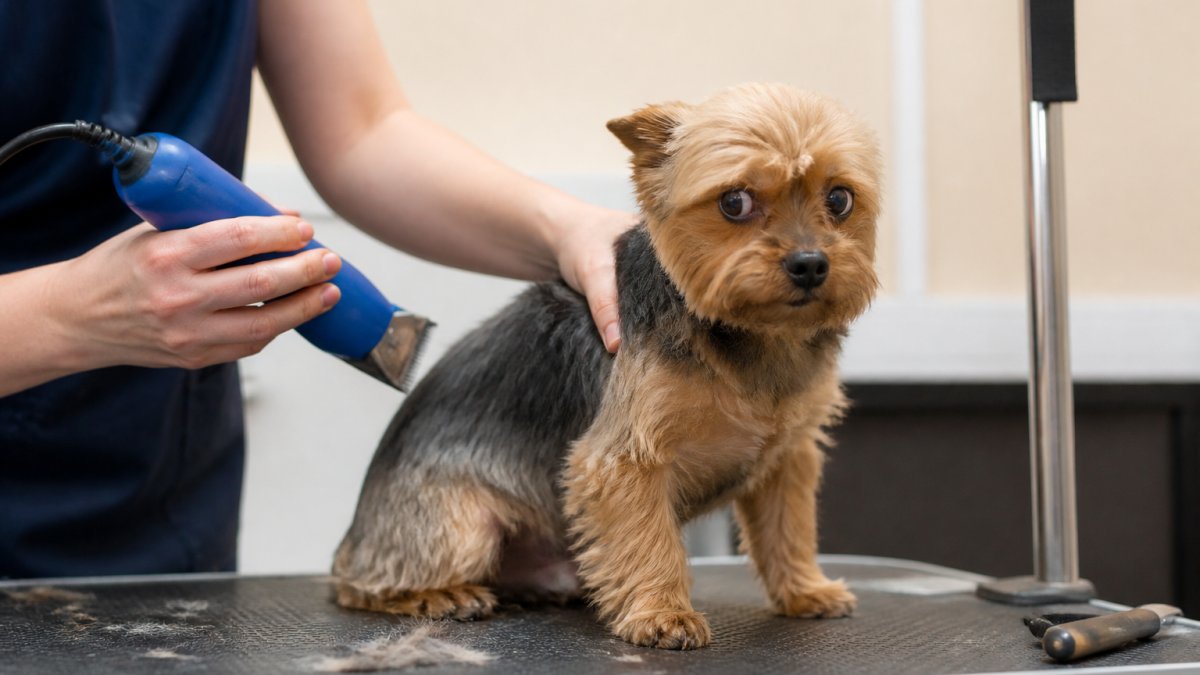
- Whale eye (whites of the eyes showing)
- Ears pinned back or flattened
A common mistake is waiting for growling before acting. Growling is late-stage communication. By then, your dog has already asked for space several times.
Normal Tiredness vs. Distress or Pain After Grooming
A tired dog naps after grooming; a distressed dog does not settle. Normal tiredness looks like a relaxed body, soft eyes, normal appetite, and seeking usual resting spots. Distress or pain looks like:
- Pacing or restlessness that lasts hours
- Hiding or avoiding touch
- Flinching when you touch a paw, ear, or hip
If your dog shows these signs for more than a day, call your vet. Pain from matting, nail trimming, or ear cleaning is a real possibility, not just sulking.
What Triggers Grooming Anxiety: Noise, Handling, and Past Experiences
Grooming anxiety rarely has one cause. It usually builds from several triggers stacking on top of each other.
Sensory Overload: Clippers, Dryers, and Unfamiliar Smells
Clippers hum and vibrate. Dryers roar. Scissors click near the face. The salon smells like strangers and cleaning products.
For a dog with sensitive hearing, this is sensory overload. Many dogs tolerate one trigger at a time. Put them all together in a small space and the brain hits a wall.
Body Sensitivity, Matting, and Overgrown Nails
Some dogs are simply touch-sensitive. Paws, ears, tails, and the belly are common no-go zones.
Add physical discomfort and stress climbs fast:
- Matting pulls on the skin with every brush stroke
- Overgrown nails make walking painful and handling paws stressful
- Tangles turn a gentle brush into a tug-of-war
A dog that yelps during brushing is not being dramatic. The coat condition is causing real discomfort. Past experiences matter too: a single bad clip, a slip on a wet table, or rough handling can teach a dog that grooming means fear.
How to Calm a Stressed Dog Before, During, and After Grooming
Calming a stressed dog works best in three stages: before, during, and after. Skip a stage and the others do less. The checklist below also covers what to do when calming stops working and the session needs to end.
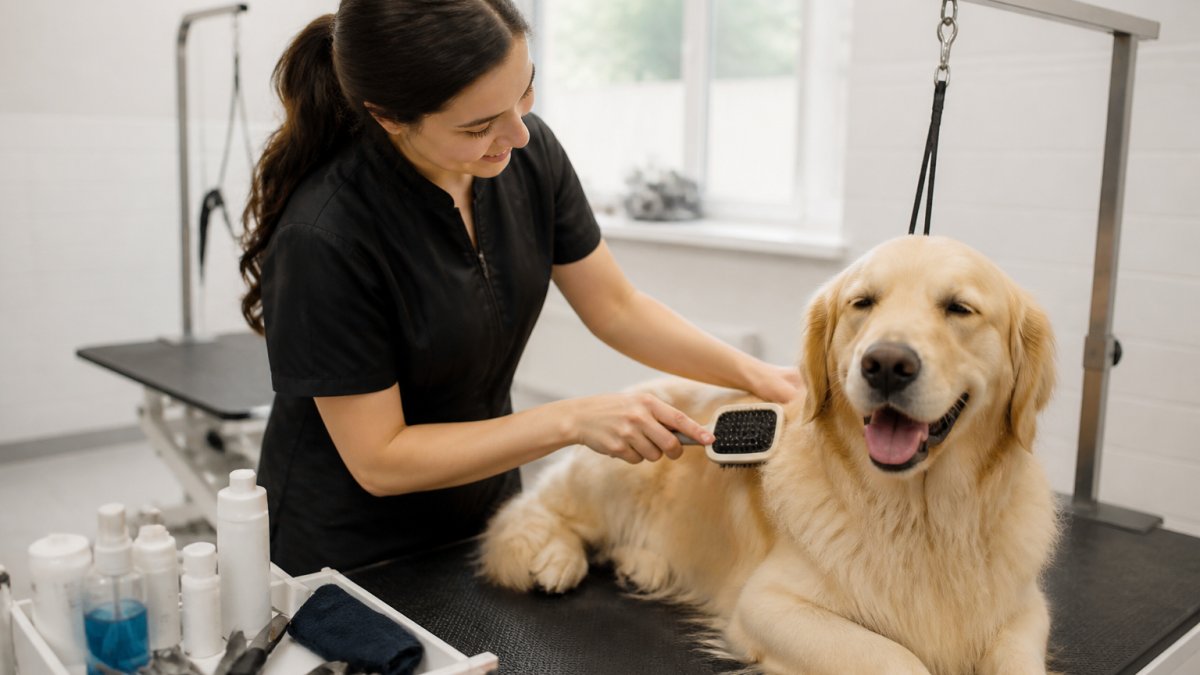
Before the appointment:
- Exercise your dog first so it arrives tired, not wired
- Skip a heavy meal right before grooming
- Bring a familiar blanket or toy
During grooming:
- Ask for breaks during the session
- Use positive reinforcement: treats for calm behavior
- Keep sessions short for anxious dogs
After grooming:
- Give your dog a quiet space to decompress
- Offer water and a light meal
- Watch for the distress signs listed above
The Grooming-Session Safety Checklist
Calming tips assume the session is safe to continue. Sometimes it is not. Use this checklist to decide whether to pause, adjust, or stop:
- Pause: your dog licks its lips, yawns, or shifts away but still takes treats. Take a 30-second break, offer water, and resume with a gentler tool or slower pace.
- Adjust: your dog is tense but not panicking. Switch to a quieter tool, shorten the remaining steps, or split the groom across two visits.
- Stop: your dog growls, snaps, tries to jump off the table, or stops taking treats entirely. End the session. A partial groom today is safer than a bite or a fall.
A dog that stops taking high-value treats is the clearest signal that stress has crossed the line where training can still work. Treats are a stress gauge, not just a reward.
What to Do If Your Dog Is Too Stressed to Finish
Ending early is a plan, not a failure. When you stop mid-session:
- Tell the groomer what happened so it goes in your dog's file
- Note the specific trigger, the dryer, a paw, the table, while it is fresh
- Book the next visit shorter, with the hardest step split out
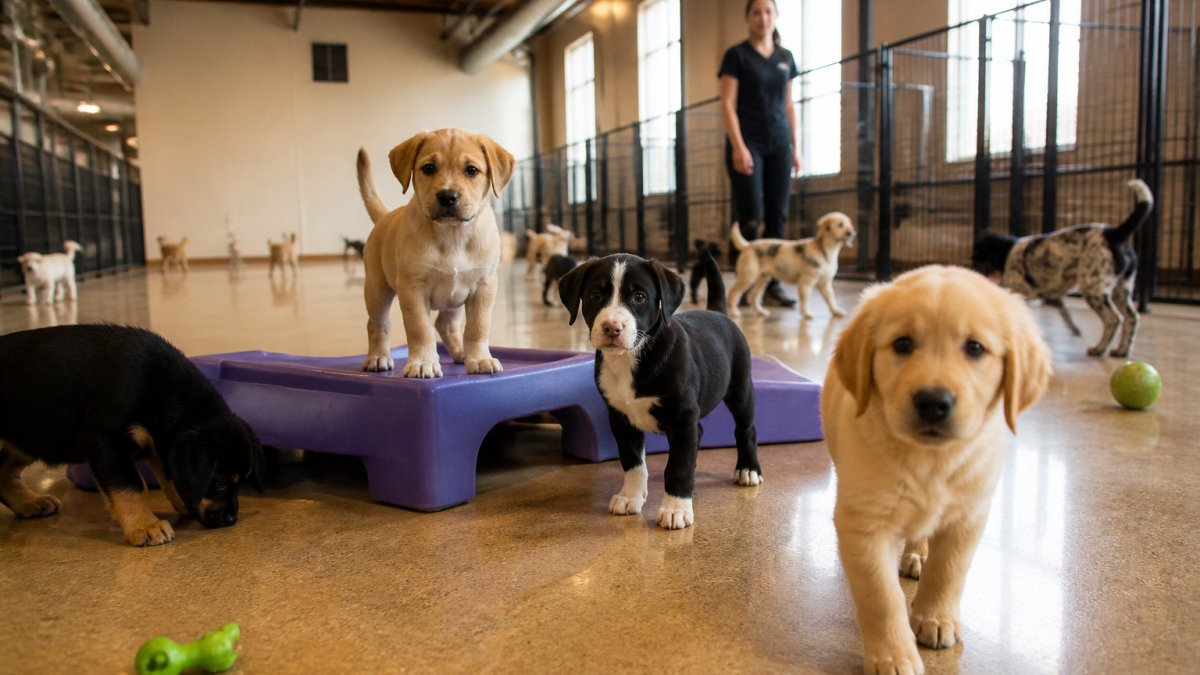
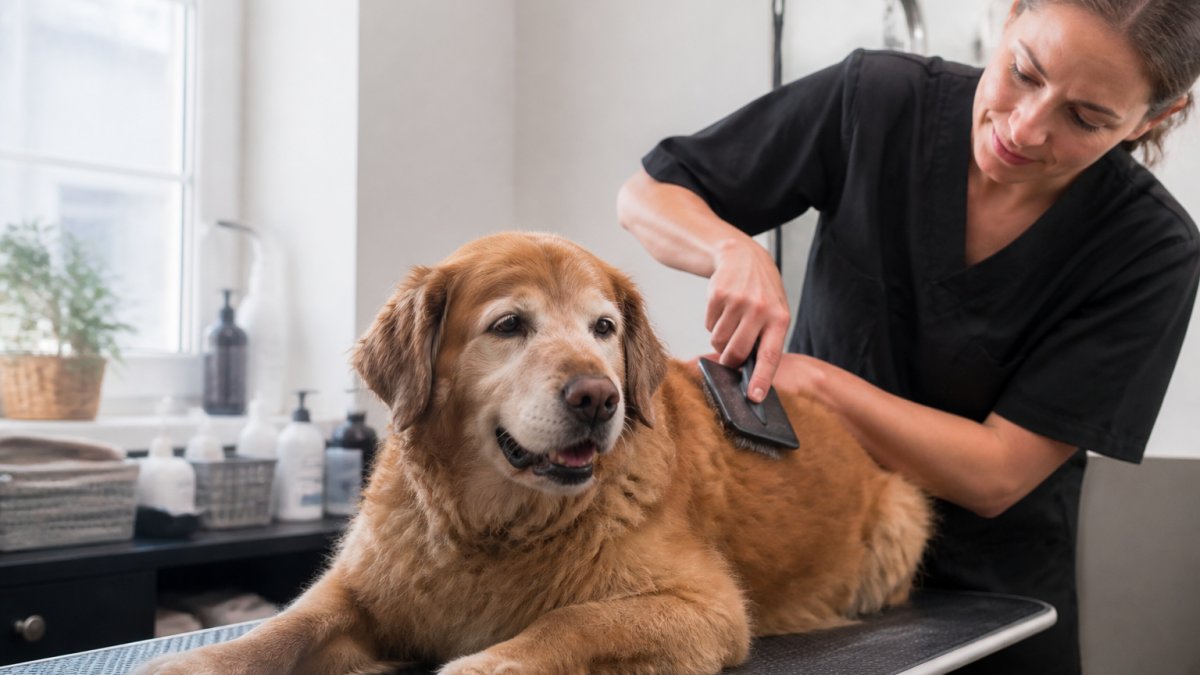
Our team at Ruffin' It Ranch works in a stress-free, cage-free grooming environment for exactly this reason. Fewer cages and calmer handling mean fewer triggers stacked at once.
Desensitizing a Dog to Grooming: A Step-by-Step Plan
Desensitizing a dog to grooming means teaching it that tools, touch, and handling predict treats, not fear. It takes weeks, not days. The plan below is the one we walk owners through before a first appointment, built around one rule: move to the next step only when your dog is calm at the current one, not when the calendar says so.
The Progress Rule That Makes the Plan Work
Most home desensitization fails for one reason: the owner advances on a schedule instead of on the dog's body language. Use these markers to decide when to move forward:
- Ready to advance: your dog looks at the tool or your hand, then looks back at you or the treat. Body is soft, ears neutral, tail at rest.
- Stay at this step: your dog tolerates the step but licks its lips, yawns, or shifts weight away. Repeat the same step for several more sessions.
- Back up one step: your dog pulls away, freezes, tucks its tail, or refuses the treat. End the session on an easy win and return to the previous step next time.
A session that ends with your dog relaxed and still taking treats is a success, even if it lasted 90 seconds. Short and calm beats long and forced every time.
Home Practice and Gradual Exposure to Tools
Here is the plan we recommend to owners before their first appointment:
- Week 1: Touch desensitization. Touch paws, ears, and tail for two seconds, then treat. Repeat daily. Keep the touch brief enough that your dog is still leaning in when you stop.
- Week 2: Tool introduction. Let your dog sniff the brush and clippers while turned off. Treat for calm curiosity. Set the tool on the floor and reward any relaxed sniff.
- Week 3: Sound exposure. Turn clippers on across the room for a few seconds. Treat. Move closer each day only if your dog stays relaxed.
- Week 4: Short sessions. Brush for one minute, then stop and treat. Build to five minutes over the week.
- Week 5: Handling practice. Lift a paw, hold it briefly, treat. Repeat with ears and tail. Add a second of nail-clipper contact against a nail without clipping.
- Week 6: Practice run. Do a mini-groom at home: brush, one nail, a quick wipe-down. Reward heavily.
| Step | Focus | Duration | Frequency | Advance when... |
|---|---|---|---|---|
| 1 | Touch desensitization | 2 seconds per touch | Daily | Dog leans in and takes treats after each touch |
| 2 | Tool introduction | 1-2 minutes | Daily | Dog sniffs the tool and stays relaxed |
| 3 | Sound exposure | A few seconds | Daily | Dog stays soft-bodied with clippers running nearby |
| 4 | Short brushing | 1-5 minutes | Daily | Dog stands calmly for the full brushing time |
| 5 | Handling practice | 1 minute | Daily | Dog allows paw, ear, and tail holds without pulling away |
| 6 | Practice run | 10 minutes | Once weekly | Dog completes the mini-groom and settles afterward |
Bridging Home Practice to the Salon
Home practice only pays off if it transfers. Two additions close that gap:
- Practice in novel spots. Once your dog is calm in the living room, repeat the steps in the bathroom, the garage, or a friend's driveway. Dogs generalize poorly, so a calm dog at home is not automatically a calm dog in a salon.
- Do a walk-through visit. Ask your groomer for a five-minute visit with no grooming, just treats and a hello. Many anxious dogs settle faster when the building stops predicting a full groom.
Preparing for the Grooming Appointment and Communicating Triggers
Tell your groomer three things before the first visit: which body parts your dog dislikes being touched, what noises or tools scare it, and what calms it down (treats, a certain toy, a quiet room). A salon that allows breaks, uses positive reinforcement, and skips cages will suit an anxious dog far better than a fast-paced assembly line. Specific questions worth asking:
- Do you offer one-on-one appointments, or will my dog be handled alongside others?
- What do you do when a dog shows stress mid-groom, pause, switch tools, or stop?
- Are dogs kenneled between steps, or is handling continuous?
If a groomer cannot answer these plainly, that is useful information. A good fit for an anxious dog treats stopping as a normal part of the job, not a failure.
How Long Does Grooming Stress Last in Dogs?
Grooming stress usually fades within a few hours for most dogs, but sensitive dogs can take a day or two to fully settle. Puppies and dogs with past trauma often need longer.
How long does grooming stress last in dogs that are highly anxious? Watch for these recovery markers:
- Appetite returns to normal
- Your dog seeks its usual resting spots
- Tail carriage and body posture relax
If your dog is still hiding, pacing, or flinching after 48 hours, that is a signal to check in with your vet.
Grooming Accommodations for Puppies, Senior Dogs, and Special Needs
Not every dog can handle a standard grooming session, and that is fine. Adjust the plan to the dog.
Puppies: Keep first visits short and positive. A puppy's first groom should be a gentle introduction, not a full haircut.
Senior dogs: Older dogs may have arthritis, reduced hearing, or mobility limits.
At Ruffin' It Ranch, we care for puppies and dogs with special needs, including individualized handling plans.
When to Seek Veterinary Support for Grooming Anxiety
Call your vet when grooming stress becomes a safety issue or does not improve with training.
Seek veterinary support if:
- Your dog bites, snaps, or injures itself or a handler
- Stress signs last more than 48 hours after grooming
- Your dog shows pain during handling (flinch, yelp, limp)
Your vet can rule out pain as the root cause and discuss options, including anti-anxiety medication for severe cases. Medication is not a failure. For some dogs, it makes training possible.
Frequently Asked Questions
What could be causing my dog to pant and shake after grooming?
Panting and shaking after grooming usually point to lingering stress from noise, handling, or an unfamiliar environment. Some dogs also pant from exhaustion after standing for a long session. Watch whether the behavior settles within a few hours. If your dog also avoids being touched, yelps, or seems painful around the nails or ears, contact your veterinarian, since discomfort or an injury during grooming can produce similar signs.
How long does it take a dog to recover from grooming stress?
Most dogs settle within a few hours to a day after a grooming appointment. Signs of stress in dogs that last longer, such as hiding, refusing food, or flinching when touched, suggest the session was more overwhelming than usual. Puppies and anxious dogs may need a full day to return to normal. If recovery takes more than 24 to 48 hours, or the behavior worsens with each visit, talk to your vet about a calmer approach.
How do I calm a stressed dog during grooming if clippers or the dryer scare them?
Start by letting your dog see and sniff the clippers while they are switched off, then reward calm behavior. Turn them on briefly at a distance and pair the sound with treats. For dryers, keep the airflow low and pointed away from the face. Ask your groomer to use breaks, a happy voice, and positive reinforcement. Desensitizing a dog to grooming works best in short, repeated sessions rather than one long attempt.
Can grooming be a positive experience for an anxious dog?
Yes, with the right setup. A cage-free grooming environment, slow handling, and breaks reduce sensory overload. Pairing each step with treats and praise builds positive associations over time. Dogs with severe fear may benefit from a veterinary behavior plan or medication before appointments. Choosing a groomer who understands body language and lets you share your dog's triggers makes a real difference for anxious dogs.
Grooming stress is common, but it is not something you or your dog has to live with. A calm environment, gentle handling, and a step-by-step desensitization plan make a real difference. At Ruffin' It Ranch, we offer stress-free, cage-free grooming, individualized care for puppies and special needs dogs, and 24/7 on-site professional staff. Ready to give your dog a calmer grooming experience? Book your pet's stay now.