 how-to
How to Prepare a Puppy for Boarding: 7-Step Guide
Table of Contents
- Start With a Prep Timeline: 4 Weeks to Drop-Off
- Puppy Boarding Requirements: Vaccines, Age, and Health Checks
- Choose the Right Facility Before You Book
- Build Crate and Routine Skills at Home
- First Time Boarding a Puppy: Book a Trial Stay
- What to Pack for Puppy Boarding
- How Long Can a Puppy Stay at Boarding?
- Drop-Off Day, the Stay, and the First Week Home
- Frequently Asked Questions
Last Updated: October 17, 2026
Start With a Prep Timeline: 4 Weeks to Drop-Off
The best way to prepare a puppy for boarding is to start four weeks before drop-off and work backward from there. At Ruffin' It Ranch, we see the difference this timeline makes: puppies who arrive already used to a crate, a routine, and a few short separations settle in far faster than those meeting all three for the first time.
Here is the schedule we suggest:
- 4 weeks out: Confirm your puppy's vaccine schedule with your vet and book the stay.
- 3 weeks out: Tour the facility and start daily crate practice.
- 2 weeks out: Begin short separations and confirm feeding details.
- 1 week out: Pack supplies and write care instructions.
- 2-3 days out: Do a trial stay or daycare visit if you can.
Most of the work happens at home, not at the kennel. The ASPCA's puppy care guidance is a solid starting point for understanding what a young dog can handle.
Puppy Boarding Requirements: Vaccines, Age, and Health Checks
Most boarding facilities require proof of current rabies, distemper, and Bordetella vaccines, plus a negative fecal test and a health check from your vet. Requirements vary by facility and by state law, so ask for the list in writing before you pay a deposit.
Puppies are a special case, though. A puppy is not a small adult dog with the same paperwork.
Which Shots a Kennel Will Ask For
Expect to show records for these:
- Rabies: usually required after 16 weeks of age, and often required by state or local law once a puppy reaches that age
- Distemper and parvovirus: part of the core series, with boosters complete, most vets finish the initial series around 16 weeks, with a final booster at 12 to 16 months
- Bordetella: the kennel cough vaccine, often required 1-2 weeks before arrival so immunity has time to build
- Canine influenza: required by some facilities, not all
Ask your vet for a printed or emailed immunization record. A photo of the vaccine card on your phone works at many kennels, but a clean PDF is safer.
The Puppy-Specific Timing Problem
This is where puppy boarding differs from adult-dog boarding, and where most generic guides stop short.
Puppies receive maternal antibodies through colostrum, and those antibodies can block a vaccine from producing immunity.
Rabies is the hard gate for most kennels. The vaccine is typically not given before 12 to 16 weeks, and some states require it by a specific age.
Bordetella is the other timing trap. Many kennels want it at least 48 hours to two weeks before drop-off.
Is Your Puppy Old Enough and Healthy Enough?
Many facilities set a minimum age, often around 16 weeks, because that is when the rabies vaccine becomes available.
Flea and tick prevention, a recent health check, and no signs of coughing or diarrhea in the days before drop-off are standard. If your puppy is recovering from an illness, reschedule.
Ask your vet two questions before you book: is my puppy's core series complete enough for a group setting, and is there any health reason to delay?
Choose the Right Facility Before You Book
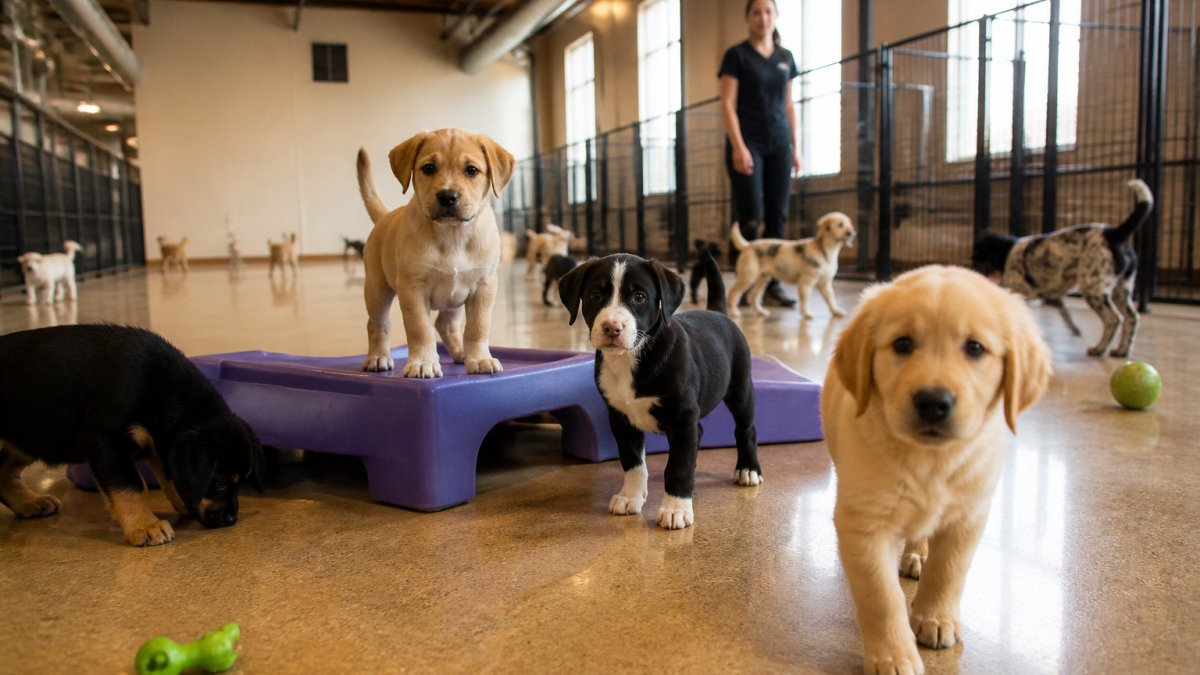
The right facility matches your puppy's energy level, size, and medical needs, not just your travel dates. A calm, older puppy may do fine in open play; a shy or reactive one needs private runs and quieter handling.
Before you compare websites, decide which category your puppy falls into. A puppy under six months, a puppy mid-vaccine-series, a puppy with separation anxiety, and a puppy with a medical condition each need a different kind of facility.
Take the Tour and Ask These Questions
A pre-boarding visit tells you more than any website. Watch how staff handle dogs and how the space smells. Ask to see the actual run your puppy would use, not just the lobby.
Ask these questions on the tour:
- How many dogs are in each play group, and how are they matched by size, age, and play style?
- Is someone on site overnight, or does staff leave? If staff leave, is there video monitoring and a response plan?
- What is the protocol if my puppy gets sick or injured, who calls me, which vet is used, and how fast?
- Can I send my puppy's own food and a blanket, and will staff follow a written feeding schedule?
- How do you handle puppies who are shy, scared, or reactive, is private play available, and is there an extra charge?
- What does a typical day look like, hour by hour, including rest periods?
- What is the staff-to-dog ratio during play groups and overnight?
- How are cleaning and disinfection handled between dogs, especially in shared play areas?
- What vaccines and health records do you require, and what is the cutoff for Bordetella timing?
- Can you send photos or updates during the stay, and how often?
A good facility answers all ten without hesitation. If they dodge the overnight staffing question or can't describe the sick-puppy protocol, that tells you something.
What a Good Answer Sounds Like
You are listening for specifics, not reassurance. "We watch them" is not an answer. "Play groups are capped at eight dogs with one attendant, matched by size, and puppies under six months get a two-hour rest period after lunch" is an answer.
On emergencies, a strong facility names the veterinarian or emergency hospital they use, describes how they reach you, and has a signed medical authorization form ready. On cleaning, they can tell you what disinfectant they use and how often runs are cleaned.
Match the Facility to Your Puppy's Needs
A high-energy adolescent puppy may thrive in structured group play with rest breaks. A shy puppy may do better with private runs and one-on-one staff time, even if it costs more.
Ask what happens if your puppy doesn't settle. The best facilities have a plan, a quieter run, more one-on-one time, a call to you, rather than letting a stressed puppy cry it out for a week. That plan is worth more than any amenity list.
Build Crate and Routine Skills at Home
Crate training is the single most useful skill you can teach before a kennel stay.
Start small. Feed meals in the crate with the door open. Toss a treat in and let the puppy walk out.
Pair crate time with your departure cue. Pick a phrase like "be right back" and use it every time you leave, even for two minutes.
Keep the daily routine steady in the final week: same feeding times, same walk schedule, same bedtime.
First Time Boarding a Puppy: Book a Trial Stay
A trial stay is the best test of whether your puppy is ready, and most good facilities offer one.
Watch for how your puppy behaves after. A tired, relaxed dog who eats normally at home is a good sign.
For a first-time boarding puppy, one night is enough. You want to learn how the puppy handles a new place and new people, not stress-test a long separation.
If your puppy is anxious, ask whether the facility can do a shorter practice visit first.
What to Pack for Puppy Boarding
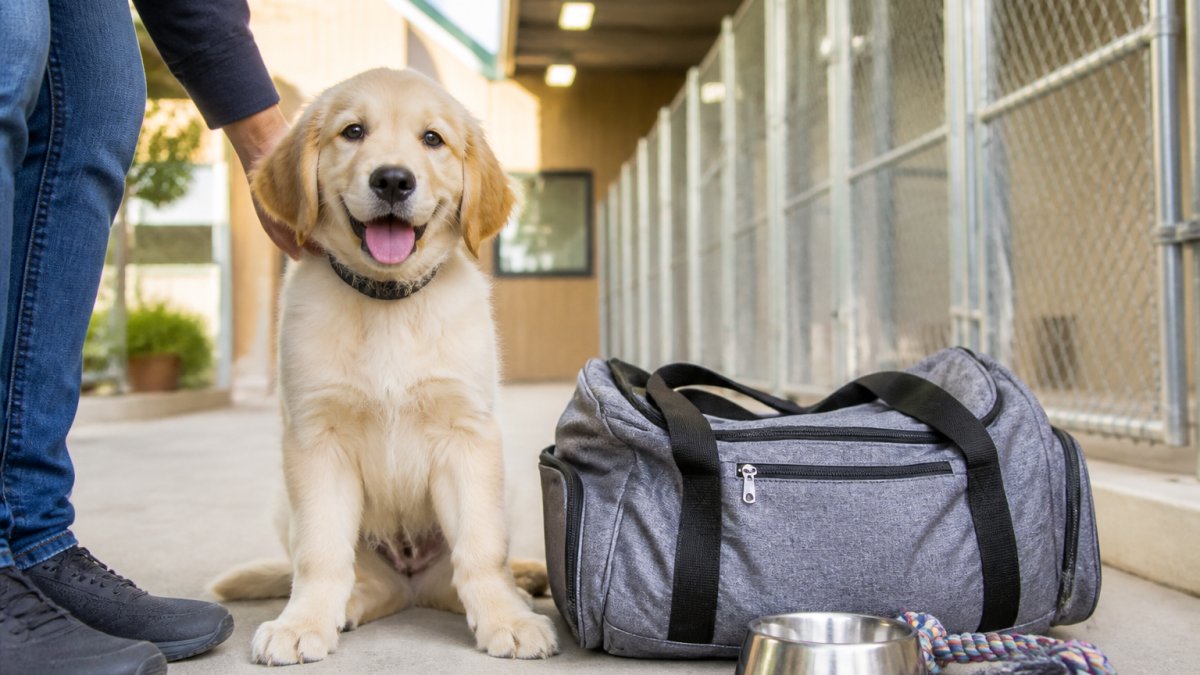
Pack your puppy's own food, measured into daily portions, plus any medications with written instructions.
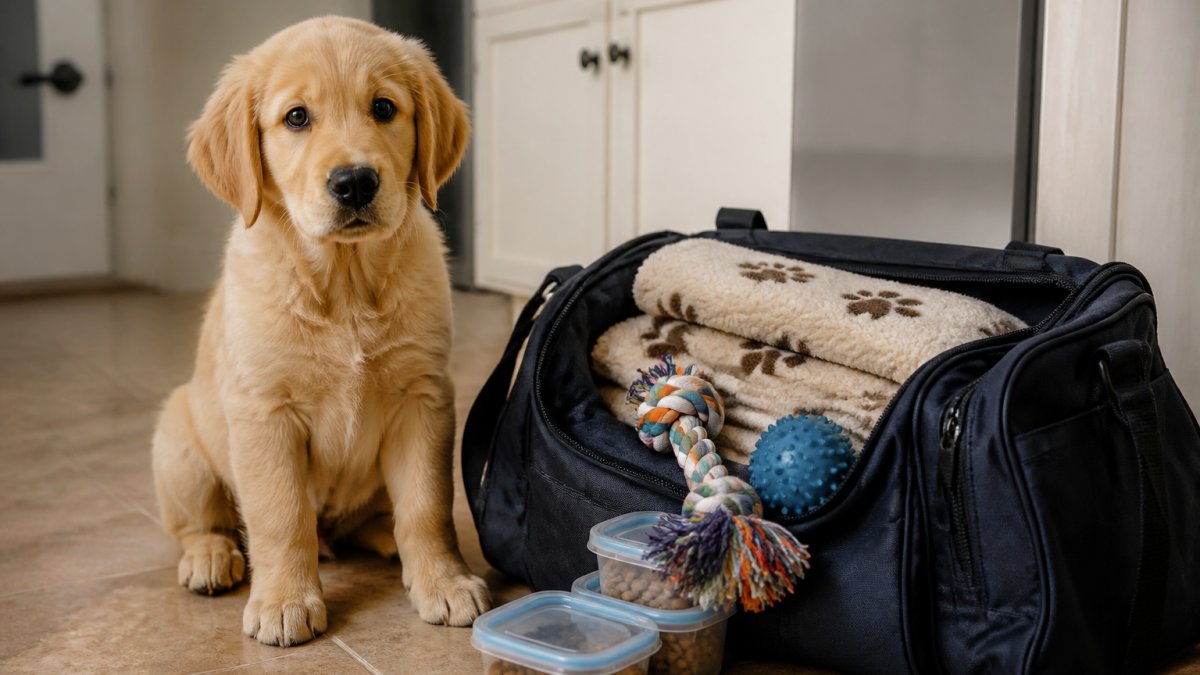
Your packing checklist:
- Food in labeled daily portions, plus two extra meals
- Medications in original packaging with dosage notes
- Vaccine and medical records
- A blanket or worn t-shirt from home
- One or two comfort toys
- Collar with ID tag and a backup leash
- Emergency contact and your vet's phone number
- Written feeding schedule and care instructions
Skip the fancy bed and the bowl. Facilities usually supply bowls, and a nice bed may come home chewed.
How Long Can a Puppy Stay at Boarding?
Most puppies handle one to three nights well for a first stay, and longer trips are fine once they've had practice.
A young puppy in the middle of vaccine series may not be eligible at all. A confident six-month-old with a trial stay behind them can usually handle a week.
Ask the facility what they recommend for your dog's age and temperament. A good kennel will tell you honestly if your puppy isn't ready.
Drop-Off Day, the Stay, and the First Week Home
Drop-off should be quick and calm. Hand over food, meds, and instructions, give your puppy a pat, and go. Long goodbyes teach your puppy that leaving is a big deal.
During the stay, ask how updates work. Many facilities send photos or messages, and a quick check-in on day one eases your mind without hovering.
The first week home matters too. Keep things quiet for a day or two, stick to the usual routine, and watch for changes in appetite, sleep, or bathroom habits.
At Ruffin' It Ranch, our 24/7 staff and individualized care plans mean your puppy's routine and needs carry over from home to the run and back. If you're planning a first stay, AAHA's hospital-accreditation standards offer a useful benchmark for the kind of supervised, documented care to look for.
Frequently Asked Questions
What vaccinations does a puppy need before boarding?
Most kennels ask for proof of rabies, DHPP (distemper, hepatitis, parainfluenza, and parvovirus), and Bordetella, which guards against kennel cough. Rabies is typically required once a puppy is 12 to 16 weeks old, and Bordetella is often given from 8 weeks. Ask your veterinarian to email the vaccination records directly to the facility before drop-off, and confirm whether the kennel requires a minimum waiting period after each shot. Written proof of immunization is standard for puppy boarding requirements.
How long should a puppy stay at boarding for the first time?
Start with one or two nights. A short stay lets your puppy adjust to the kennel environment, staff, and routine without overwhelming stress, and it gives you a clear read on how they handle separation. After a successful trial, most owners can book longer trips. For puppies under six months, aim to keep the first booking under a week and check in with staff midway. Ask the facility how they handle first-time guests and whether a daycare visit beforehand is an option.
What should I pack for my puppy's boarding stay?
Pack pre-portioned food in labeled containers, any medications with written dosing instructions, a familiar blanket or worn T-shirt, one or two comfort toys, and a copy of vaccination records. Skip bowls and beds unless the facility asks for them, since most kennels supply their own. Label everything with your puppy's name and your phone number, and include an emergency contact who can make decisions if you're unreachable. A short written note about feeding schedule, walk routine, and quirks helps staff keep things consistent.
How do I reduce boarding stress for a puppy?
Practice separation before the stay by leaving your puppy with a sitter or in a crate for short, increasing periods. Visit the facility for a tour or a daycare day so the space isn't brand new on drop-off day. Pack a familiar blanket and a scented piece of clothing so the kennel smells like home. Keep drop-off calm and brief, and ask staff whether they send photo updates. Puppies often settle faster than owners expect once a consistent routine kicks in.
Leaving a puppy for the first time is stressful for both of you. The good news is that most of the work happens before drop-off: a solid prep timeline, current vaccines, a few crate skills, and one short trial stay. Ruffin' It Ranch makes that final step easier with 24/7 on-site staff, climate-controlled private runs, individualized care for puppies and special-needs dogs, and flexible play sessions matched to your dog's comfort level. Book your pet's stay and travel with one less worry.