 how-to
How to Introduce Dog to Daycare: A Step-by-Step Guide
Table of Contents
- What You'll Need Before the First Day
- Step 1: Assess Your Dog's Readiness for Dog Daycare
- Step 2: Choose the Right Daycare Facility
- Step 3: Prepare Your Dog with a Gradual Introduction Plan
- Step 4: Your Dog Daycare First Day Checklist
- Step 5: Reading the Signs a Dog Likes Daycare
- How Long Should a Dog Stay at Daycare?
- What If Your Dog Isn't Ready for Group Daycare?
- Frequently Asked Questions
Last Updated: October 9, 2026
What You'll Need Before the First Day
Learning how to introduce dog to daycare works best when you prepare ahead.
Start by gathering a few basics:
- Up-to-date vaccination records from your vet
- A collar with a current ID tag
- A leash you can control easily
That last item matters: staff can match your dog's feeding and rest schedule if they know it.
Step 1: Assess Your Dog's Readiness for Dog Daycare
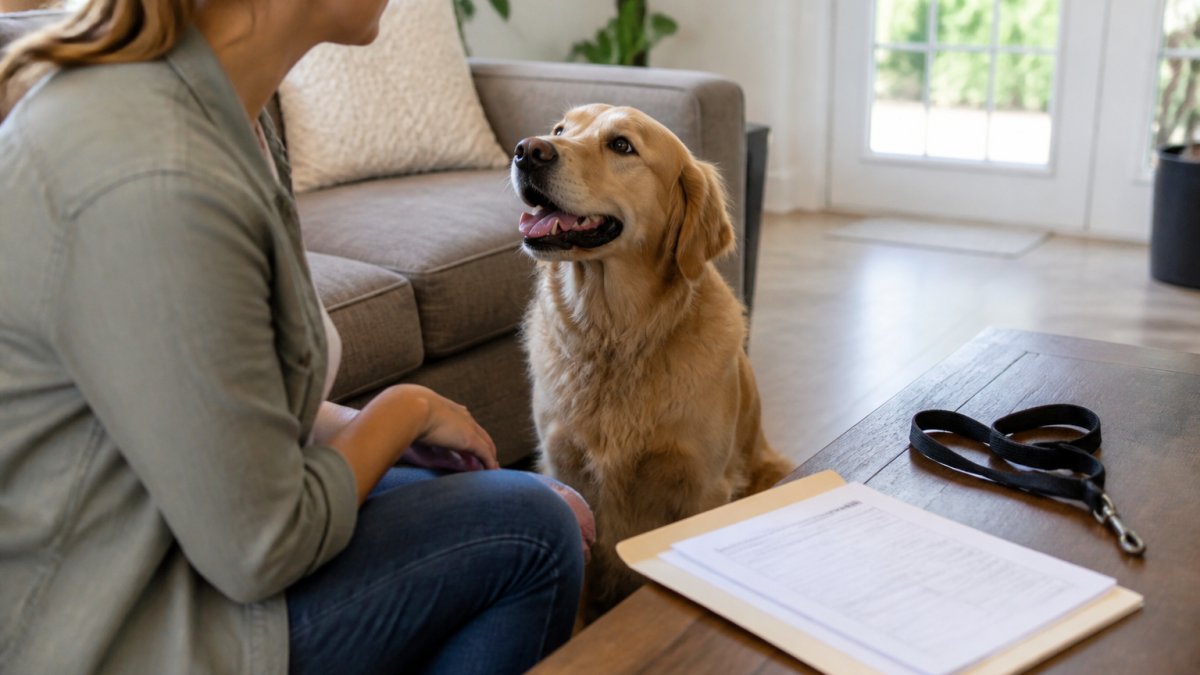
Readiness comes down to two things: health and temperament. A dog needs both before group play is safe, and skipping this step usually ends with a stressed dog and a wasted trip. Many dogs are not good candidates for open group daycare, and finding that out at home beats finding out in a room with fifteen unfamiliar dogs.
Age and Vaccination Requirements
Puppies can usually start daycare once they've completed their core vaccines and a vet gives the okay, often around 16 weeks. The American Veterinary Medical Association publishes a standard puppy vaccine schedule most facilities follow, but check with your vet since timing varies.
A few additional health screens worth knowing about:
- Bordetella is often required every six to twelve months because kennel cough spreads easily in group settings.
- Canine influenza vaccination is required by some facilities and recommended by many vets in areas where the virus circulates.
- Spay or neuter status matters at many facilities. Some require it after a certain age; others run intact-dog groups separately.
If your dog is recovering from surgery, illness, or injury, wait until your vet clears them. A dog in pain is more likely to snap.
Temperament and Social Skills Check
Not every dog enjoys a group setting, and that's fine. A good facility runs a behavior assessment before any dog joins, watching how your dog greets others, shares space, responds to correction, and recovers after a startle.
Here is what a real assessment looks like, and what each observation tells you:
| What staff watch | Green flag | Yellow flag | Red flag |
|---|---|---|---|
| Greeting style | Calm sniff, loose body | Brief freeze, then relaxes | Stiff, hard stare, hackles up |
| Space sharing | Moves around others easily | Avoids, but not panicked | Guards a spot, snaps when approached |
| Response to correction | Yields, then re-engages | Yields but shuts down | Escalates instead of yielding |
| Recovery after startle | Shakes off, resumes play | Takes a few minutes | Cannot settle, paces, whines |
| Toy or food guarding | None | Mild, easily redirected | Hard stare, growl, snap |
Two or more red flags in the same category signals that open group play isn't the right fit right now. That's a safety call, not a rejection of your dog.
Signs Your Dog May Thrive in Group Play
- Relaxed body language around other dogs on walks
- Willingness to sniff and greet calmly, then move on
- Ability to settle when play pauses
Signs Your Dog May Need a Different Setup
- Freezes, tucks its tail, or tries to hide when other dogs approach
- Repeated growling, snapping, or hard staring
- Cannot settle after a greeting, even with a break
Dogs who show fear, stiff posture, or repeated growling may do better with private play, one-on-one care, or a behavior professional before group daycare is on the table. That's matching the dog to the right environment, not a failure.
When to Delay Daycare Entirely
A few situations call for waiting rather than adjusting the plan:
- A dog in the first two weeks after adoption, when it is still decompressing
- A dog recovering from illness, injury, or surgery
- A dog in the middle of a fear period, especially puppies between roughly 8 and 11 weeks and again around 6 to 14 months
If any apply, talk to your vet or a qualified behavior professional before booking a trial. A short delay is cheaper than a bad first experience.
American Veterinary Medical Association puppy vaccination guidelines
Step 2: Choose the Right Daycare Facility
The right facility matches your dog's needs and your schedule. Tour at least two, and watch how staff interact with the dogs already there, that tells you more than any brochure.
Look for:
- Trained staff on site at all times
- Clean, climate-controlled indoor and outdoor space
- Separate areas for small dogs, seniors, and puppies
Dogs need room to move but also quiet zones to decompress. Nonstop play with no breaks will burn out even high-energy dogs.
Questions to Ask a Dog Daycare Before Enrolling
Ask these before you commit:
- How many dogs per staff member during play?
- What happens if my dog gets stressed or overwhelmed?
- How do you handle a dog who needs a break?
- What are your vaccination and health requirements?
- Can I see daily updates or photos?
- What is your pickup and drop-off window?
- How do you match dogs into play groups?
Their answers reveal whether they treat each dog as an individual. If staff can't describe their group-matching process, that's a red flag.
Step 3: Prepare Your Dog with a Gradual Introduction Plan
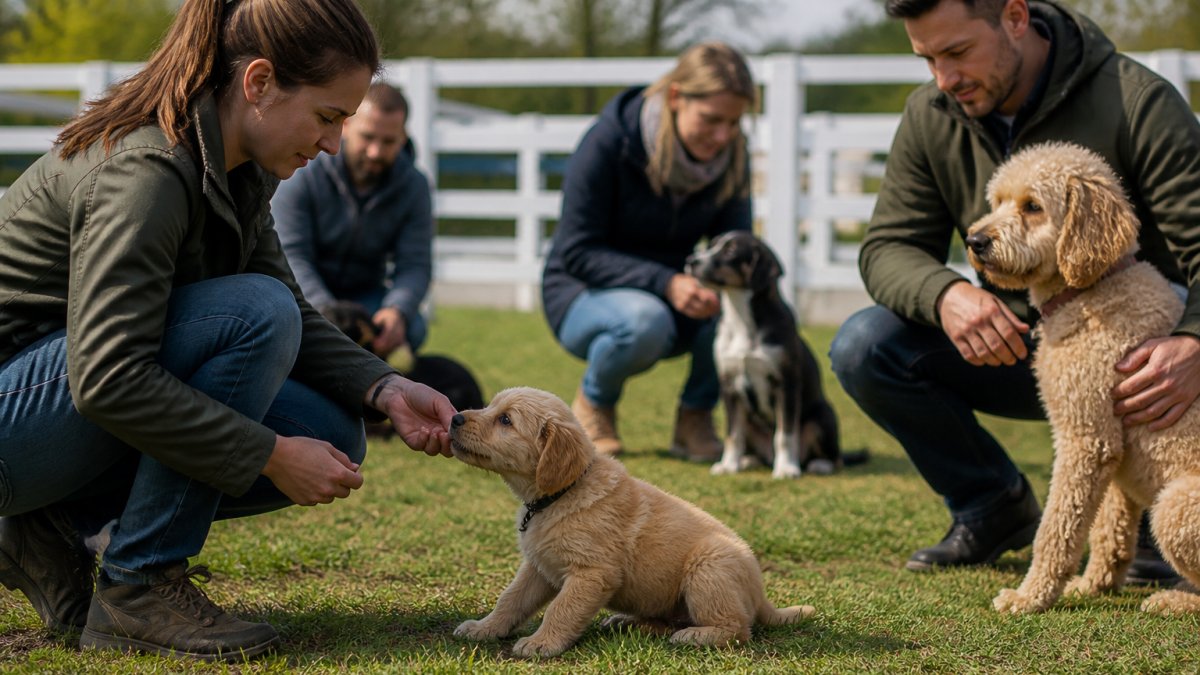
Knowing how to introduce dog to daycare gradually beats a full day on day one. The goal is to build tolerance for three stressors, the car ride, the building, and the group, one at a time.
Here is a sequence that most behavior-savvy facilities and trainers use. Adjust the spacing to your dog, but do not skip stages.
| Stage | What happens | Typical length | Spacing |
|---|---|---|---|
| 1. Neutral visit | You and your dog walk the lobby and outdoor area on leash. No other dogs. | 10-15 minutes | Day 1 |
| 2. Leashed observation | Your dog watches a calm group from behind a barrier or across a fence. | 15-20 minutes | 2-3 days later |
| 3. Supervised meet-and-greet | One or two calm, screened dogs, staff present, leashes on. | 15-30 minutes | 2-3 days later |
| 4. Short group trial | Small, matched group. You leave the building. | 1-2 hours | 3-4 days later |
| 5. Half day | Normal group, normal routine, includes a rest period. | 4 hours | 3-5 days later |
| 6. Full day | Standard schedule. | 6-8 hours | Once half days go well twice |
Space stages a few days apart for recovery; back-to-back visits are too much for most dogs in the first two weeks.
Criteria for Moving to the Next Stage
Advance on behavior, not the calendar. Move forward only when your dog shows all of the following:
- Loose, relaxed body on arrival, not stiff, not pulling backward
- Willingness to sniff and greet without freezing
- Able to disengage from other dogs when a staff member calls or claps
If any are missing, repeat the stage rather than pushing forward. Repeating a stage is the plan working, not failure.
Adult Dogs vs. Puppies
Adult dogs with an unknown history need the full sequence, often slower. A dog adopted as an adult may never have been in a group of more than two dogs, so stage 3 is where most problems surface.
Puppies under six months often move faster through stages 1-3 thanks to the critical socialization window, but they tire faster. A puppy that does great for 45 minutes may fall apart at 90, so keep puppy stages short and frequent.
Drop-Off and Pickup Mechanics
How you hand off your dog matters as much as the visit.
- Drop off during a quiet window. Ask staff when the fewest dogs are arriving. A chaotic lobby on your first few visits sets a bad tone.
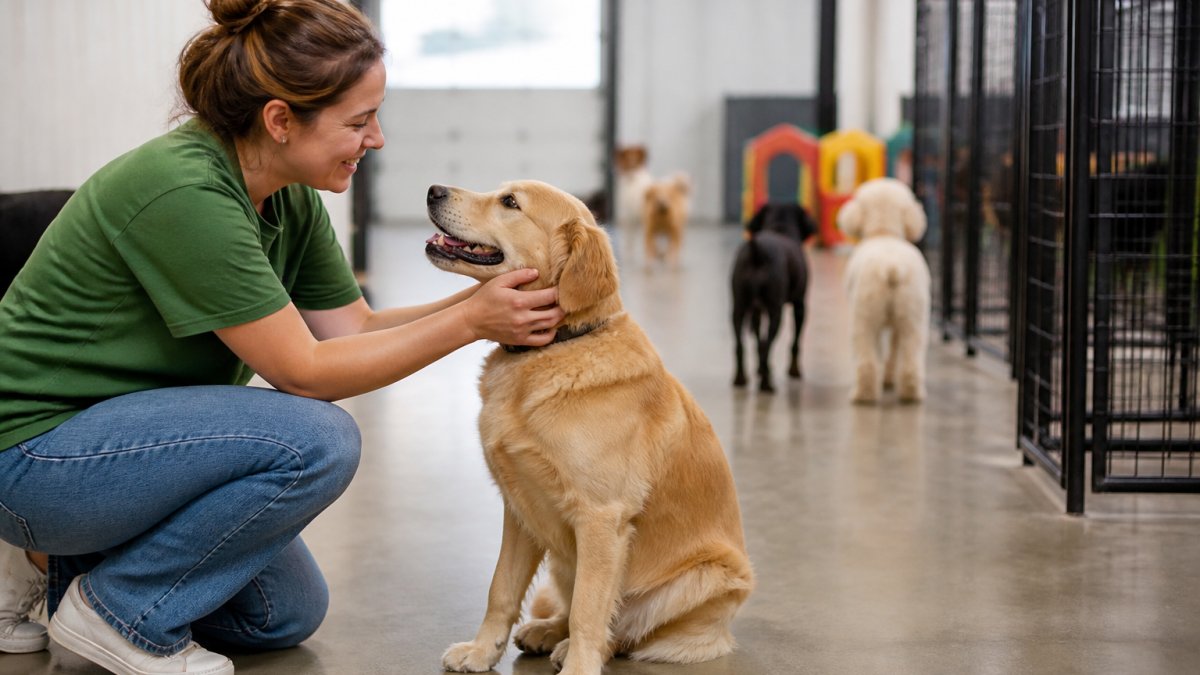
- Keep the goodbye under two minutes. A quick pat, a confident tone, and out the door. Long, emotional goodbyes teach your dog that leaving is a big event worth worrying about.
- Do not linger in the parking lot. Dogs can often see or hear you, and hovering undermines the whole point of the visit.
What to Do If a Stage Goes Badly
If your dog freezes, tucks its tail, hides, or refuses to move forward, stop the visit. End on a neutral note, a short walk away from the building, then home, and retry the same stage in a few days. If it fails twice, drop back a stage; if it fails three times, your dog may need one-on-one care or a behavior professional before group daycare fits.
Step 4: Your Dog Daycare First Day Checklist
A smooth first day comes down to preparation. Use this checklist the night before and morning of:
- Confirm vaccination records are on file
- Pack enough food if your dog eats mid-day
- Bring any medication with clear instructions
Drop-off should take under two minutes, a quick pat and a confident walk out the door beats a long goodbye.
Step 5: Reading the Signs a Dog Likes Daycare
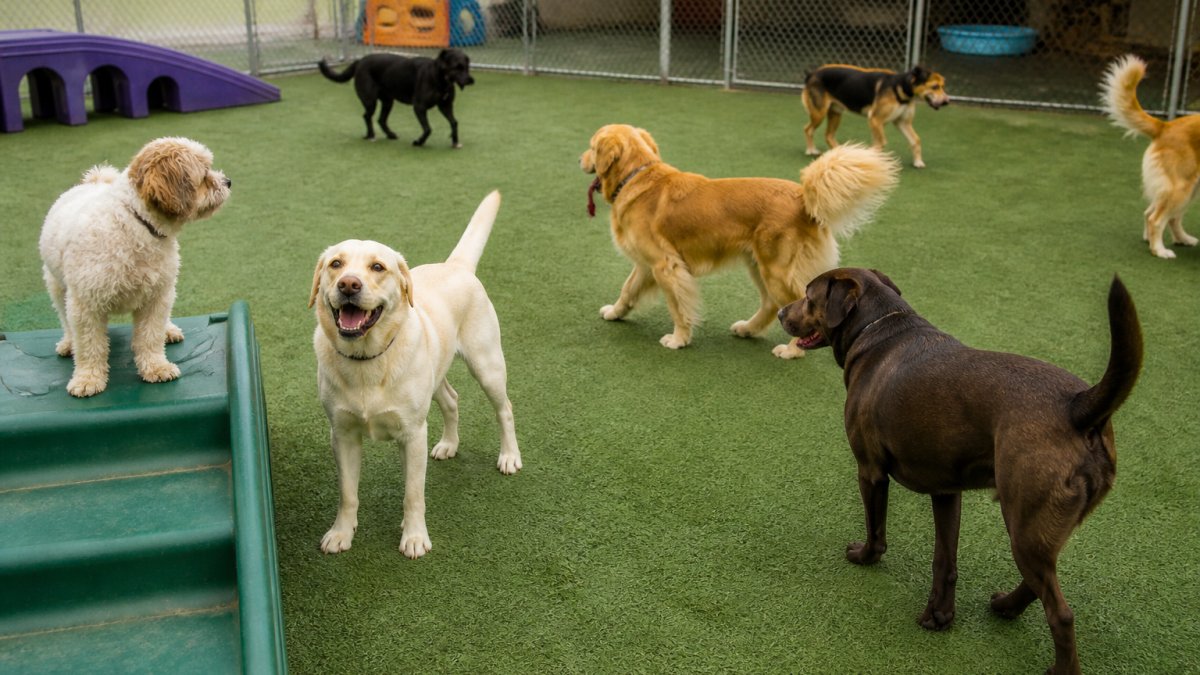
Most dogs show clear signals within the first few visits. Positive engagement looks like a loose, wiggly body, play bows, and willingness to re-engage after a pause.
Stress Signals vs. Positive Engagement
Watch for these differences:
| Signal | Positive Engagement | Stress or Fear |
|---|---|---|
| Body posture | Loose, relaxed, wiggly | Stiff, tucked tail, hunched |
| Mouth | Open, relaxed pant | Tight, closed, lip licking |
| Play | Play bows, bouncy movement | Hiding, freezing, pacing |
| After play | Settles and rests | Won't settle, overstimulated |
| Greeting | Calm sniffing | Lunging, snapping, cowering |
A dog who plays hard then rests is doing great. A dog who never settles, or paces and whines, is overstimulated and needs shorter days or a different setup.
How Long Should a Dog Stay at Daycare?
Most dogs do best with 4 to 8 hours per visit, two to three times a week. Full days suit high-energy, social dogs; shorter visits suit puppies, seniors, and dogs who tire easily.
Match the length to your dog's energy and comfort, not your schedule.
Many facilities offer half-day and full-day options, plus monthly packages that lower the per-visit rate. Start short and build up as your dog settles in.
What If Your Dog Isn't Ready for Group Daycare?
Some dogs simply prefer a quieter setup.
For these dogs, look for facilities that offer:
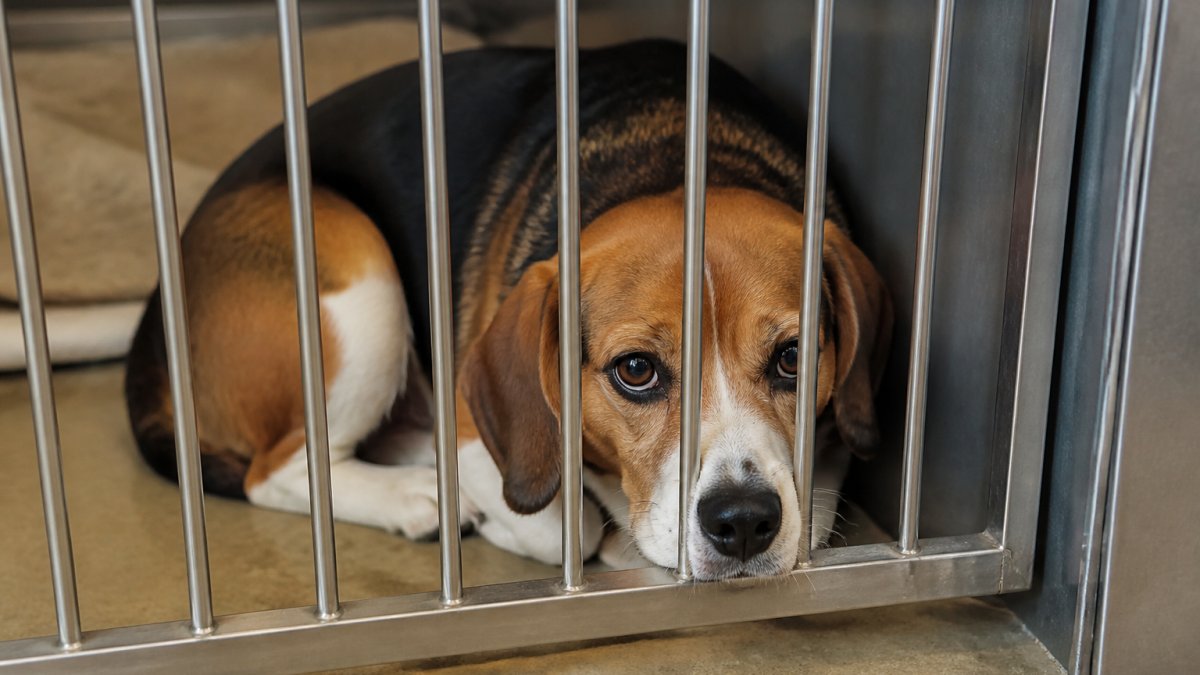
- Private indoor and outdoor runs
- One-on-one play sessions with staff
- Smaller, carefully matched play groups
At Ruffin' It Ranch, we care for puppies and dogs who need extra attention, including those who don't do well in groups.
The goal is simple: a dog who's safe, comfortable, and happy to come back. Whether that's a busy group or a quiet run, the right fit matters more than the label.
Frequently Asked Questions
How do I prepare my dog for their first day at daycare?
Start with a trial visit or short stay a few days before the full day. Bring your dog's vaccination records, leash, and a favorite toy or blanket. Arrive early to walk the facility with your dog, and keep your goodbye calm and brief. A gradual introduction helps reduce stress and builds positive experiences with the new environment.
How long should a dog stay at daycare the first time?
For the first visit, two to four hours is a good starting point. This allows your dog to experience the group play session, staff supervision, and the routine without becoming overwhelmed. If they seem comfortable, gradually extend to a half day, then a full day over several visits. Watch for signs of stress like excessive panting, hiding, or refusing to engage.
How can I tell if my dog is enjoying daycare?
Signs a dog likes daycare include relaxed body language, a wagging tail, eagerness to enter the facility, and calm behavior when greeting other dogs. After pickup, they should be tired but content, not anxious or withdrawn. If your dog shows fear, excessive drooling, or tries to hide, they may need a slower adjustment period or a different environment.
Can daycare help a dog socialize?
Yes, supervised group play at a dog daycare can improve social skills and confidence, especially for puppies and young dogs. Staff-monitored interactions teach appropriate dog-to-dog communication and body language. However, daycare is not a substitute for training or one-on-one socialization. Dogs with fear or aggression need a behavior assessment and possibly private play sessions first.
Figuring out how to introduce dog to daycare takes patience, but the payoff is a dog who looks forward to every visit. If your dog needs a facility that handles puppies, special needs, or dogs who don't thrive in big groups, Ruffin' It Ranch is built for exactly that. Our 24/7 on-site staff, climate-controlled runs, and flexible play options mean your dog gets individualized care, not a one-size-fits-all day. Book your pet's stay now and see the difference a thoughtful introduction makes.