 how-to
Is Dog Daycare Good for Shy Dogs? A 2026 Guide
Table of Contents
- Is Dog Daycare Good for Shy Dogs? The Honest Answer
- Signs a Dog Is Stressed at Daycare (Before, During, and After)
- How to Introduce a Dog to Daycare: A Step-by-Step Trial Plan
- How Long Should a Dog Stay at Daycare?
- Questions to Ask a Dog Daycare Before You Book
- When to Seek Help From a Veterinarian or Behavior Professional
- Alternatives for Shy Dogs Who Don't Enjoy Group Play
- Conclusion: Matching the Setting to Your Dog
- Frequently Asked Questions
Last Updated: October 12, 2026
Is Dog Daycare Good for Shy Dogs? The Honest Answer
Dog daycare can be good for a shy dog, but only when the setting matches the dog.
At Ruffin' It Ranch, we care for puppies and special-needs dogs, and temperament, not enthusiasm, decides whether daycare helps.
Shyness is a temperament trait, not a flaw, and it shapes how a dog handles new places, people, and dogs.
Here is when daycare helps, when it backfires, and how to test the fit safely.
When Daycare Helps a Shy Dog
Daycare helps when the environment is structured and low-pressure, so a nervous dog learns other dogs are predictable. Confidence building works best in small groups with compatible dogs plus one-on-one staff attention.
Look for these green flags:
- Small groups sorted by temperament and play style
- A calm environment with rest breaks built into the day
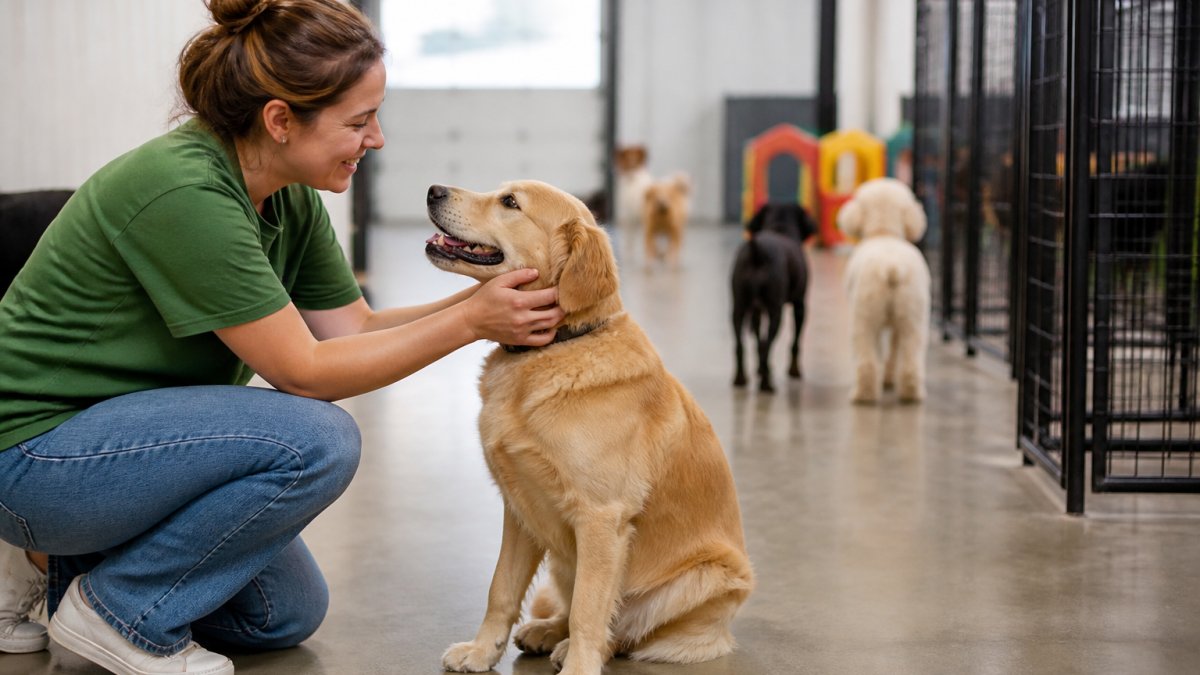
- Staff who read body language and step in early
For many shy dogs, walking through the door without freezing is the first real win.
When Daycare Makes Fear Worse
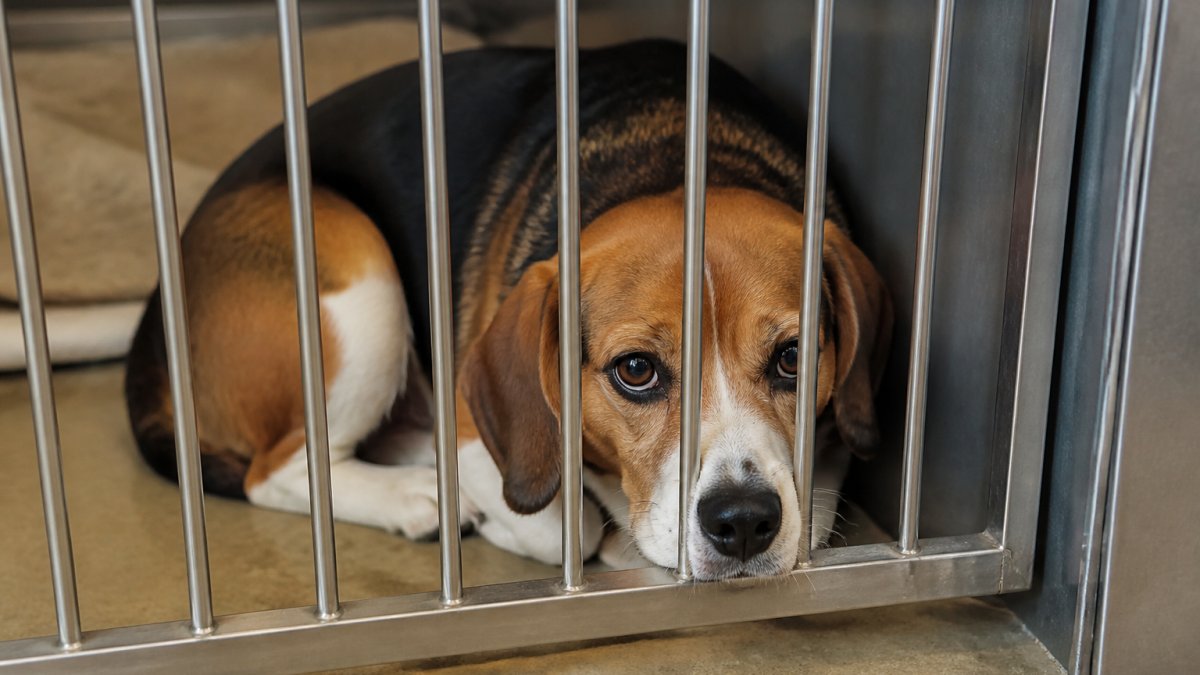
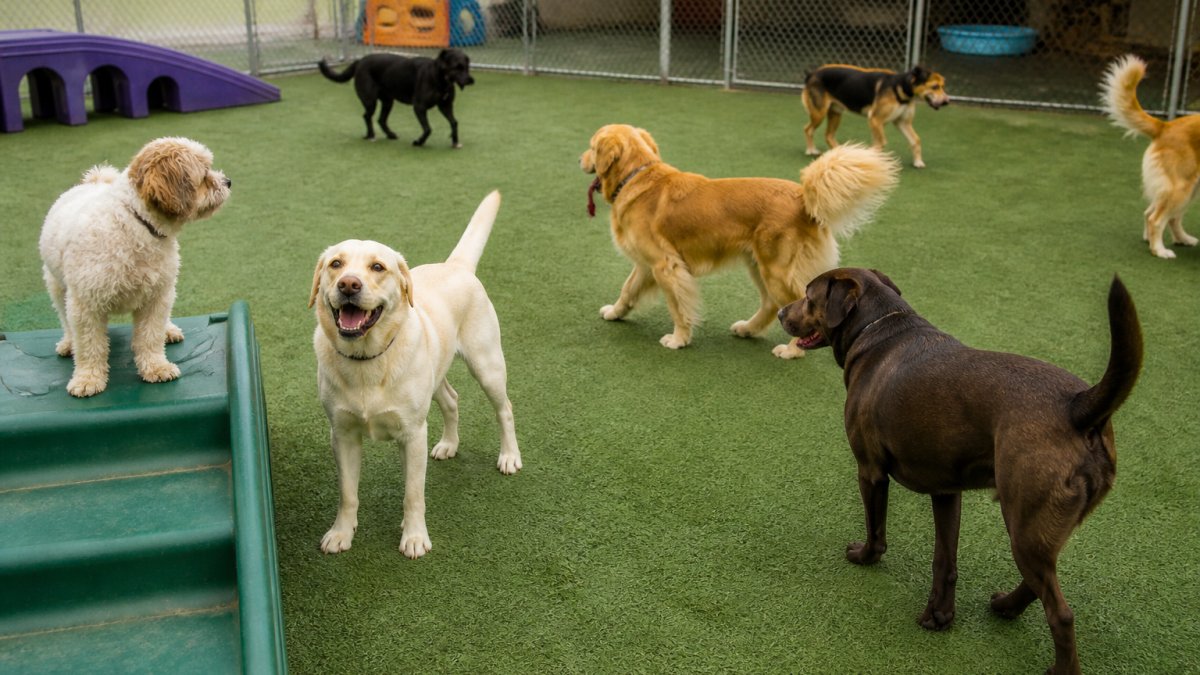
A high-stimulus environment can overwhelm a fearful dog fast. Constant barking, tight space, and rough play push dogs past their limit, teaching them other dogs mean stress.
Watch for these red flags:
- Large, mixed groups with no temperament sorting
- No rest breaks or quiet space
- Staff who cannot describe your dog's behavior at pickup
A reactive dog in the wrong room is a safety risk. Daycare suitability depends on fit, not marketing.
Signs a Dog Is Stressed at Daycare (Before, During, and After)
Stress shows up before you leave, during the stay, and after you get home. A shy dog rarely complains out loud, so body language is your best tool.
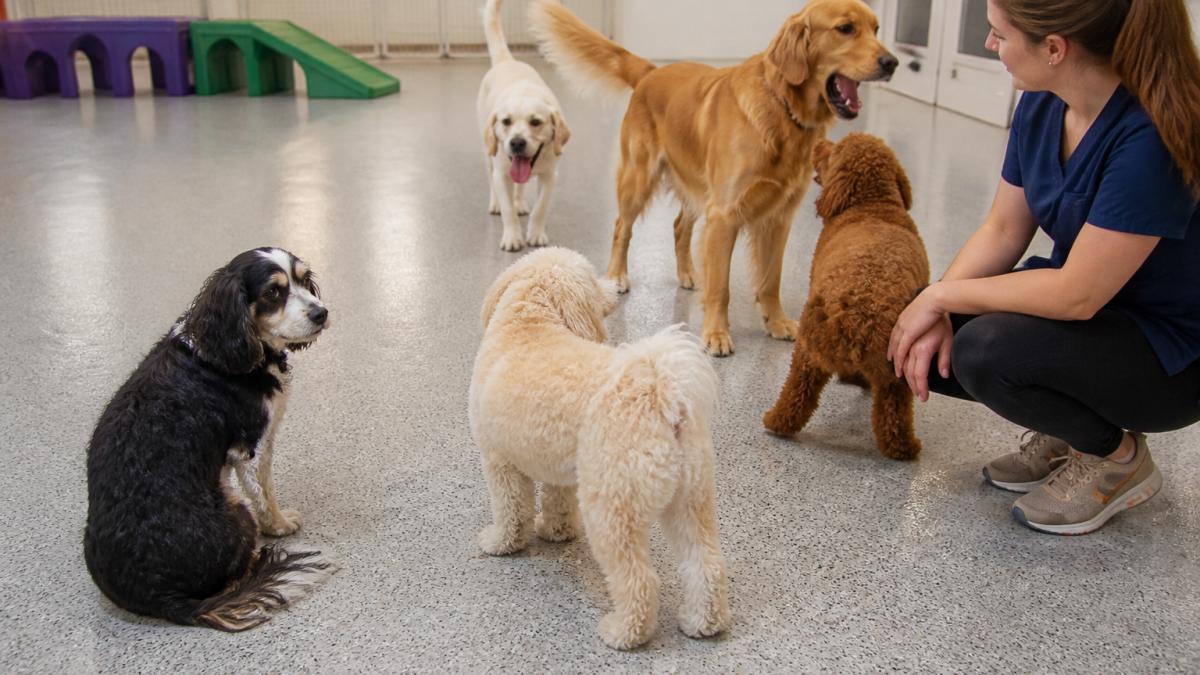
Body Language to Watch at Drop-Off
Drop-off behavior tells you a lot. A confident dog pulls toward the door; a stressed dog plants their feet.
Common stress signals include:
- Tucked tail and flattened ears
- Lip licking, yawning, or whale eye when no food is present
- Trembling, panting, or drooling without heat or exercise
A shy dog who pauses, then leans forward to sniff, is coping. A dog who shuts down is not.
Recovery Time as a Progress Signal
Recovery time is the clearest progress signal. After a good day, a shy dog settles within hours; after a bad day, stress lingers.
Ask yourself:
- Does your dog sleep, eat, and drink normally that night?
- Are they back to baseline by morning, or clingy, jumpy, or withdrawn for a day or more?
A dog who needs two days to recover is telling you the day was too much. Write it down.
How to Introduce a Dog to Daycare: A Step-by-Step Trial Plan
A gradual introduction beats a full day on the first visit, letting a shy dog build comfort in stages with a clear decision at each step.
Total time: 2 to 4 weeks Difficulty: Easy, but it needs patience
What You'll Need
- A facility that offers short trial visits
- A treat your dog loves and only gets on daycare days
- A notebook or phone note for tracking behavior
Step 1: Tour Without Your Dog [Time: 30 minutes]
Visit alone first. Watch how staff greet dogs and how the room sounds, and ask to see the rest area, not just the play floor.
Go sign: You can picture your dog in that space without wincing, and staff can describe how they handle a nervous dog without hedging. No-go sign: Constant barking, no visible quiet space, or staff who cannot tell you the staff-to-dog ratio. Expected result: You can picture your dog in that space without wincing.
Step 2: A 30-Minute Visit [Time: 30 minutes]
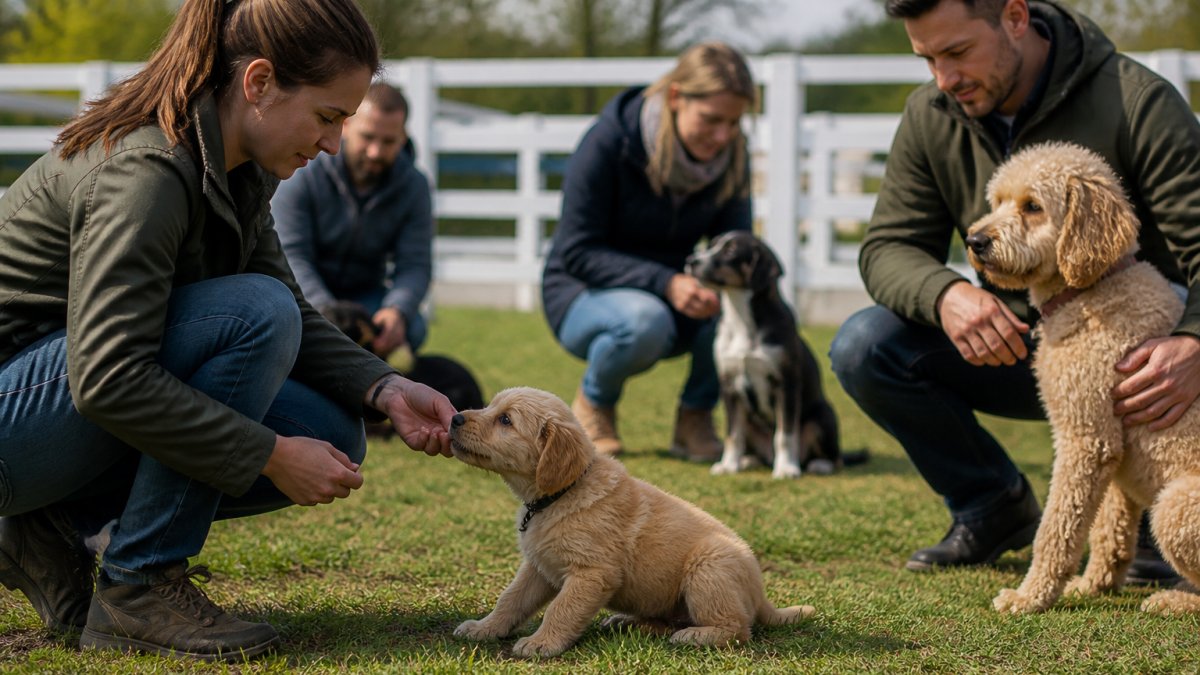
Book the shortest visit offered, ask for one-on-one attention or a small-group slot, and stay nearby to pick up quickly if your dog shuts down.
Go sign: Your dog pauses, then leans forward to sniff, takes a treat from staff, and walks in on a loose leash by the end of the visit. No-go sign: Freezing at the threshold, tucking the tail and holding it there, refusing high-value treats, or trying to back out of the leash. Expected result: Your dog explores, even briefly, and recovers within a few hours.
Step 3: A Half Day [Time: 4 hours]
Add time only if the short visit went well. Ask staff to note rest breaks and engagement, and to say specifically what your dog did.
Go sign: Your dog eats, rests during scheduled breaks, and shows curiosity toward calm dogs without hiding. No-go sign: Pacing the whole visit, hiding in a corner, or coming home wired and unable to settle for 24 hours or more. Expected result: Your dog eats, rests, and shows curiosity toward calm dogs.
Step 4: A Full Day [Time: 6 to 8 hours]
Move to a full day once the half day ends with a relaxed dog, and keep the first full day on a quiet weekday.
Go sign: Normal energy at pickup, normal appetite that evening, and back to baseline by the next morning. No-go sign: Clingy, jumpy, or withdrawn behavior that lasts more than a day, or new fear of familiar people. Expected result: Normal energy at pickup and normal recovery overnight.
Go and No-Go Markers at Each Stage
| Stage | Go Sign | No-Go Sign | Next Step |
|---|---|---|---|
| Tour | Calm room, attentive staff | Constant barking, no quiet space | Try another facility |
| 30-minute visit | Explores, takes treats | Freezes, hides, bolts | Stop and reassess |
| Half day | Rests and recovers same day | Wired or shut down for 24+ hours | Repeat half day or stop |
| Full day | Happy at pickup, normal next day | Clingy, jumpy, or withdrawn | Drop back a stage |
How to Read Recovery Time at Each Stage
Recovery time is the clearest progress signal, and the one most owners skip. A dog who needs two days to return to baseline is telling you the day was too much. Write it down.
How Long Should a Dog Stay at Daycare?
A shy dog should start with 30- to 60-minute stays and build slowly. Most do best with half days at first, since two short, good visits beat one long, stressful one.
Use these guidelines:
- First visits: 30 to 60 minutes
- Building phase: 2 to 4 hours, once or twice a week
- Steady state: 4 to 6 hours for dogs who handle it well
Rest breaks are not optional; six hours of hard play leads to overstimulation.
Questions to Ask a Dog Daycare Before You Book
Ask direct questions and listen for specific answers; vague replies about "lots of playtime" tell you little. Bring these on your tour:
- How are dogs grouped, and by what criteria?
- What is the staff-to-dog ratio, and who supervises play?
- How do you handle a nervous or fearful dog?
What to Observe on a Facility Tour
Watch the room, not the brochure:
- Dogs with relaxed bodies and loose tails
- Staff kneeling to check on individual dogs
- Clean water available and clean floors
If a dog in the corner is ignored while staff chat at the desk, that tells you something.
When to Seek Help From a Veterinarian or Behavior Professional
Talk to your vet or a qualified behavior professional if your dog's fear is severe or worsening; a veterinarian can rule out pain or medical issues that look like shyness. Seek help when you see:
- Growling, snapping, or lunging around other dogs
- Panic at drop-off that does not improve after several visits
- Loss of appetite or sleep after daycare
A certified behavior consultant or veterinary behaviorist can build a plan for a reactive dog. Daycare is not a substitute for that work, and a good facility will say so.
Alternatives for Shy Dogs Who Don't Enjoy Group Play
Group play is not the only path to a happy dog. Plenty of shy dogs thrive with quieter options, so match the option to what your dog actually needs.
| Option | Best For | What It Looks Like | Trade-Off |
|---|---|---|---|
| One-on-one playtime with a staff member | Dogs who like people more than dogs | A handler plays, walks, or does enrichment with your dog alone | Limited dog-to-dog practice |
| Small compatible group | Dogs who warm up to one or two calm dogs | Two to four dogs matched by temperament and play style | Requires a facility that actually sorts groups |
| Structured enrichment day | Dogs who need mental work, not play | Sniffing, puzzle feeders, rest, and quiet time | Less social exposure |
| In-home pet sitter | Dogs who shut down outside the home | Care in your dog's own space | No new-dog exposure at all |
| Solo walks with a dog walker | Dogs who need exercise without pressure | One dog, one walker, familiar route | Does not build dog-dog comfort |
| Small-group training class | Dogs ready to learn near other dogs | Obedience or confidence work in a calm, small class | Structured, not free play |
How to Choose Without Assuming Sociability Is the Goal
A shy dog does not have to become a social butterfly. The goal is a dog who can relax, recover, and choose to engage on their own terms. Measure progress with indicators that do not require group play:
- Relaxed recovery: Your dog returns to baseline within a few hours, not a few days.
- Voluntary engagement: Your dog chooses to approach a calm dog or a familiar person, even briefly.
- Comfort around other dogs: Your dog can be near other dogs without freezing, hiding, or bolting.
If your dog hits those markers, the option is working, even if they never become the dog who races into a playroom.
When to Skip Daycare Entirely
Some dogs are better served outside a group setting, and that is a legitimate answer, not a failure. Skip group daycare and lean on the alternatives above when you see:
- Growling, snapping, or lunging around other dogs
- Panic at drop-off that does not improve after several visits
- Loss of appetite or sleep after daycare
A certified behavior consultant or veterinary behaviorist can build a plan for a reactive dog. Daycare is not a substitute for that work.
At Ruffin' It Ranch, we offer individualized care for dogs who need a slower pace. Our climate-controlled facility has large private indoor and outdoor runs, so a dog who wants space can have it.
Safe social opportunities still matter. They just do not have to happen in a crowd.
Conclusion: Matching the Setting to Your Dog
The real question is not whether dog daycare is good for shy dogs, but whether a specific daycare is good for your specific dog.
Ruffin' It Ranch provides 24/7 on-site professional staff, private indoor and outdoor runs, and individualized care for puppies and special-needs dogs.
Book your pet's stay now and let us match the setting to your dog.
Frequently Asked Questions
What are the downsides of doggy daycare for a shy dog?
The main risk is overstimulation. A high-stimulus room with constant barking, crowding, and unpredictable dogs can push a fearful dog past their comfort level, and repeated exposure at that intensity can make fear worse rather than better. Other downsides include picking up rude play habits from pushy dogs, exhaustion that shows up as irritability at home, and stress signals the staff may miss in a large group. The fix is not avoiding daycare altogether; it is choosing a facility with small groups, rest breaks, quiet space, and one-on-one attention.
How can you tell if a shy dog is comfortable at daycare?
Look for voluntary engagement. A comfortable shy dog will approach other dogs on their own, offer play bows, take treats, and return to curious, interested behavior after a brief pause. They should recover quickly after drop-off and settle easily at home. If your dog hides, freezes, tucks their tail, avoids the handler, or spends the whole session pressed against a wall, that is a fear response, not shyness, and it means the setting is wrong for them right now.
Do veterinarians recommend dog daycare for shy dogs?
Many veterinarians view daycare as reasonable for shy dogs when the environment is calm, groups are small, and introductions are gradual. The recommendation usually comes with conditions: watch for stress signals, keep sessions short at first, and stop if behavior changes for the worse. Vets are more likely to suggest a behavior professional when a dog shows fear that does not improve, reacts aggressively, or shuts down entirely. Daycare suitability is an individual call, not a blanket yes or no.
How long should a shy dog stay at daycare at first?
Start with two to three hours, not a full day. That is long enough to see how your dog handles drop-off, a short group session, and pickup without pushing them into exhaustion. If they come home relaxed and recover within an hour, extend to four hours, then a half day. A full day is reasonable only after several successful shorter visits. Some shy dogs do best on a two-visit-per-week schedule with rest days in between.
What are alternatives to daycare for a shy dog?
If group play is too much, look for individual playtime, private runs, or one-on-one attention at a boarding and daycare facility. A trusted dog walker, a quiet in-home sitter, or a structured training class with a small number of compatible dogs can build confidence without the noise of a busy room. Enrichment at home, like puzzle feeders and sniff walks, also helps. The goal is safe social opportunities, not forcing sociability.