 how-to
Is Fear Free Grooming Worth It for Senior Dogs?
Last Updated: October 31, 2026
Quick Summary
Yes, fear free grooming is worth it for senior dogs because it adapts handling to stiff joints, fading vision and hearing, and sensitive skin. Short sessions with breaks and gentle pacing keep older dogs calm and safe.
- Senior dogs often find grooming more stressful because of joint stiffness, sensitive skin, and reduced vision or hearing.
- Schedule sessions at your dog's best time and exercise lightly first with a five to ten minute sniff walk.
- Work in small zones and pause for ten to twenty seconds after each one, rewarding calm behavior.
- Handle paws, ears, face, and tail last, when the dog has already had successful, rewarded handling.
- Stop and reschedule if the dog shows sustained trembling, labored breathing, or pain when one specific area is touched.
Table of Contents
- Why Senior Dogs Find Grooming Harder
- How to Groom an Anxious Senior Dog Step by Step
- Signs of Pain During Dog Grooming to Watch For
- Keeping Sessions Short, Soft and Low-Stress
- How Often to Groom a Senior Dog
- Preparing Your Dog at Home Between Appointments
- Questions to Ask Before Booking Your Senior Dog's Groomer
- Frequently Asked Questions
Why Senior Dogs Find Grooming Harder
Senior dogs often find grooming more stressful than younger dogs do. Their bodies change with age, and a routine that once felt easy can become uncomfortable. Fear free grooming for senior dogs focuses on those changes, so the experience stays calm and safe.
Many older dogs need a slower, gentler pace. A few changes in how a groomer handles the dog can make a big difference.
Stiff joints and sensitive skin
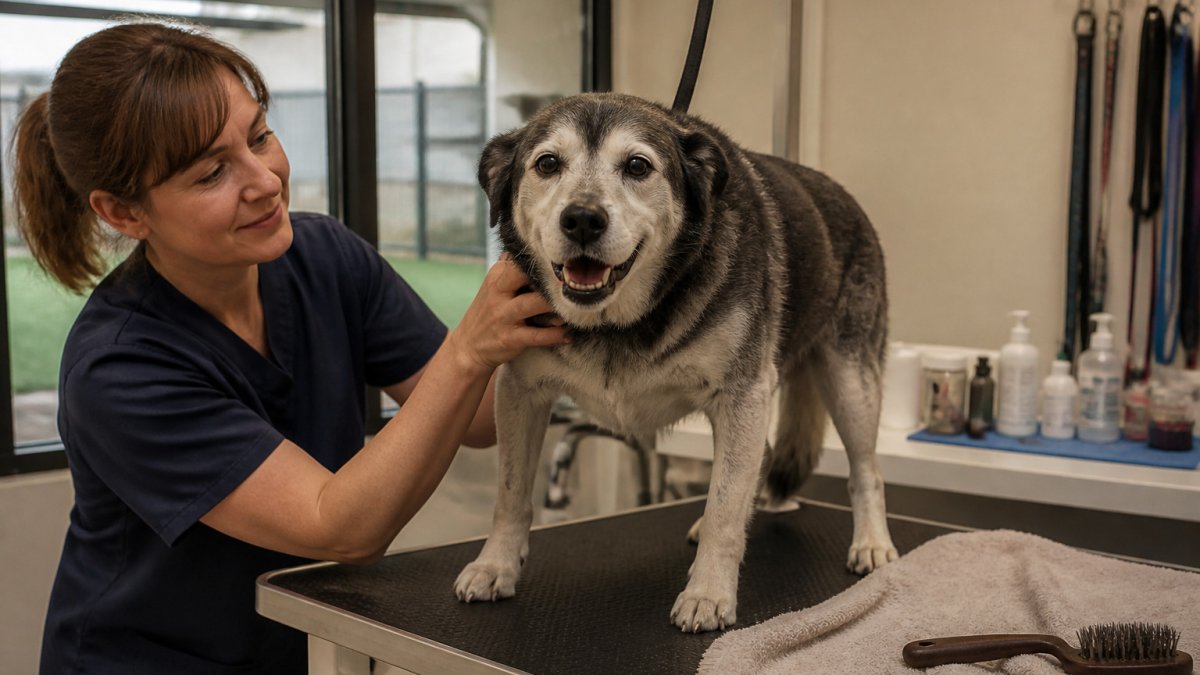
Arthritis and stiff joints make standing still hard. A dog may shift its weight, pull away, or refuse to stay on a slick table. Skin can also get thinner and more sensitive with age.
- Use soft, non-slip surfaces for standing and bathing
- Support the hips and back during brushing
- Avoid harsh brushing on tender spots
- Keep the water warm, not hot
Fading vision and hearing
Many senior dogs have trouble seeing or hearing well. A dog that cannot see the groomer coming may startle easily. A dog that cannot hear clearly may feel lost in a noisy room.
Speak in a calm, steady voice and touch the dog gently on the shoulder before moving near its head. Approach from the front where the dog can see you.
How to Groom an Anxious Senior Dog Step by Step
A fear-free session is best approached as a sequence, and for a senior dog the sequence matters more than any single tool. The plan below runs from preparation at home through post-grooming recovery, with checkpoints where you pause or stop.
Before the session: set up for calm
- Schedule at the dog's best time. Many older dogs are stiffest after waking and most settled after a short walk and a bathroom break.
- Exercise lightly first. A five- to ten-minute sniff walk can take the edge off nervous energy without tiring arthritic joints.
- Bring a medical summary. Note medications, pain diagnoses, skin conditions, and any handling preferences. This is the single most useful thing you can hand a groomer.
- Skip breakfast if your veterinarian approves it for dogs prone to nausea or motion stress, but never withhold water.
Step 1: Let the dog settle in the space
Give the dog two to three minutes to sniff the table, the tools, and the groomer before anything begins. Do not lift the dog onto the table immediately. Let it approach, and reward any calm investigation with a treat. If the dog avoids the table entirely, that is information, slow down rather than push.
Step 2: Start with touch, not tools
Begin with gentle, flat-hand contact on the shoulder and chest, the areas most dogs accept first. Work toward the collar, then the back. Watch the dog's face and body: relaxed ears, soft eyes, and a loose tail are green lights. A closed mouth, stiffened legs, or a turned head are yellow lights, pause and wait.
Step 3: Introduce one tool at a time
Turn clippers or a dryer on across the room first, then bring them closer while rewarding calm behavior. Let the dog sniff the brush or clipper body before it touches skin. This is the desensitization step most rushed sessions skip, and it is the one that pays off most for seniors who startle easily.
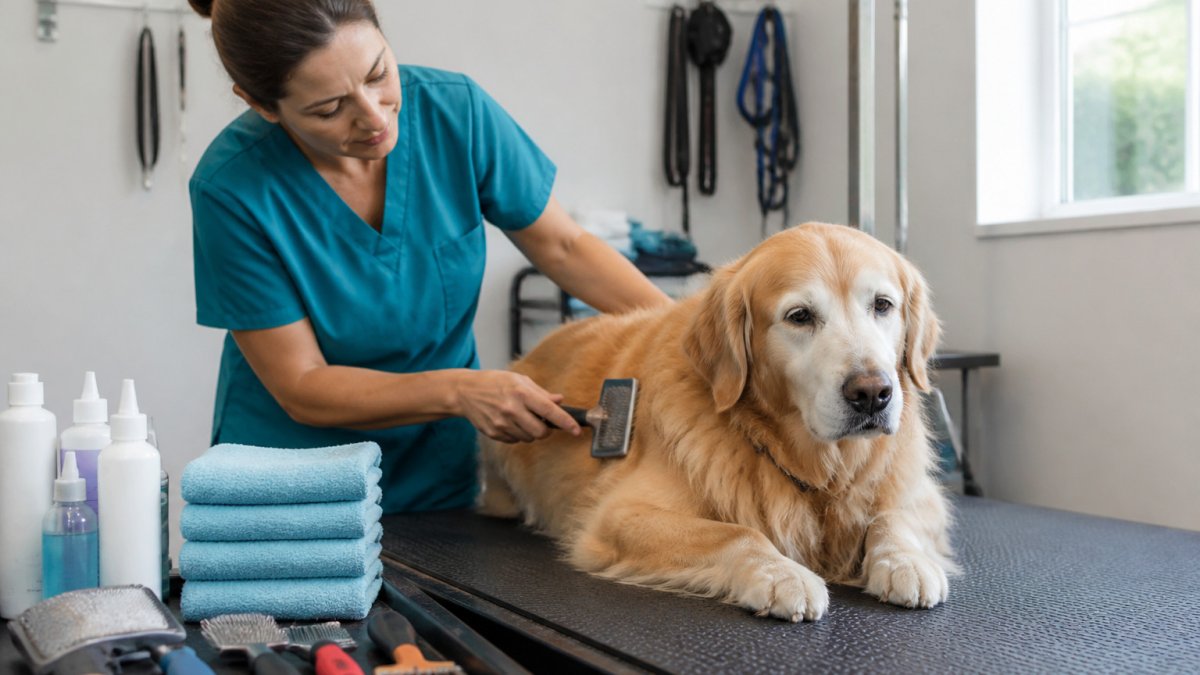
Step 4: Work in small zones with breaks
Brush or clip one small area, a shoulder, a flank, one paw, then pause for ten to twenty seconds. Offer a treat or praise after each zone.
Step 5: Handle the sensitive areas last
Paws, ears, face, and tail are the highest-stress zones for most senior dogs. Save them for the end, when the dog has already had a run of successful, rewarded handling. If the dog will not tolerate a paw, do not force it, note it and let the owner or veterinarian address nail care separately.
Step 6: Close with a calm recovery period
End before the dog is exhausted. Give five to ten minutes of quiet rest, water, and a treat in a low-traffic area before the dog goes home. A short, positive ending is what the dog remembers next time.
When to stop the sequence early
Stop and reschedule if the dog shows sustained trembling, refuses treats it normally takes, tries repeatedly to leave the table, or vocalizes when a specific area is touched.
The article walks through six steps; this table summarises each one with its timing or checkpoint.
| Step | What to do | Time or checkpoint |
|---|---|---|
| Before the session | Schedule at the dog's best time and exercise lightly | Five to ten minute sniff walk |
| Step 1: Settle in | Let the dog sniff the table and tools | Two to three minutes |
| Step 2: Touch first | Flat-hand contact on shoulder and chest | Watch for relaxed ears and loose tail |
| Step 3: One tool at a time | Desensitise with clippers or dryer across the room | Reward calm behaviour |
| Step 4: Small zones | Work one area, then pause | Ten to twenty second breaks |
| Step 5: Sensitive areas last | Paws, ears, face and tail | Save for the end of the session |
| Step 6: Recovery | Quiet rest, water and a treat | Five to ten minutes before going home |
Signs of Pain During Dog Grooming to Watch For
Pain and fear look similar from across the room, but they call for different responses. Fear usually eases when the trigger is removed; pain often persists or worsens when a specific area is touched. Learning to read both, and knowing when to stop, is the core safety skill in senior-dog grooming.
Observable signs, grouped by what they tell you
Signs of fear or stress (pause and slow down):
- Lip licking, yawning, or excessive swallowing when no food is present
- Pinned ears, tucked tail, or a tightened mouth
- Whale eye, the whites of the eyes showing as the dog turns its head away
- Sudden stillness or freezing
Signs of pain (stop and reassess):
- A sudden yelp, snap, or growl when one specific spot is touched
- Flinching or pulling away from a limb, hip, or the spine
- Trembling that starts when a joint is manipulated
- Holding a leg up, or refusing to bear weight on a paw
Signs that mean stop now and seek veterinary advice:
- Labored breathing, a blue or gray tinge to the gums, or coughing that starts during handling
- Collapse, weakness in the hind end, or inability to stand
- A skin wound, hot spot, lump, or discharge that was not there before
- Bleeding that does not stop with light pressure
What a groomer should and should not handle
A groomer should not diagnose pain or treat a skin condition. If a dog reacts sharply to a joint or a patch of skin, the right move is to stop that area and have a veterinarian look at it before the next appointment.
When to pause, shorten, or stop
- Pause for yellow-light stress signals: give the dog a break, offer water, and resume more slowly.
- Shorten the session if the dog is tiring, slower responses, lying down, or losing interest in treats are common signs that stamina is gone.
- Stop for any pain signal tied to a specific area, any breathing change, or any sign the dog is overheating. Reschedule rather than push through.
Talk with your veterinarian about any joint or skin pain before the next appointment, and ask the groomer to note which areas triggered a reaction so the next visit can start there, slowly.
Keeping Sessions Short, Soft and Low-Stress
Short sessions help most anxious seniors. Many groomers break the visit into several small parts with rest in between. Soft bedding, quiet music, and dim lighting can also lower stress.
Here is what helps most:
- Book shorter appointments with breaks
- Use a soft, padded surface
- Keep the room quiet and calm
- Stop before the dog reaches its limit, and learn the signs that grooming is causing stress and what to do about them.
How Often to Groom a Senior Dog
Most senior dogs need grooming every four to six weeks, but the right schedule depends on coat type and health. Dogs with long or thick coats may need more frequent visits, while dogs with short coats may need fewer.
Regular grooming also gives you a chance to check the skin, ears, and nails. Fewer, gentler visits are often better than long, stressful ones.
Preparing Your Dog at Home Between Appointments
You can make the next grooming visit easier with simple practice at home. Brush your dog for a few minutes each day. Handle the paws, ears, and tail gently.
Short, regular practice builds trust. Over time, your dog may feel more relaxed when it sees the grooming tools.
Questions to Ask Before Booking Your Senior Dog's Groomer
Before you book, ask these questions:
- Do you use fear free methods with senior dogs?
- How long are your sessions, and do you take breaks?
- Do you use non-slip, padded surfaces?
- How do you handle dogs with joint pain or poor vision?
- What happens if my dog shows signs of stress?
A good groomer will answer these questions clearly. If you are looking for a calm, supportive option, you can book cage free grooming in Marlboro for anxious dogs with Ruffin' It Ranch.
Frequently Asked Questions
How do you groom a senior dog without stressing them out?
Keep sessions short, usually 20 to 30 minutes at a time, and build in breaks so your dog can rest, stretch and drink water. Use soft, non-slip surfaces, avoid restraining the dog more than needed, and move slowly with calm, consistent praise. Ask the groomer to pause at any sign of stiffness or distress rather than pushing through. A fear free approach also means introducing tools gradually and letting your dog sniff and settle before each new step.
How often should a senior dog be groomed?
Most senior dogs do well with a professional grooming appointment every four to six weeks, though coat type and skin condition matter most. Dogs with long or matted coats may need more frequent visits, while short-coated seniors can go longer between sessions. Regular brushing at home between appointments reduces mats and makes each visit shorter and less stressful. Your veterinarian can advise if skin problems or joint issues call for a different schedule.
How can I tell if my senior dog is in pain during grooming?
Watch for yelping, growling, flinching, pulling away, a tucked tail, trembling, lip licking, or sudden stillness that looks like freezing. Stiffness when lifted onto the table or reluctance to lie on one side can signal joint discomfort. Ask the groomer to stop and check in whenever you see these signs, and mention them to your veterinarian. Persistent discomfort during handling deserves a veterinary exam rather than more grooming.
Is mobile grooming better for senior dogs?
Mobile grooming can help anxious or mobility-limited seniors because the dog stays in a familiar setting, avoiding car rides and unfamiliar smells. It also reduces the stress of waiting among other dogs. However, a mobile van still requires a stable, level space and a groomer who works calmly and patiently. Compare it against a quiet, low-traffic salon with a fear free track record, and choose whichever keeps your dog most relaxed.
Senior dogs deserve grooming that respects their comfort and their limits. With the right groomer, a slower pace, and simple practice at home, most anxious dogs can enjoy the experience more. Ruffin' It Ranch offers stress-free grooming in a calm setting, and we are happy to help you plan your dog's next visit.