 how-to
7 Dog Daycare Safety Checks Every Owner Should Make
Last Updated: November 1, 2026
Quick Summary
To evaluate daycare safety, ask for documents rather than descriptions at each stop: staff pet first aid and CPR certificates, actual staff-to-dog ratios, written vaccination requirements, a written emergency plan naming a 24-hour vet, cleaning logs, and an incident report form. Judge every answer by its specificity, because vague answers are answers too.
- Ask who holds a current pet first aid and CPR certification, and request records.
- Count dogs yourself during peak hours and confirm how many staff are on the floor.
- Good programs run temperament assessments first, then group dogs by size and energy.
- A real emergency plan is written, posted, and rehearsed, with drills logged at least quarterly.
- Ask for the cleaning schedule and initialed log, plus the isolation protocol for sick dogs.
Table of Contents
- Why Daycare Safety Comes Down to Systems, Not Promises
- The 7-Point Dog Daycare Safety Checklist
- Dog Daycare Vaccination Requirements and Health Screening
- Questions to Ask a Dog Daycare Before You Enroll
- Dog Daycare Emergency Procedures: What a Real Plan Looks Like
- Sanitation and Disease Prevention: How to Judge a Clean Facility
- Incident Reporting and Facility Security: The Paper Trail That Protects Your Dog
- Book a Tour at Ruffin' It Ranch and See the Protocols Yourself
- Frequently Asked Questions
Why Daycare Safety Comes Down to Systems, Not Promises
Walk into any dog daycare and you'll hear the same assurances: "We love dogs here." "Your pup is family." Warm words are easy. Systems are hard.
Knowing how to evaluate dog daycare safety protocols means looking past the smiles and inspecting the machinery underneath: training records, ratios, cleaning logs, and written emergency plans. For a broader framework on evaluating safe dog care, see our guide to finding safe dog boarding. Safety is what happens when the right process runs even on the busiest day.
Here's the uncomfortable truth most tours skip. A friendly lobby tells you nothing about what happens in the back room at 2 p.m. when twenty dogs are wound up and one staffer is on break.
So below, we'll walk through seven checks any owner can make. Bring them on your next facility tour. Ask for documents, not descriptions.
The 7-Point Dog Daycare Safety Checklist
This dog daycare safety checklist covers the seven areas that decide whether a facility runs on structure or luck. Use it as your tour script. Ask for proof at each stop.
| # | Check | What to Ask For | Red Flag |
|---|---|---|---|
| 1 | Staff training | Pet first aid and CPR certificates | "We train in-house" with no records |
| 2 | Supervision | Actual staff-to-dog ratio on the floor | Vague answers or "it varies" |
| 3 | Grouping | How dogs are sorted by size and play style | One big open room for all dogs |
| 4 | Health screening | Vaccination records and health checks | No proof required |
| 5 | Emergency plan | Written plan with vet contact | "We'd call your vet" only |
| 6 | Sanitation | Cleaning schedule and logs | Strong smell or visible mess |
| 7 | Incident reporting | Written report process | "Nothing bad ever happens" |
Point 1: Staff Training and Pet First Aid Certification
Ask one question first: "Who here holds a current pet first aid and CPR certification?"
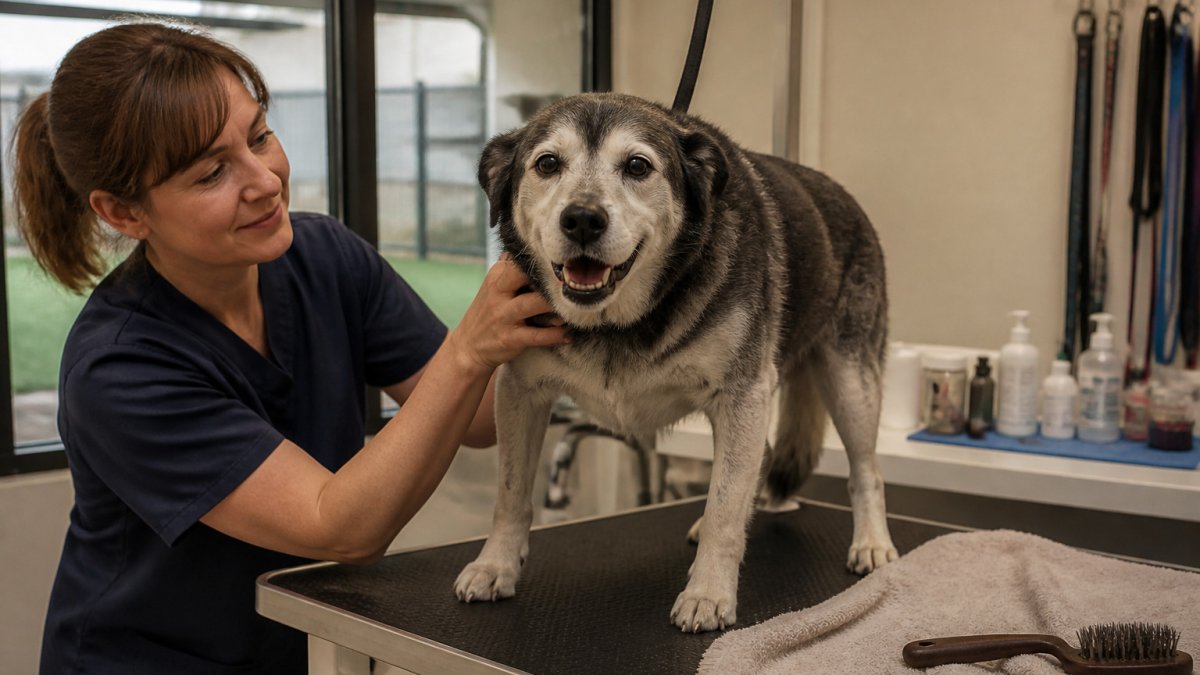
Staff qualifications separate real facilities from warehouses with water bowls. Look for handlers trained in reading stress signals, breaking up scuffles safely, and spotting early illness. A common mistake owners make is accepting "years of experience" as a substitute for certification. Experience matters, but CPR training is what counts in the first three minutes of an emergency.
Point 2: Staff-to-Dog Ratios and Active Supervision
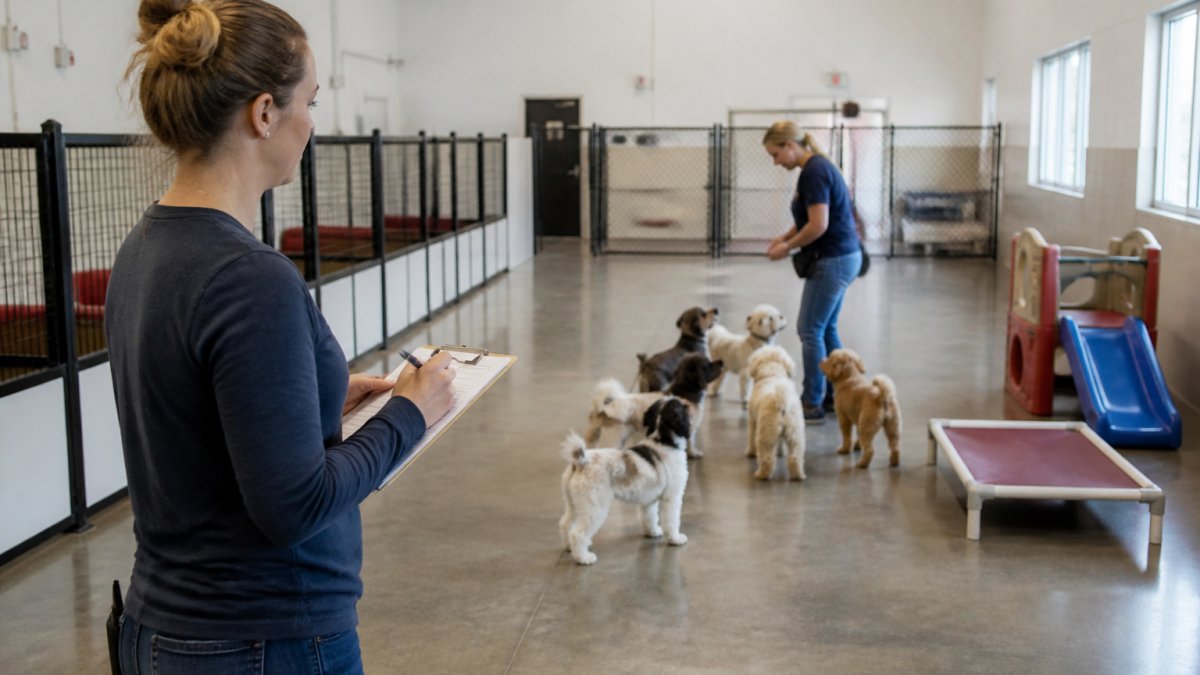
A safe ratio depends on dog size and energy, but the principle never bends: more dogs per handler means less eyes-on time. Ask how many staff are on the floor during peak hours, then count dogs yourself.
Active supervision means staff are standing, moving, and watching, not sitting behind a desk. Watch the room for five minutes. Do handlers scan the group? Do they step in before a scuffle starts? If you want to understand what quality supervised play looks like, read our guide on the benefits of supervised dog play before your tour.
Point 3: Dog Grouping by Size, Temperament, and Play Style
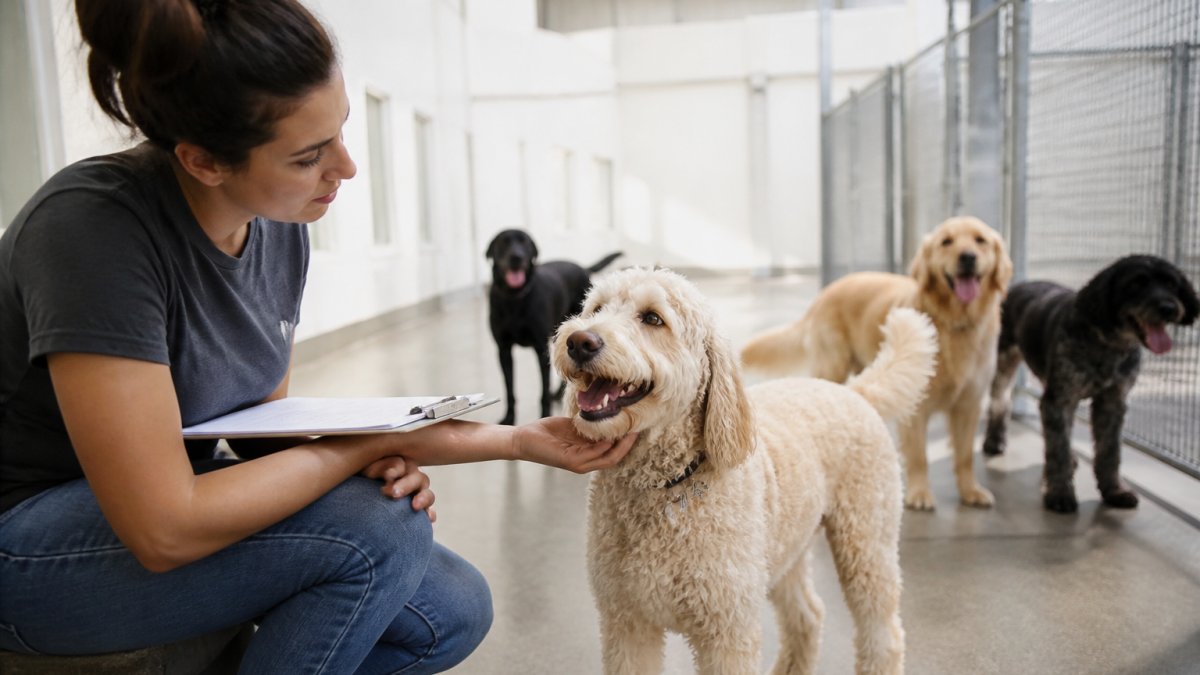
Grouping is where injury prevention actually happens. Small dogs mixed with large, rough players is a recipe for trouble, no matter how friendly everyone is.
Ask how the facility handles size separation, shy dogs, and dogs with different play styles. Good programs run temperament assessments first, then place dogs in groups matched by energy and size. They also build in rest periods. Overtired dogs snap. Separate areas for breaks are a sign of a thoughtful operation.
Dog Daycare Vaccination Requirements and Health Screening
Standard dog daycare vaccination requirements often include rabies, DHPP, and bordetella; ask each facility for its written requirements. Ask which vaccines they require, how often records must be updated, and whether they check expiration dates.
Health screening goes beyond paperwork. If you're unsure how the intake process works, our step-by-step guide on how to introduce your dog to daycare walks through screening and first-day expectations.
Watch out: a facility that accepts dogs "as long as they look healthy" without checking records is gambling with every dog in the building.
Questions to Ask a Dog Daycare Before You Enroll
Bring these questions to ask a dog daycare and judge the answers by their specificity. Vague answers are answers too.
- What is your staff-to-dog ratio during peak hours?
- Are all handlers pet first aid and CPR certified?
- How do you group dogs, and how often do groups change?
- What is your written emergency plan, and which vet do you call?
- How do you clean between groups, and can I see the log?
- How do you document and report incidents?
- Can I see the play area during my tour?
If you want to see a facility's own answers to common enrollment questions, review our FAQ before you visit.
Dog Daycare Emergency Procedures: What a Real Plan Looks Like
Dog daycare emergency procedures should be written, posted, and rehearsed. Ask to see the plan, not just hear about it. A real plan names the nearest emergency veterinary hospital, lists owner contact numbers, and assigns a staff member to each task. But the strongest plans go further, covering the scenarios that separate a rehearsed facility from one that improvises.
Evacuation and severe weather. Ask how the facility evacuates dogs during a fire alarm or severe weather warning. A credible plan identifies primary and secondary exit routes, specifies how dogs are moved (leashes, carriers, or slip leads kept at each exit), and names a muster point away from the building.
Power loss and climate control. A facility that depends on air conditioning or ventilation needs a backup plan. Ask whether they have a generator, battery backup, or agreement to relocate dogs to a partner facility. In a prolonged outage, how do they keep water available and prevent overheating?
Staff roles and rehearsal. A written plan is only as good as the people who execute it. Ask who is assigned to call the veterinarian, who stays with the group, who handles transport, and who notifies owners. The best facilities run drills at least quarterly and keep a log of when the plan was last rehearsed.
Veterinary access and transport. Confirm the facility has a relationship with a 24-hour emergency hospital, not just a daytime vet. Ask how they transport a dog in an emergency: is there a dedicated vehicle, a staff member assigned to drive, and a pet first aid kit on board? A plan that says "we'd call your vet" without a transport mechanism is incomplete.
Owner notification. Ask how and when owners are contacted during an emergency. A strong protocol includes a phone call within a set time frame, a written follow-up, and a clear point of contact. If the facility cannot describe its notification sequence, it has not thought through the owner's experience.
Use these questions on your tour when comparing facilities.
Sanitation and Disease Prevention: How to Judge a Clean Facility
Cleaning procedures should be scheduled, logged, and visible. Ask how often play areas are disinfected, what products are used, and how waste is handled during the day. Disease prevention depends on routine, not occasional deep cleans.
Cleaning frequency and logs. Ask for the cleaning schedule and the log that proves it was followed. Look for a schedule that specifies multiple cleanings per day for high-traffic areas, not a single end-of-day wipe-down. The log should be initialed and dated, not just posted.
Isolation protocols. The most important disease-control question is how the facility handles a dog that shows signs of illness, such as coughing, vomiting, or diarrhea.
Illness notification. Ask whether the facility notifies owners when a contagious illness (like kennel cough or canine influenza) is confirmed among dogs that attended recently. A responsible facility has a notification process, even if it is informal, and can describe how they alert exposed owners.
Cleaning products and dwell time. Disinfectants need the right contact time to work (the EPA). Ask what products are used and whether staff follow the label's dwell time. A facility that sprays and immediately wipes may be cleaning for appearance, not for disease control.
Waste handling and traffic flow. Observe how waste is managed during your tour. Are waste bags and bins placed throughout the play area, or does staff have to leave the room to dispose of waste?
Your senses as a starting point, not a verdict. A strong odor or damp bedding suggests the cleaning schedule slips under pressure, but a clean-smelling lobby does not prove the back room is clean.
Sanitation is not about how the facility looks during a tour. It is about the routines that run when no one is watching. Ask for the schedule, the isolation plan, and the notification process, and judge the answers by their specificity.
Incident Reporting and Facility Security: The Paper Trail That Protects Your Dog
Every facility will have incidents eventually. What matters is whether there's a written process for reporting, notifying owners, and following up. Ask to see the incident report form.
Facility security rounds out the picture. Check how a facility secures its entry and outdoor areas. Ask how dogs are moved between indoor and outdoor areas and who watches the gate.
Book a Tour at Ruffin' It Ranch and See the Protocols Yourself
Reading about safety checks is useful. Standing in a facility and watching them run is better. At Ruffin' It Ranch, our team is on site 24/7, our climate-controlled facility includes large private indoor and outdoor runs, and we're equipped to care for puppies and dogs with special needs. We're also Pet Boarding Certified.
We'd rather you tour, ask, and verify than take our word for it. Book professional dog daycare or schedule a visit. Get started with Ruffin' It Ranch and tour a facility where the systems match the promises.
Frequently Asked Questions
What safety questions should I ask a dog daycare?
Ask about staff training and pet first aid certification, the staff-to-dog ratio during play, how dogs are grouped by size and temperament, vaccination requirements, and what happens during a medical emergency or fight. Also request to see written incident reporting procedures and ask whether you can observe a play session. Facilities that answer with specifics and documentation are more trustworthy than ones that give vague reassurance.
What vaccinations should a dog have before attending daycare?
Most facilities require current rabies, DHPP (distemper, hepatitis, parvovirus, parainfluenza), and Bordetella vaccines, plus proof from your veterinarian. Some also require a negative fecal test and may ask about canine influenza depending on local risk. Ask for the facility's written requirements and how often records must be updated. Puppies may need to complete their full vaccine series before joining group play.
How do I know if a dog daycare is right for my dog?
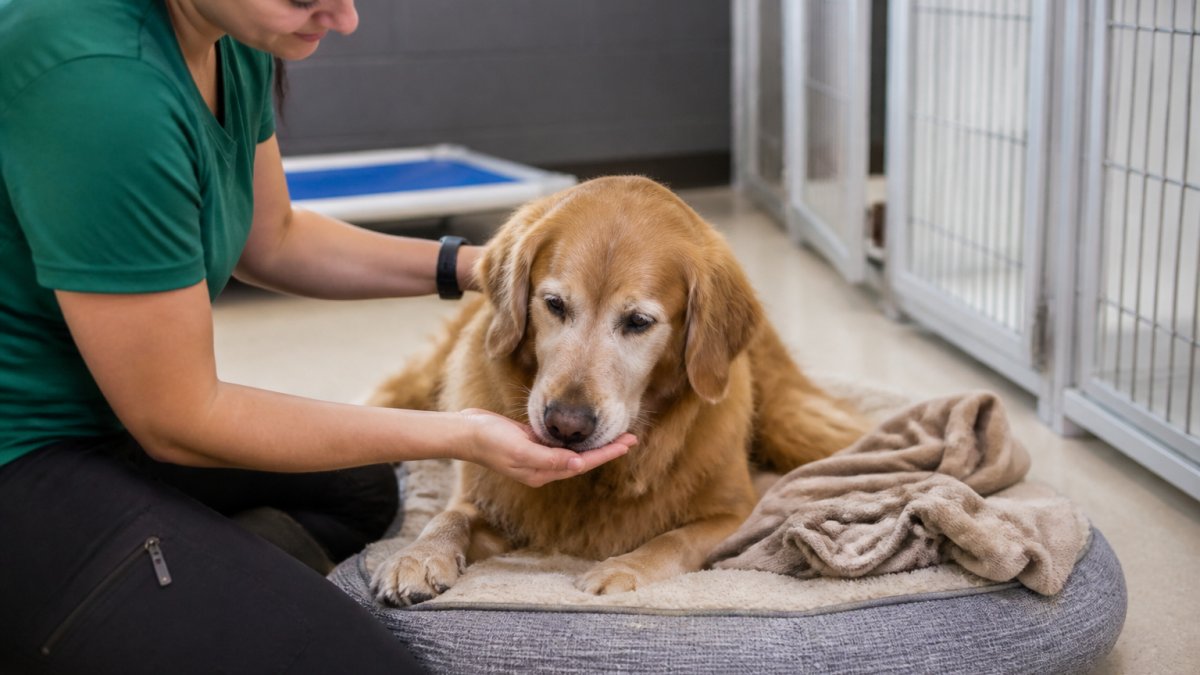
Start with a temperament assessment or meet-and-greet before enrollment. A good facility will observe how your dog reacts to other dogs, group size, and the environment, then recommend private play or a smaller group if needed. Shy, reactive, or senior dogs often do better with separate areas and rest periods. Ask whether the facility offers alternatives to open group play, such as one-on-one sessions or private runs.
How does a dog daycare handle dog fights or medical emergencies?
A written emergency plan should cover separation of dogs, staff first aid response, and transport to a veterinary partner. Ask who is on-site at all times, whether staff hold pet first aid and CPR certification, and how owners are contacted. Request the incident reporting process: what gets documented, who reviews it, and how follow-up happens. Clear procedures and a posted veterinary contact list are signs of a prepared facility.