 how-to
7 Desensitization Steps to Calm a Dog's Grooming Anxiety
Last Updated: October 28, 2026
Quick Summary
Desensitization for grooming anxiety means introducing each grooming trigger in small, separate steps, starting with sound, then vibration, then blade contact. Keep sessions short, pair each step with treats, and move on only after your dog stays loose across two sessions in a row. Stop at the first stress signal, such as lip licking or head-turning.
- Keep sessions short and frequent: three to five short sessions per week usually works better than one long one.
- Watch for early stress signals like lip licking, yawning, and tucked tail, and stop before your dog escalates.
- Introduce clippers in stages: sound first, then vibration without the blade, then blade contact on a tolerant area.
- Check clipper blades against your wrist every few minutes, since heat can create fear unrelated to noise.
- Track recovery time after each session; a dog that needs 30 to 60 minutes to settle means the step was too big.
Table of Contents
- Why Dogs Develop Grooming Anxiety
- Reading Stress Signals and Stop Points Before You Start
- How to Get a Dog Used to Brushing, Step by Step
- Desensitizing a Dog to Clippers Without Triggering Panic
- Desensitizing a Dog to Nail Trims in Short Sessions
- Building a Dog Grooming Anxiety Training Plan With Measurable Milestones
- Start Your Dog's Grooming Plan This Week
- Frequently Asked Questions
Why Dogs Develop Grooming Anxiety
Grooming asks a dog to accept a lot of unfamiliar handling at once. Restraint, sudden noise, vibration, and touch on sensitive areas like the paws, ears, and face can all feel threatening.
Fear often comes from a few common sources:
- Being held still against its will
- Loud or buzzing clippers and dryers
- Past experiences with pain, a nick, or a rushed groomer
- Lack of early handling as a puppy
- Feeling trapped on a table or in a tub
Reading Stress Signals and Stop Points Before You Start
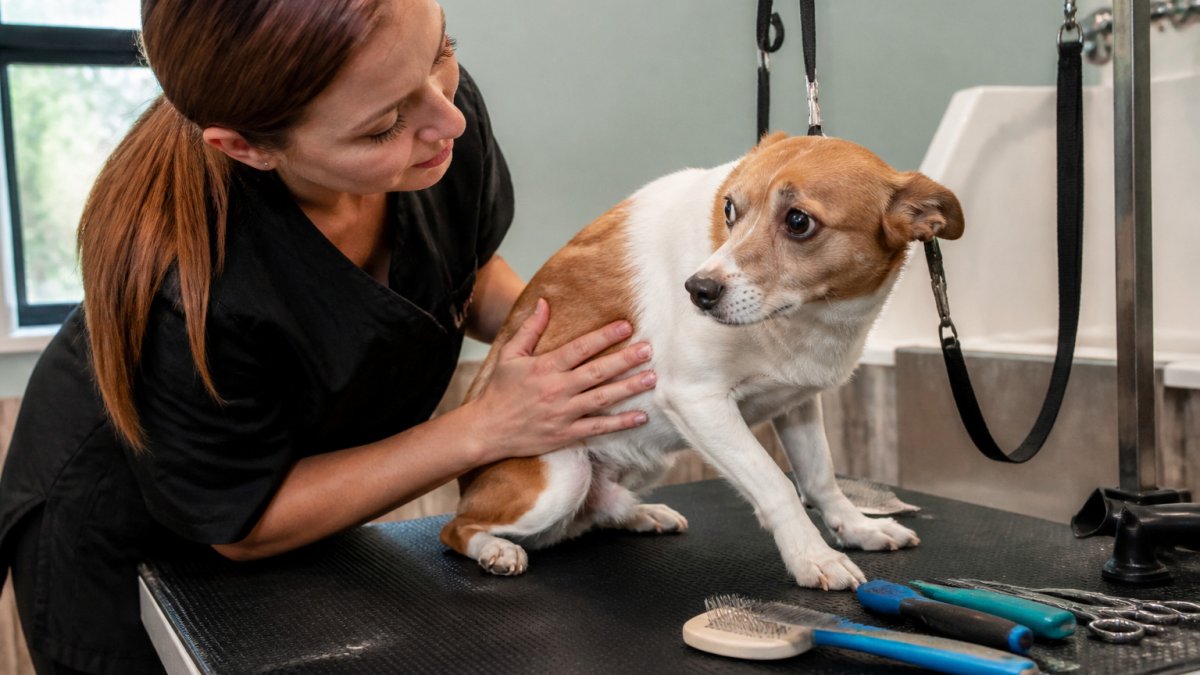
Your dog will tell you when a session is too much, usually well before it snaps or bites. Learn these signs so you can stop early.
Common early stress signals include:
- Lip licking or yawning when no one is tired
- Turning the head away or avoiding eye contact
- Tucked tail or ears pinned back
- Freezing or stiffening the body
- Panting when the dog is not hot or exercised
- Moving away or trying to leave
How to Get a Dog Used to Brushing, Step by Step
Keep sessions short and frequent rather than long and rare. Three to five short sessions per week usually works better than one long one.
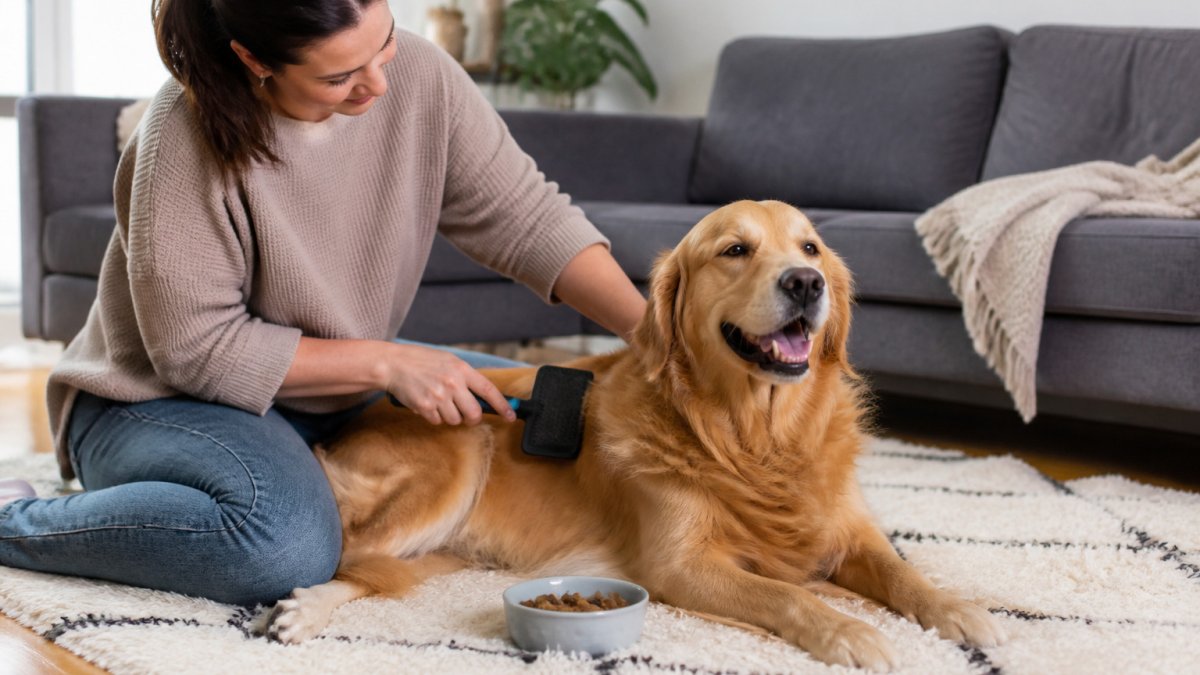
Pairing Brushing With Treats and Touch
Also practice touch on its own. Gently handle the paws, ears, and tail for a second or two, then treat. This builds tolerance for body handling that grooming will eventually require.
Desensitizing a Dog to Clippers Without Triggering Panic
Sound first, then vibration, then contact. Run these as separate mini-protocols across a week or more before you ever touch the clipper body to your dog.
Stage 1: Sound only (clippers off, then on)
Move on when: your dog eats normally with the clippers running within arm's reach and does not stop chewing to track the sound.
Stage 2: Vibration without the blade
Move on when: your dog stays loose and takes treats while the running clipper body rests against the shoulder for two to three seconds.
Stage 3: Blade contact on a tolerant area
Move on when: your dog accepts three to five short passes on the back with a relaxed body and no head-turning or lip-licking.
Handling heat, blade noise, and the face
Clippers get warm, and a hot blade on sensitive skin can create a fear that has nothing to do with noise. Check the blade against your wrist every few minutes and swap to a cool blade or let it rest. For the face, ears, and paws, use a smaller clipper or scissors and keep sessions to a few seconds at a time, these areas have thinner skin and more nerve endings, so the same pass that is fine on the back can be too much here.
When to stop and reassess
If your dog shows stress signals, lip licking, yawning, head-turning, tucked tail, freezing, at the sound stage after two weeks of daily short sessions, stop and talk to your veterinarian before pushing further. Severe noise fear can be a sign of a deeper anxiety issue, and a vet can rule out pain (ear infections and dental pain often show up as clipper reactivity) and discuss whether medication support is appropriate. For dogs with pain or mobility issues, use a table with a non-slip mat and support the body so the clipper work does not add joint strain.
Desensitizing a Dog to Nail Trims in Short Sessions
Trim only a little at a time. Keep sessions to one or two nails for the first weeks. Having a grooming styptic powder on hand is a good idea in case you cut too close to the quick.
Building a Dog Grooming Anxiety Training Plan With Measurable Milestones
Most guides give you a four-week table and call it a plan. A real plan tracks three things per session: what you did, how the dog responded, and how long it took to recover. Without the recovery number, you cannot tell whether a step was actually easy or just survived.
The three-column session log
Keep a simple chart with these columns for every session:
| Date | Step practiced | Body language (loose / mild stress / stopped early) | Recovery time (minutes to settle) |
|---|
Recovery time is the hidden variable. A dog that settles in under five minutes after a session handled the step well. A dog that needs 30-60 minutes to stop panting, pacing, or hiding is telling you the step was too big, even if it never growled or snapped. Log the recovery time and use it as your real progression gate.
Trigger-specific progression criteria
Move to the next stage only when the current stage meets its criterion on two separate sessions in a row. One good session can be a fluke; two in a row is a pattern.
Stress thresholds and stop rules
A dog has a stress threshold, the point where it can still learn. Past that threshold, it is in fight-or-flight and nothing you pair with a treat will stick. Watch for the early signals (lip licking, yawning, head-turning, tucked tail, freezing) and stop the session at the first one, not after the dog escalates.
A sample two-week starter plan
| Week | Focus | Daily session length | Ready to move on when |
|---|---|---|---|
| 1 | Tool presence and touch | 1-2 minutes | Dog sniffs tools and accepts a one-second touch on the shoulder, recovers in under 5 minutes |
| 2 | Brushing and paw holds | 2-3 minutes | Dog stays loose for 2 minutes of brushing and a 3-second paw hold, recovers in under 5 minutes |
| 3 | Nail trims and clipper sound | 2-3 minutes | One nail tip trimmed calmly; clippers running within arm's reach while dog eats |
| 4 | Clipper contact and mini routine | 3-5 minutes | Three to five clipper passes on the back; full mini session ends calm |
Adapting the plan for puppies, rescue dogs, and dogs in pain
- Puppies: start earlier and shorter, 30-60 seconds per session, and prioritize handling over tools. Puppies have short attention spans and tire quickly; three 30-second sessions beat one 3-minute session.
- Rescue dogs: assume unknown history and start one stage back from where the dog's behavior suggests. A dog that tolerates brushing may still have a clipper history you cannot see. Go slower on sound and restraint.
- Dogs with pain or mobility issues: arthritis, back problems, and skin conditions change how a dog tolerates handling. Use non-slip mats, support the body during paw work, and shorten sessions. If grooming seems to hurt rather than frighten, a vet visit comes before more training.
When to escalate to a veterinarian
Consider a vet visit if your dog shows severe panic (not eating, trying to escape, injuring itself), aggression, or still reacts strongly after four to six weeks of consistent, criteria-based practice. A veterinarian can rule out pain and medical causes and discuss whether anxiety medication or a referral to a veterinary behaviorist is appropriate. Medication is not a failure of training, for some dogs it lowers the threshold enough that the exercises can finally work.
Start Your Dog's Grooming Plan This Week
Ruffin' It Ranch offers a stress-free, cage-free grooming environment in Marlboro. Learning why grooming anxiety develops can also help you choose the right exercises. You can also look at cage-free grooming benefits for anxious dogs or review the best dog groomers in Monmouth County.
Frequently Asked Questions
How do you desensitize a dog to grooming?
Start with the tools and handling that cause the least stress, not the full grooming routine. Let your dog sniff a brush or clippers while they are switched off, then pair each touch with a high-value treat. Keep sessions to a few minutes, end before your dog shows stress, and increase intensity only when calm behavior is consistent over several sessions. Most dogs need several weeks of short, regular practice before a full bath or trim feels routine.
How long does it take to train a dog to tolerate grooming?
Timelines vary widely by dog, age, and how strong the fear is. Many owners see clear progress within two to four weeks of short daily practice, but dogs with deep-seated fear may need months. Track specific milestones, such as holding still for a brushing stroke or accepting clippers near the body without flinching, rather than judging by a calendar date. Progress is rarely a straight line, so expect occasional setbacks.
What should I do if my dog panics during grooming?
Stop the session immediately and give your dog space. Do not force the dog to finish, because forced restraint can increase fear and make future sessions harder. Note what triggered the panic, such as a noise, a certain body part, or a specific tool, and return to an earlier, easier step in your plan. If panic happens every time, or your dog snaps or bites, talk to your veterinarian before continuing.
When should I ask a professional for help with grooming anxiety?
Seek help from a veterinarian if your dog's anxiety is severe, includes aggression, or does not improve with consistent home training over several weeks. A vet can rule out pain or a medical cause, such as skin or joint discomfort that makes handling hurt, and can discuss whether medication is appropriate. A certified trainer or a low-stress professional groomer can also help you build a structured plan that matches your dog's specific triggers.