 how-to
Is 24/7 Pet Monitoring Necessary? A Vet Care Review
Last Updated: October 22, 2026
Quick Summary
24/7 pet monitoring is not necessary for most healthy adult pets, which need periodic supervision rather than continuous surveillance. It becomes necessary when a pet is sick, recovering, very young, or very old, because their condition could change fast enough to become life-threatening between checks.
- Continuous monitoring is a medical tool reserved for pets whose condition could deteriorate quickly.
- For a flagged pet, a common overnight pattern is a check every 2 to 4 hours through the first night.
- Post-surgery or injury recovery calls for continuous monitoring for the first 24-48 hours.
- A camera or baby monitor gives overnight awareness but does not replace hands-on checks of gums and breathing.
- Ask whether staff is on-site overnight before booking a boarding facility.
Table of Contents
- What 24/7 Pet Monitoring Actually Means
- When 24/7 Pet Monitoring Is Necessary
- When Around-the-Clock Monitoring Is Overkill
- Risk-Based Guidance by Age, Condition, and Life Stage
- Monitoring Pets at Home Overnight
- Questions to Ask a Dog Boarding Facility About Overnight Care
- Pet Cameras, Wearables, and Remote Monitoring Tools
- Conclusion
- Frequently Asked Questions
What 24/7 Pet Monitoring Actually Means
Is 24/7 pet monitoring necessary? For most healthy adult pets, no. Continuous monitoring matters when a pet is sick, recovering, very young, or very old. At Ruffin' It Ranch, we treat 24/7 monitoring as a medical tool, not a default.
24/7 pet monitoring is the practice of watching a pet around the clock for changes in breathing, behavior, appetite, or mobility. It ranges from a camera in the living room to a staffed overnight ward.
The two get confused constantly. That confusion costs owners money and peace of mind. The confusion happens because "monitoring" is used for three different things, and each one has a different purpose, a different cost, and a different limit.
The Three Settings of Monitoring
1. At-home monitoring. You, a family member, or a pet sitter observes the pet in its normal environment.
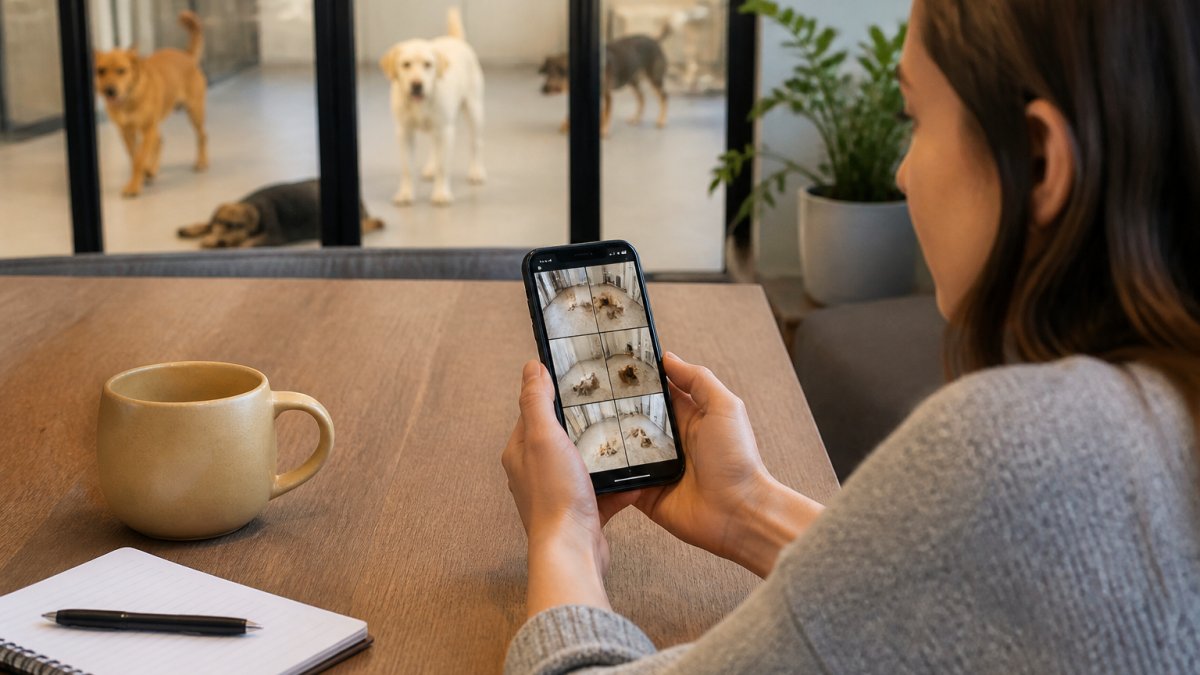
2. Remote monitoring. Cameras, wearables, smart feeders, and health apps extend your eyes when you are not in the room.
3. In-hospital monitoring. A veterinary team tracks vital signs on a schedule, temperature, heart rate, respiratory rate, blood pressure, pain score, urine output, and mentation.
Supervision vs. Continuous Medical Monitoring
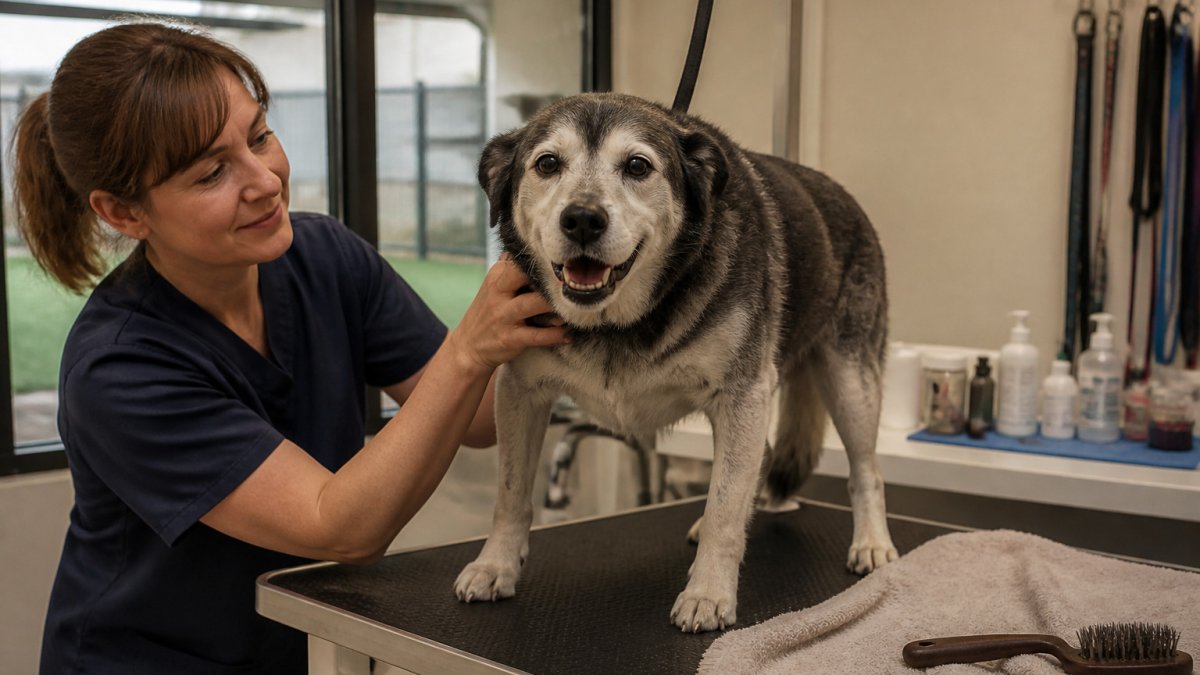
Supervision means someone checks on your pet regularly. Medical monitoring means tracking specific vital signs on a schedule.
- Supervision: periodic visual checks, feeding, walks, potty breaks
- Medical monitoring: breathing rate, gum color, hydration, pain level, urine output
- The difference: one catches problems early; the other catches them before they become emergencies
Most pets need the first. Few need the second.
When Each Setting Is Appropriate
| Setting | Best for | Not a substitute for |
|---|---|---|
| At-home supervision | Healthy adults, mild issues, first night after routine care | Hospital monitoring when vitals are unstable |
| Remote monitoring | Trend-watching, separation anxiety, senior pets home alone | Hands-on assessment of gums, breathing, and pain |
| In-hospital monitoring | Post-surgery, poisoning, chronic disease flares, fragile neonates and seniors | Long-term home care after discharge |
The honest answer to whether 24/7 monitoring is necessary depends on which of these three you mean, and on your pet's actual risk, not on a marketing pitch.
When 24/7 Pet Monitoring Is Necessary
Round-the-clock monitoring is necessary when a pet's condition could change fast enough to become life-threatening between checks. Vets call this the "recheck window," and it varies by condition.
Signs a Dog Needs Emergency Veterinary Care
Go to an emergency vet now, not in the morning, if you see any of these:
- Labored breathing or blue-tinged gums
- Collapse, seizure, or inability to stand
- Suspected poisoning or toxin exposure
- Bloated, hard abdomen with retching
- Uncontrolled bleeding or a major injury
- Straining to urinate with no output
The American Veterinary Medical Association's pet emergency guidance is a solid reference for owners deciding whether to travel to the clinic.
When Around-the-Clock Monitoring Is Overkill
A healthy adult dog with a normal routine does not need 24/7 monitoring. It needs a safe home, fresh water, and a watchful eye.
Pushing continuous monitoring on every pet creates anxiety for owners and false alarms. It also masks real problems, because constant surveillance makes every normal twitch look like a symptom.
- Healthy adult dog, normal day: periodic checks are enough
- Puppy or senior with a known condition: closer watch, not necessarily round-the-clock
- Post-surgery or recovering from illness: follow your vet's schedule exactly
Risk-Based Guidance by Age, Condition, and Life Stage
Match your monitoring level to your pet's actual risk, not to a general rule. Here is how we think about it at Ruffin' It Ranch.
| Life Stage or Condition | Monitoring Level | Why |
|---|---|---|
| Healthy adult (1-7 years) | Periodic checks | Low risk, stable baseline |
| Puppy under 6 months | Frequent checks, overnight included | Fragile, fast-changing needs |
| Senior pet (8+ years) | Daily health checks, overnight awareness | Higher risk of hidden illness |
| Chronic condition (diabetes, heart, kidney) | Scheduled medical monitoring | Condition can shift quickly |
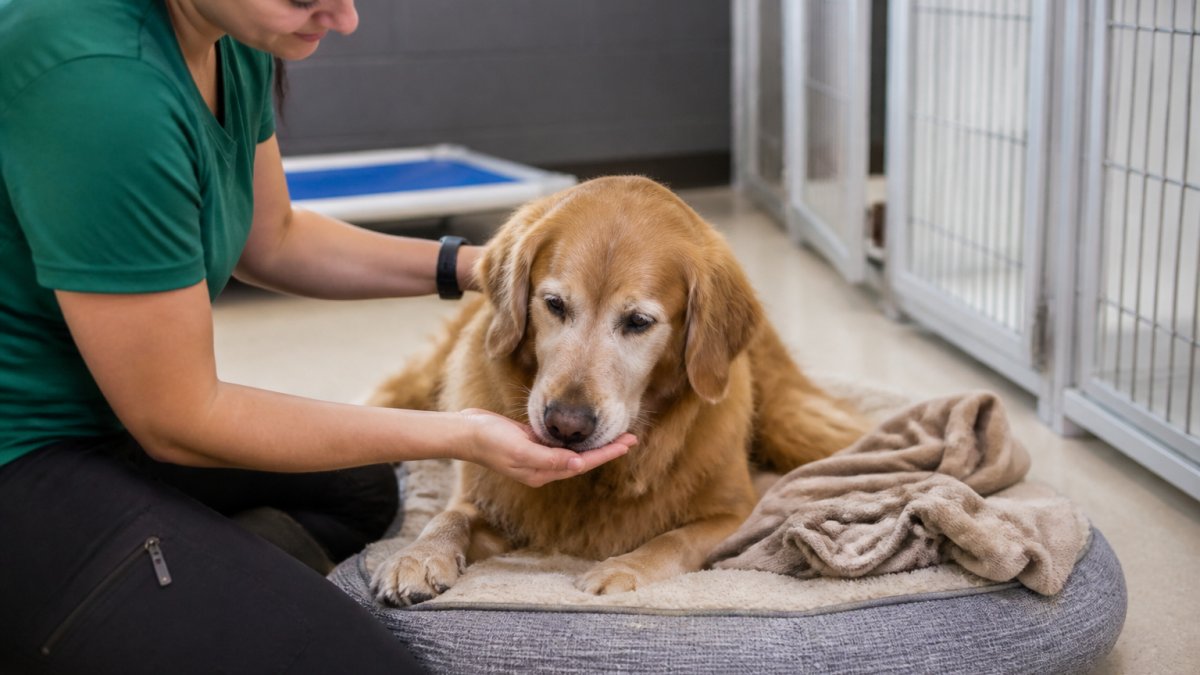
| Post-surgery or injury recovery | Continuous for the first 24-48 hours | Highest crash risk window |
| Special needs or aggressive dogs | Trained, individualized supervision | Safety for pet and handler |
A healthy pet and a fragile pet need very different levels of care. Treat the risk, not the calendar.
Monitoring Pets at Home Overnight
Overnight is when problems hide. Your pet is asleep, you are asleep, and subtle changes go unseen. A simple overnight routine closes that gap, but only if you know what to watch, how often, and when to act.
How Often to Check
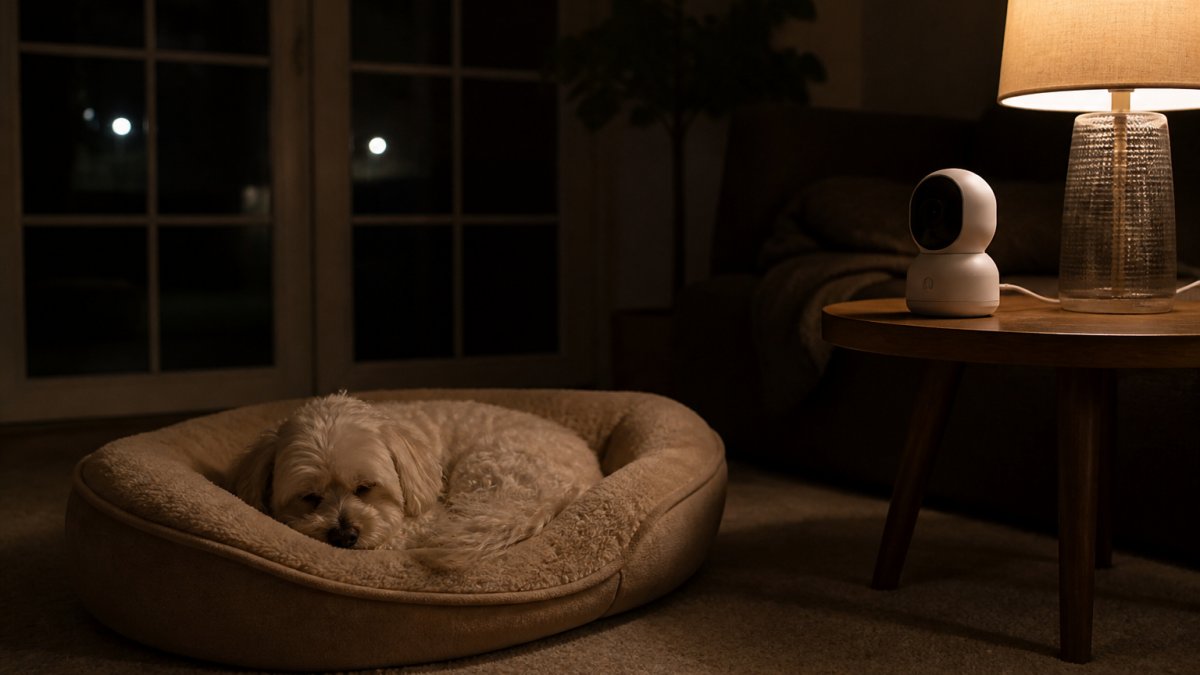
For a healthy adult pet, one pre-bed check is usually enough. For a pet your vet has flagged, post-surgery, senior, chronic condition, or recent poisoning exposure, a common pattern is a check every 2 to 4 hours through the first night, then tapering as the pet stabilizes. Ask your vet for the specific interval; it depends on the condition and the treatment given.
What to Track
Keep the list short enough that you will actually do it. These are the changes that matter most overnight:
- Breathing rate and effort, count breaths for 15 seconds and multiply by four. Note whether the pet is breathing with its mouth open, with the abdomen, or with the neck extended.
- Gum color, should be pink, not pale, white, blue, or brick red. Press gently and watch how fast color returns.
- Behavior and mentation, is the pet responsive, restless, pacing, or unusually quiet?
- Appetite and water intake, a pet that refuses a favorite treat is a data point.
- Urine and stool output, note frequency, volume, and any straining.
- Pain signs, trembling, guarding a body part, reluctance to lie down, or a change in sleeping position.
When to Wake Your Vet
Call the after-hours line, do not wait for morning, if you see any of the following:
- Labored breathing, open-mouth breathing in a cat, or a resting respiratory rate that is clearly above the pet's normal
- Pale, white, or blue gums
- Collapse, seizure, or inability to stand
A Simple Overnight Routine
- Do a pre-bed check: gums, breathing, water intake, and a quick body scan
- Keep your pet in a room you can hear from your bedroom
- Note any change in behavior, even small ones, and write it down with the time
- Set one overnight check if your vet has flagged a risk, or follow the interval they gave you
- Keep your vet's after-hours number and an emergency clinic address on hand
When Home Monitoring Is Not Enough
If your pet needed treatment in a hospital, was sent home with a guarded prognosis, or has a condition your vet described as "could change quickly," overnight home monitoring may not be the right setting. Ask directly: "Is my pet stable enough to be watched at home tonight, or does this need a staffed overnight ward?" That question is the difference between supervision and medical monitoring, and it is the one most owners forget to ask.
Questions to Ask a Dog Boarding Facility About Overnight Care
Ask direct questions before you book. A good facility answers them without hesitation.
- Is staff on-site overnight, or is the building empty?
- How often does someone check on pets during the night?
- What happens if a pet shows signs of illness at 2 a.m.?
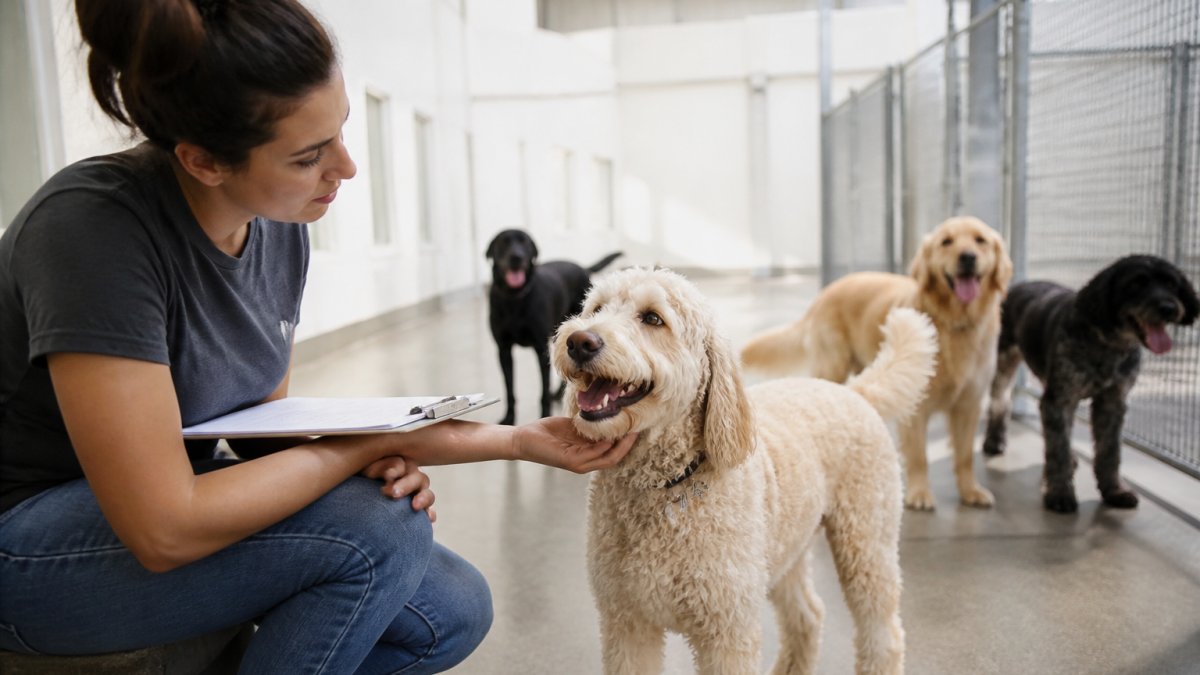
At Ruffin' It Ranch, our overnight team is on-site around the clock.
Dog Boarding Medication Instructions to Confirm Before Drop-Off
Medication errors are one of the most common boarding problems. Confirm these before you hand over the leash:
- Exact dose and timing, written down, not just spoken
- Storage needs, such as refrigeration or room temperature
- What happens if a dose is missed
- Who administers it and how they log it
- Any side effects to watch for
- Contact number for your vet in case of a reaction
Ask the facility to repeat the instructions back to you. If they cannot, that is a red flag.
Pet Cameras, Wearables, and Remote Monitoring Tools
Remote tools extend your eyes, not your judgment. They help you notice change; they do not replace a vet.
- Pet cameras: watch behavior, sleep, and appetite; good for separation anxiety
- Wearables: track activity and rest patterns; useful for spotting trends over time
- Smart feeders and water monitors: flag skipped meals or low water intake
The FDA's guidance on animal health products is worth reading before you buy any device that claims to diagnose illness.
Conclusion
The honest answer to whether 24/7 pet monitoring is necessary depends on your pet, not on a marketing pitch. Healthy adult dogs need supervision, not surveillance. Sick, young, senior, and special-needs pets need closer, sometimes round-the-clock, care.
That is the standard we hold at Ruffin' It Ranch. Our 24/7 on-site staff, climate-controlled private runs, and individualized care plans mean your pet is watched by trained eyes, not just a camera.
Book your pet's stay with Ruffin' It Ranch and travel knowing someone is always there.
Frequently Asked Questions
Is 24/7 monitoring necessary for every dog?
No. Most healthy adult dogs do fine with routine supervision and a safe space overnight. Continuous 24/7 pet monitoring is a medical or behavioral tool, not a default. It earns its place when a dog is recovering from surgery, managing a chronic condition, very young, or elderly with mobility or cognitive issues. For a healthy, active adult pet, ordinary observation plus a morning check is usually enough, and constant camera-watching can create anxiety for owners without improving outcomes.
Which dogs may need overnight or around-the-clock monitoring?
Dogs recovering from surgery or anesthesia, pets with conditions like seizures, diabetes, or heart disease, puppies under six months, and senior dogs with mobility or cognitive decline are the usual candidates. Dogs with severe separation anxiety may also benefit from supervised overnight care rather than isolation. A veterinarian should make the call based on diagnosis and current medications, not a general rule. If your dog falls into one of these groups, ask your vet what specific signs warrant a call or visit.
What signs mean a dog needs emergency veterinary care?
Seek emergency care for difficulty breathing, collapse, uncontrolled bleeding, suspected poisoning, repeated vomiting or diarrhea, a distended abdomen, pale gums, straining to urinate, or a seizure lasting more than a few minutes. Signs a dog needs emergency veterinary care also include sudden inability to walk, severe pain, and heatstroke. Call the clinic while you travel so staff can prepare. First aid can stabilize a pet, but it does not replace a veterinary exam and diagnostic testing.
Is overnight monitoring the same as 24/7 veterinary care?
No. Overnight monitoring means someone is watching and can respond, which may be a trained boarding staff member, a pet sitter, or a home camera. 24/7 veterinary care means a licensed veterinarian and medical team are on site with diagnostic tools, oxygen, IV fluids, and surgical capability. A boarding facility can provide observation and transport to a vet, but it cannot replace hospitalization. If your dog needs continuous medical treatment, that belongs in a veterinary hospital, not a boarding run.
What should I ask a boarding facility about overnight supervision?
Ask whether staff are on site overnight or just on call, how often someone physically checks each pet, and what happens if a dog shows signs of illness at 2 a.m. Confirm the facility has a vet on call and a written emergency transport plan. Ask how they handle medication schedules and whether they can send photo or video updates. Questions to ask a dog boarding facility should also cover vaccination requirements, isolation protocols for sick pets, and whether private runs are available for dogs that need quiet.