 blog
How to Use Natural Remedies for Dog Separation Anxiety
Last Updated: October 24, 2026
Quick Summary
You can calm dog separation anxiety with natural remedies by pairing a staged desensitization plan with evidence-backed supplements such as alpha-casozepine, L-theanine, melatonin, probiotics, or a pheromone diffuser. Supplements support calm behavior but are not a cure, so use them alongside training and clear each one with your veterinarian first.
- True separation anxiety is panic that starts within minutes of departure, not hours later.
- Most adult dogs can handle four to six hours alone, but anxious dogs tolerate far less.
- Departure desensitization starts with cues like keys and doorknobs before any real leaving.
- Alpha-casozepine is commonly dosed at roughly 15 mg per kg of body weight per day.
- For severe distress, arrange a sitter or daycare and involve your veterinarian or a behaviorist.
Table of Contents
- Signs of Separation Anxiety in Dogs (and How It Differs From Boredom)
- How Long Can a Dog Be Left Alone? Setting a Realistic Baseline
- How to Calm a Dog With Separation Anxiety: A Staged Plan
- Dog Separation Anxiety Supplements: What the Evidence Says
- Exercise, Enrichment, and a Home Environment That Lowers Stress
- What to Do During Unavoidable Absences
- Choosing Care That Won't Undo Your Training
- Frequently Asked Questions
Signs of Separation Anxiety in Dogs (and How It Differs From Boredom)
Dog separation anxiety is a panic disorder triggered by being left alone, not simple misbehavior. It affects roughly a quarter of dogs at some point, according to veterinary behavior research from the American Veterinary Medical Association, and it looks different from a dog that is just under-stimulated. The dog that shreds the door frame within ten minutes of your exit is not bored.
The Four Distress Types That Look Alike
Owners often misread the cause. The fix depends on getting this right.
- True separation anxiety: panic that starts within minutes of departure, regardless of exercise or toys.
- Boredom: destructive behavior that builds slowly over hours, not minutes.
- Noise fear: reactions tied to thunderstorms, fireworks, or construction, not your absence.
A dog that chews furniture after six quiet hours is bored. A dog that howls the moment the door clicks is anxious.
What a True Panic Response Looks Like
Panic has physical signs. Watch for drooling, pacing, dilated pupils, and destructive digging at exits. Some dogs vocalize nonstop. Others urinate or defecate despite being fully house-trained. These signs appear fast, usually within the first 30 minutes. That timing is the tell. If your dog settles after an hour, the issue is likely frustration, not panic.
How Long Can a Dog Be Left Alone? Setting a Realistic Baseline
Most adult dogs can handle four to six hours alone, but that range shrinks fast for a dog with separation anxiety. Puppies need far less. A general rule many trainers use: one hour per month of age, up to a cap of four hours. Senior dogs and dogs with medical conditions often need shorter stretches too.
The real question is not the clock. It is what your dog does with the time. A dog that sleeps for five hours is fine. A dog that paces and pants for five hours is not, even if the house is intact. Build your baseline from observed behavior, not a fixed number.
How to Calm a Dog With Separation Anxiety: A Staged Plan
You calm a dog with separation anxiety by teaching calm departure and return, in small steps, before you ever leave for real. This is called systematic desensitization, and it works because it resets your dog's prediction that the door means panic.
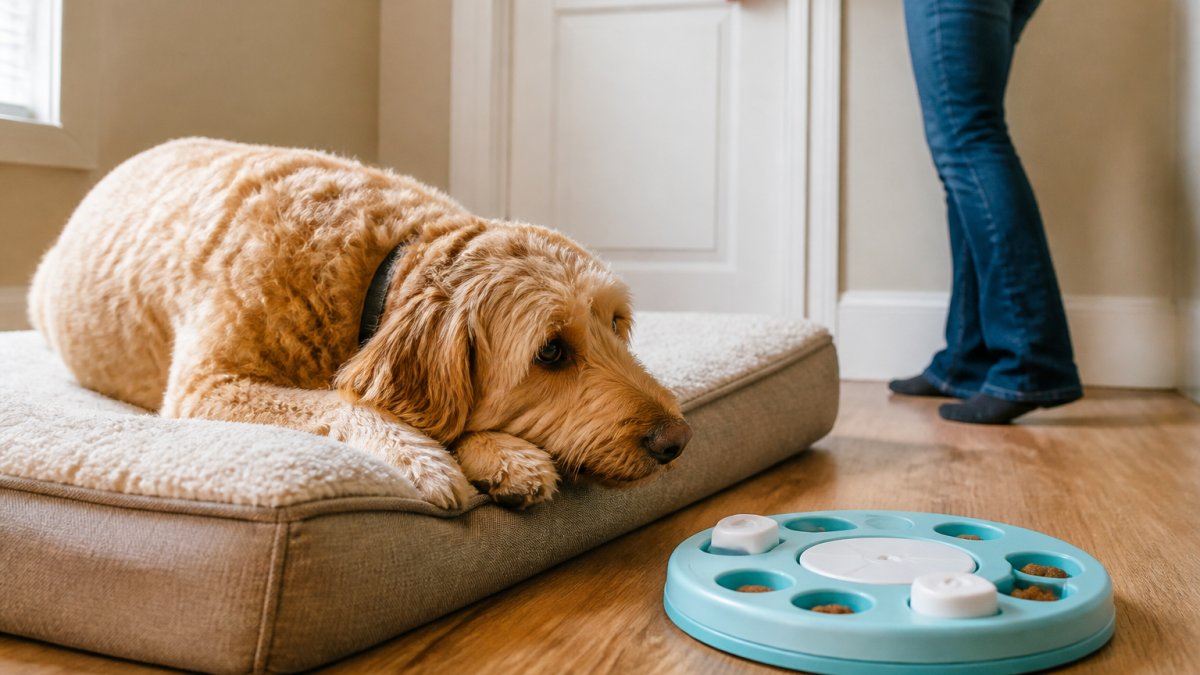
Phase 1: Departure Desensitization
Start with the cues, not the leaving. Pick up your keys. Put them down. Repeat until your dog stops reacting. Then touch the doorknob. Then open the door. Then step out for one second. Each step repeats until your dog stays relaxed. For a fuller walkthrough of this process, see our guide on how to help a dog with separation anxiety.
Phase 2: Gradual Alone-Time Training
Now build duration. Step out for 5 seconds, then 30, then 2 minutes, then 10. Keep sessions short and end on success. A common mistake is pushing for one big jump. That resets progress. Aim for three short sessions a day. For a structured plan you can follow week by week, our 2026 training plan for managing dog separation anxiety lays out the full schedule.
Phase 3: Monitoring Progress and Spotting Setbacks
Track each session. Note the time alone and whether your dog stayed calm. A setback looks like renewed drooling, pacing, or destruction at a duration your dog previously handled. That means you advanced too fast. Drop back two steps and rebuild. Progress is not linear. Expect a few stumbles.
Dog Separation Anxiety Supplements: What the Evidence Says
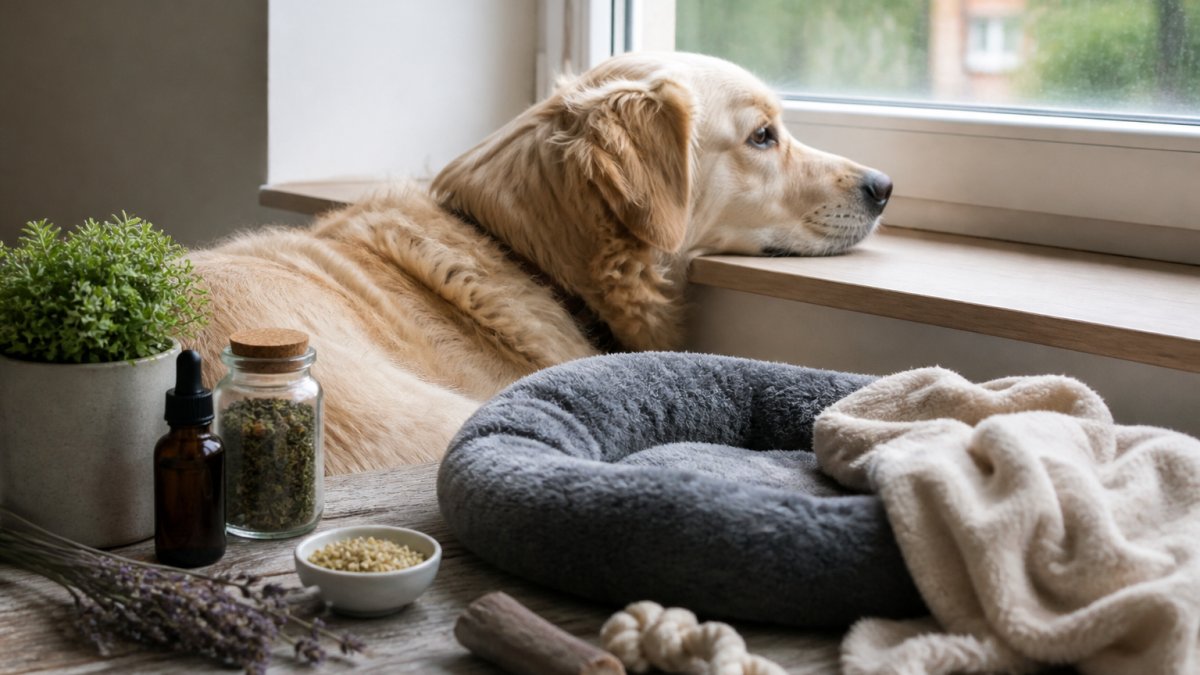
Dog separation anxiety supplements can support calm behavior, but they are not a cure, and "natural" does not mean "risk-free." The strongest evidence covers a short list of ingredients; the rest is mostly marketing.
Below is an evidence-strength comparison, not a shopping list. Dosing ranges are general starting points only; your vet sets the actual dose based on weight, health history, and other medications.
Ingredients With Meaningful Evidence
- Alpha-casozepine (milk protein peptide): One of the better-studied options for situational and generalized anxiety in dogs. Common veterinary dosing is roughly 15 mg per kg of body weight per day, often split into two doses. Onset is not instant, allow several days to a couple of weeks. Avoid in dogs with confirmed milk-protein allergy.
- L-theanine (green tea amino acid): Studied for relaxation without sedation. Typical ranges run about 1-5 mg per pound of body weight, once or twice daily; some products combine it with other calming agents. It is generally well tolerated, but it can add to the effects of blood-pressure or sedating medications, so disclose everything your dog takes.
- Melatonin: Best suited to situational stress, travel, storms, a one-off absence, rather than daily long-term use. Common small-dog dosing is around 1-3 mg total, with larger dogs sometimes receiving 3-6 mg; timing is usually 30-60 minutes before the event. Skip it in dogs with diabetes or on certain seizure or blood-thinning medications unless your vet approves.
Ingredients With Weak or Mixed Evidence
- Chamomile, valerian root, and passionflower: Popular in calming chews, but dog-specific dosing and safety data are thin. Valerian can interact with sedatives; chamomile can affect blood thinners.
- CBD and other hemp products: Regulation, purity, and dosing vary widely, and product labels often misstate content. Do not use without explicit veterinary guidance, and never combine with other sedating medications without approval.
- Proprietary "calming blends": If the label hides ingredient amounts, skip it. You cannot evaluate safety or dose what you cannot see.
How to Trial a Supplement Without Fooling Yourself
- Set a baseline first. Track alone-time sessions for one to two weeks before starting anything, so you have something to compare against.
- Change one variable at a time. Introduce a single supplement, not a stack, so you can attribute any change.
- Give it a fair window. Most options need days to weeks; judge after the label's recommended trial period, not after one session.
- Watch for interactions. List every supplement, prescription, and over-the-counter product your dog receives and review the list with your vet.
- Stop if behavior worsens. Increased restlessness, GI upset, or sedation are reasons to pause and reassess.
For a comparison of product formats and what to look for on labels, our guide to the best calming supplements for dogs before boarding breaks down the options.
Here is how the ingredients the article covers compare on evidence and typical use.
| Ingredient | Evidence | Key notes |
|---|---|---|
| Alpha-casozepine | Better-studied option | Roughly 15 mg per kg per day; avoid with milk-protein allergy |
| L-theanine | Studied for relaxation without sedation | About 1-5 mg per pound, once or twice daily |
| Melatonin | Best for situational stress | Small dogs around 1-3 mg, 30-60 minutes before event |
| Probiotics | Emerging evidence | Multi-week trial; choose products listing strains and CFU counts |
| Pheromone diffuser or collar | Supportive, not curative | Replace refills on manufacturer's schedule |
| Chamomile, valerian, passionflower | Weak or mixed | Dog-specific dosing and safety data are thin |
| CBD and hemp products | Weak or mixed | Labels often misstate content; use only with vet guidance |
| Proprietary calming blends | Weak or mixed | Skip if the label hides ingredient amounts |
Exercise, Enrichment, and a Home Environment That Lowers Stress
A tired dog is a calmer dog, but exercise alone will not fix separation anxiety. Pair physical activity with mental enrichment. A 30-minute sniff walk does more for a nervous dog than a fast run. Sniffing lowers arousal.
Add these to your daily routine:
- Safe chew toys that last, like frozen stuffed Kongs
- Puzzle feeders that slow eating and engage the brain
- Calming music or a white-noise machine left on during absences
Keep the home environment predictable. Feed at the same times. Walk the same routes. Predictability lowers baseline stress.
What to Do During Unavoidable Absences
Some absences cannot be avoided, work, medical appointments, travel. The goal during those absences is not to cure separation anxiety; it is to keep your dog safe, limit rehearsal of panic, and protect the training progress you have made. Management alone will not resolve the underlying problem, but the right interim plan prevents setbacks while you build alone-time tolerance.
Match the Management to the Distress Level
- Mild distress (whining, mild pacing, settles within 10-15 minutes): A safe chew, a frozen stuffed toy, calming music, and a predictable departure routine may be enough. Keep absences short where possible.
- Moderate distress (persistent vocalizing, drooling, door scratching): Add a trusted sitter, daycare, or a friend who can stay with the dog. A camera lets you confirm what actually happens after you leave.
- Severe distress (self-injury, escape attempts, destruction at exits, house-soiling in a trained dog): Do not leave the dog alone for long stretches. Arrange coverage, sitter, daycare, or boarding with staff on-site, and involve your veterinarian or a veterinary behaviorist. Severe cases often need professional support alongside training.
Build an Interim Absence Kit
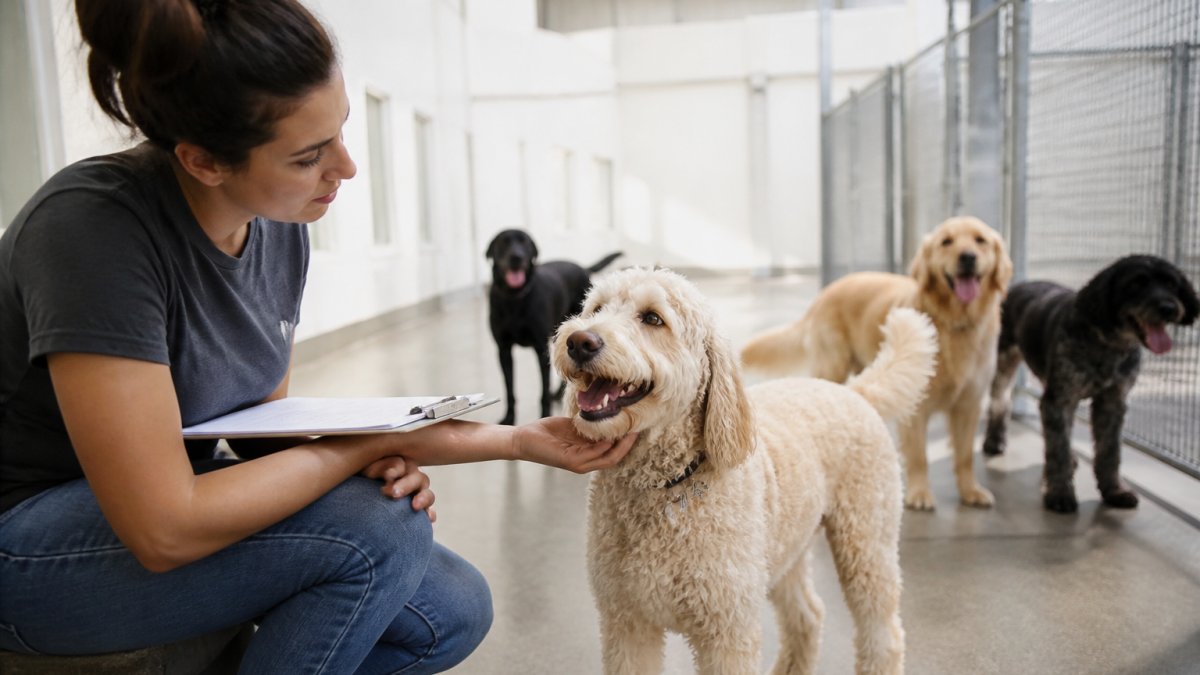
- A sitter or daycare you have vetted in advance. Ask whether staff are on-site 24/7, whether dogs are separated by temperament, and how they handle anxious dogs. Have a backup contact, not just one option.
- A camera with two-way audio. Watch the first 30 minutes, that is when panic usually peaks, and note whether your dog settles or escalates.
- A scent item and a safe chew. A worn t-shirt and a long-lasting chew can help, but neither replaces training.
Protect the Training While You Manage
Unavoidable absences can undo progress if they repeatedly exceed your dog's current tolerance. Two rules help:
- Keep practice sessions below the panic threshold. If your dog can handle 10 minutes calmly, do not let a real absence run 45 minutes without support.
- Rebuild after a setback. If a long absence triggers renewed drooling, pacing, or destruction, drop back two steps in your desensitization plan and rebuild from there.
For a step-by-step approach to soothing your dog through an unavoidable absence, our guide to soothing dog separation anxiety walks through each move.
Choosing Care That Won't Undo Your Training
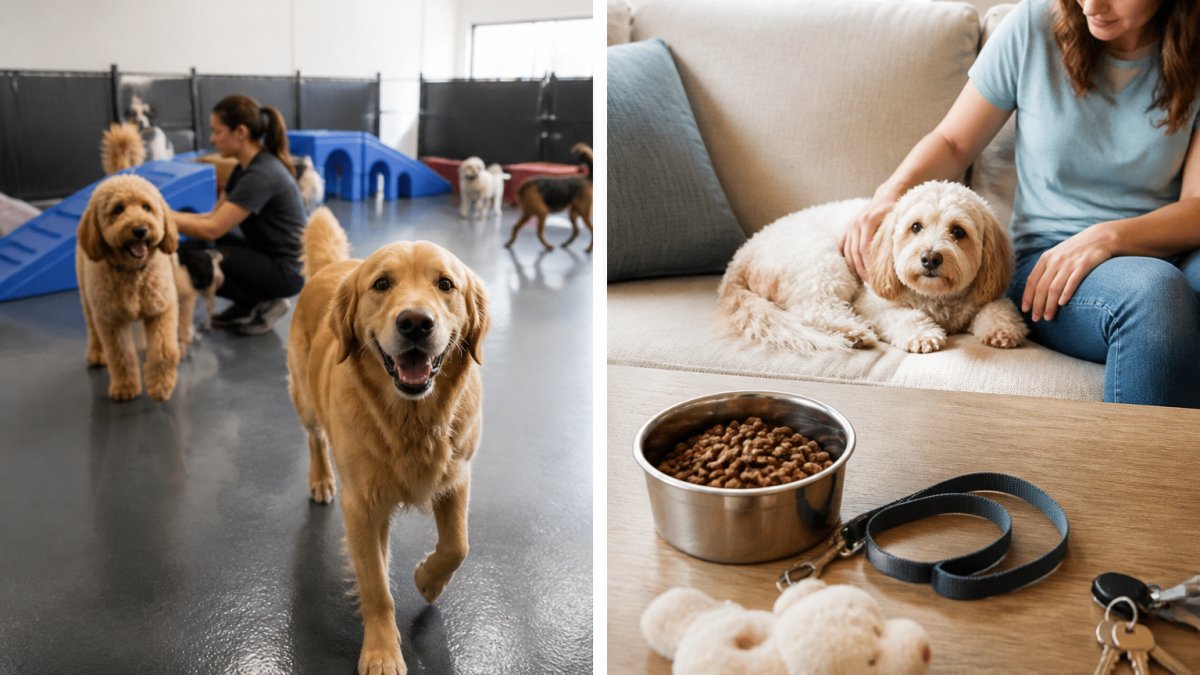
Boarding and daycare can either support your training or wreck it. If you are weighing other options, see our best alternatives to Dogtopia for anxious dogs. The wrong environment, like a cage-heavy kennel with no supervision, can spike anxiety. The right one keeps your dog calm and engaged. Look for these traits:
- 24/7 on-site staff, not just daytime coverage
- Private runs for dogs that need space
- Supervised play matched to temperament
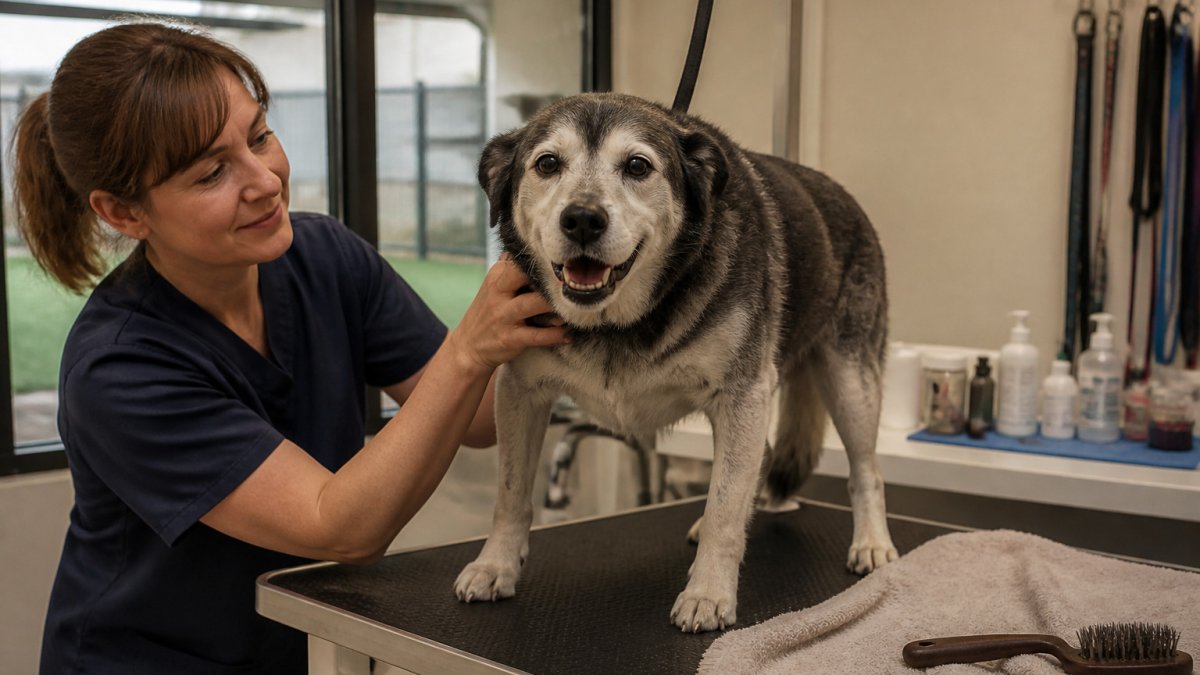
At Ruffin' It Ranch, our climate-controlled facility offers large private indoor and outdoor runs and 24/7 professional staff. We are equipped to care for puppies and dogs with special needs, and our cage-free grooming keeps stress low.
Frequently Asked Questions
Can natural remedies help a dog with separation anxiety?
Natural remedies can support a dog separation anxiety plan, but they work best alongside behavior modification rather than instead of it. Ingredients like L-theanine, alpha-casozepine, and melatonin have some research behind them for calming, and pheromone diffusers can take the edge off mild distress. For moderate to severe cases, pair these with systematic desensitization and talk to your veterinarian about whether medication is warranted.
What calming aids are safe for dogs with separation anxiety?
Safe options include L-theanine, alpha-casozepine, melatonin (short-term use), and dog-appeasing pheromone diffusers or collars. Probiotics and calming chews with recognizable ingredients are generally low risk. Avoid CBD products without third-party testing, and skip anything containing xylitol, caffeine, or essential oils like tea tree or eucalyptus, which are toxic to dogs. Always check with your vet before starting a supplement, especially if your dog takes other medication.
How long can a dog be left alone before anxiety sets in?
Most adult dogs can handle four to six hours alone, and some manage up to eight if they have been trained for it. Puppies and senior dogs need shorter stretches, often two to four hours. Dogs with separation anxiety may panic within minutes. The right number depends on your individual dog, so build alone time gradually and watch for signs of distress rather than relying on a fixed rule.
When should I talk to a veterinarian about my dog's separation anxiety?
See a vet if your dog injures themselves trying to escape, destroys doors or windows, drools excessively, vomits, or vocalizes nonstop when alone. These signs suggest panic rather than mild stress, and medication may be part of the plan. A vet can also rule out medical causes like pain or thyroid issues that mimic anxiety. Bring video of your dog alone to the appointment so the vet can see the behavior.
If your dog panics the moment you reach for the door, you are not alone, and you are not stuck. The right mix of staged training, calming support, and care that respects your dog's stress level can change the picture. At Ruffin' It Ranch, our 24/7 on-site staff, spacious private runs, and individualized care give anxious dogs a calm, supervised place to stay while you are away. Get started with Ruffin' It Ranch and give your dog a stay that supports the progress you have worked for.